
Sakura in spring, snow in winter… but what about summer? This Tohoku itinerary takes you north to prove why Japan is truly a year-round destination.
Think Japan, and you’re probably picturing cherry blossoms of spring or the snowy landscapes of winter. These seasons are breathtaking show stealers no doubt, but Japan isn’t just a two-season show.
The country bursts to life in the summer with buzzing festivals, outdoor adventures, and experiences you can’t get any other time of year, especially in the northern region of Tohoku.
So if you’re craving a fresh take on Japan, this 5-day itinerary will guide you through the country’s underrated north, showing off the summer perks of Japan.
Where is Tohoku?
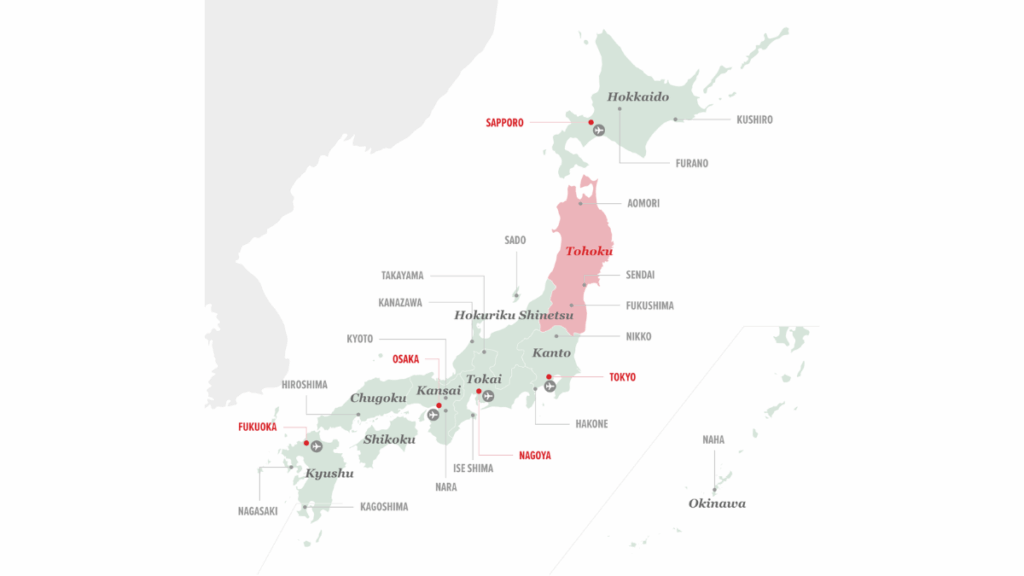
Photo credit: Japan National Tourism Organization
First of all, where exactly is Tohoku? Head all the way up to the northern tip of Japan’s main island, Honshu, and there it is: the six prefectures of Akita, Aomori, Fukushima, Iwate, Miyagi, and Yamagata that form the Tohoku region.
Once considered so far from the capital that it earned the nickname Michinoku — or “the end of the road” — this region feels worlds apart from the usual tourist spots. And that’s what makes it so refreshing! Instead of bustling cities and crowded streets, you’ll find small towns, endless landscapes, and a side of Japan that feels untouched.
Getting to Tohoku
Touring the entirety of Tohoku in just 5 days is no easy task, but this itinerary hits the highlights with a route through four of its six prefectures: starting in Miyagi, then on to Iwate, Aomori, and finally Akita.
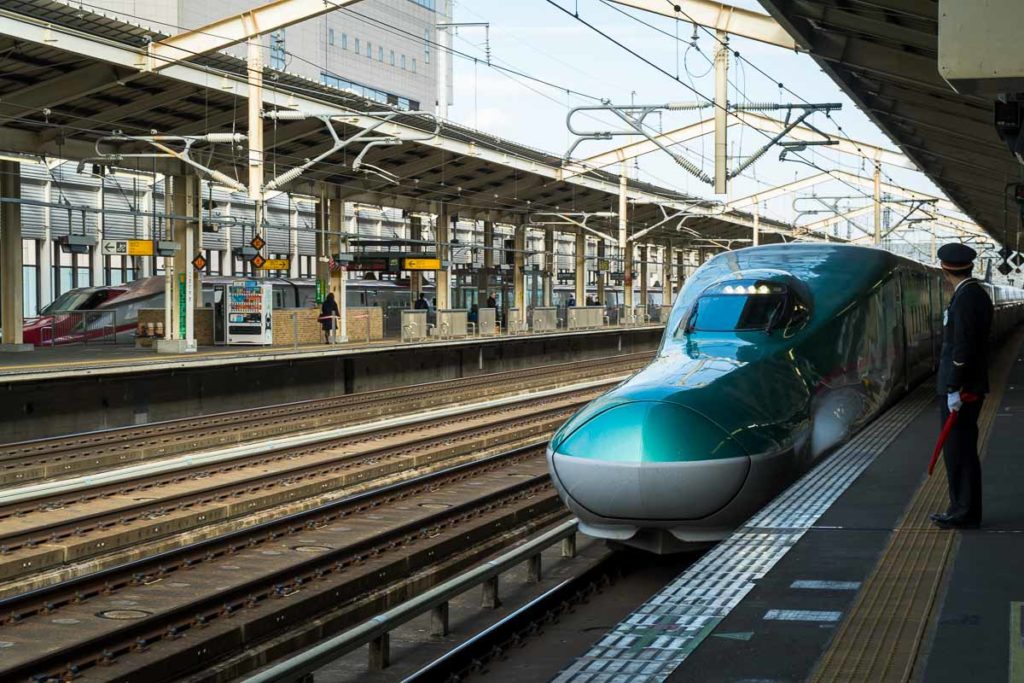
Our journey began at Haneda Airport in Tokyo where we first made our way to Tokyo Station. Then, we hopped on the Shinkansen bullet train to our first stop, Sendai in Miyagi.
The Shinkansen became our go-to ride between prefectures.
If you’re planning a similar journey, the JR East Pass is a real lifesaver. It gives you unlimited rides on JR East trains (Shinkansen included) across the region, so you can zip from city to city without the hassle of purchasing an individual ticket for each ride.
A single Shinkansen trip can already cost a lot, but with the pass, you can take multiple long-distance rides for a fraction of the price.
Day 1: Miyagi
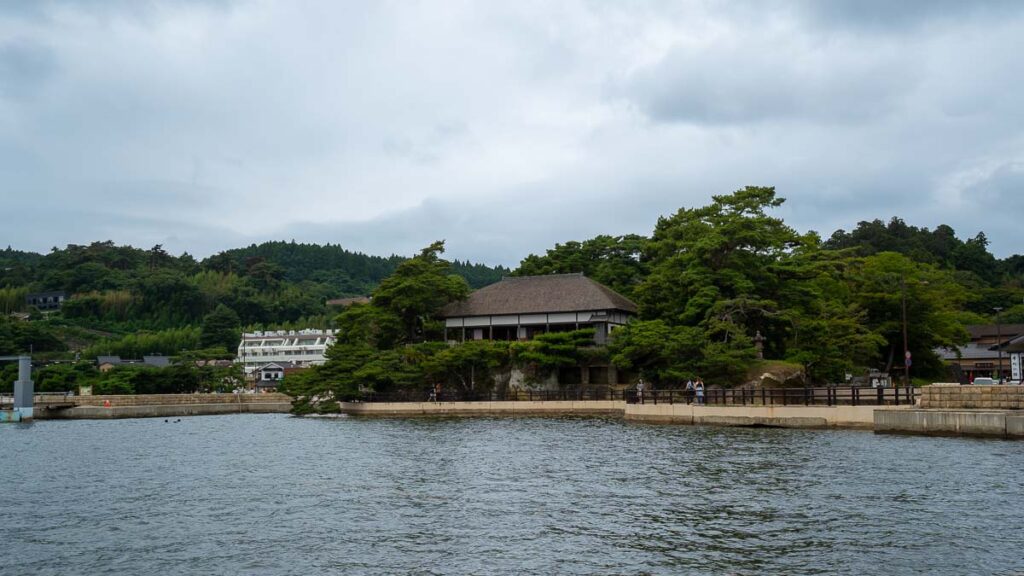
Miyagi Prefecture is home to Sendai, the most populous city in Tohoku, and a perfect starting point for your northern adventure. The prefecture is known for the stunning views of Matsushima Bay and local delicacies like gyutan (grilled beef tongue).
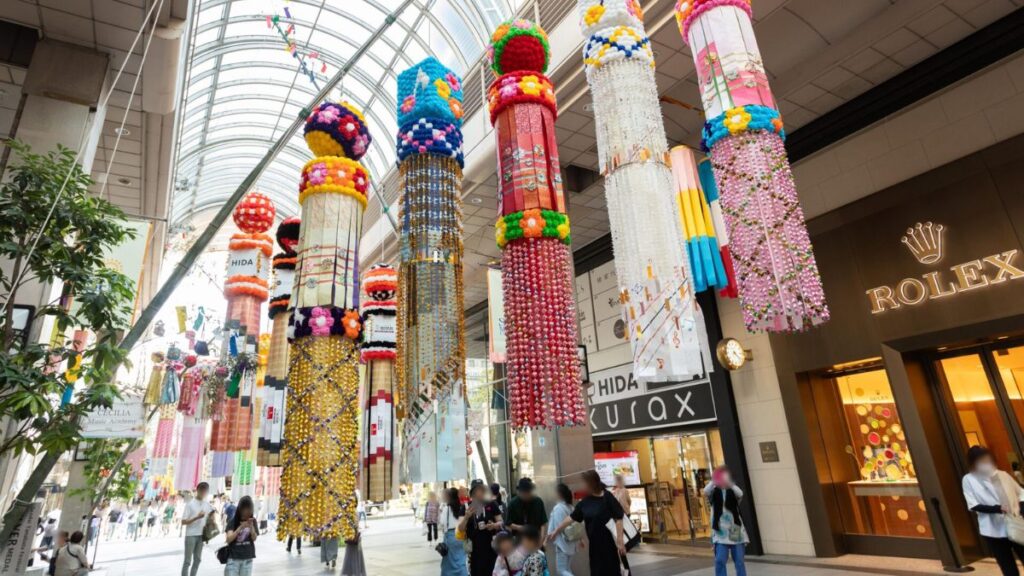
Photo credit: Sendai Tanabata Festival Support Association
Time your trip around July or August, and you’ll be swept up in the magic of one of Japan’s biggest summer celebrations, the Tanabata Festival (Star Festival). Inspired by the tale of two star-crossed lovers, Orihime and Hikoboshi, who can only meet once a year, the streets of Sendai come alive with colourful streamers that represent hope and purity.
Can’t make it during Tanabata? No worries, Miyagi still has plenty in store for you!
Hunt for anime icons at Tomizawa Park
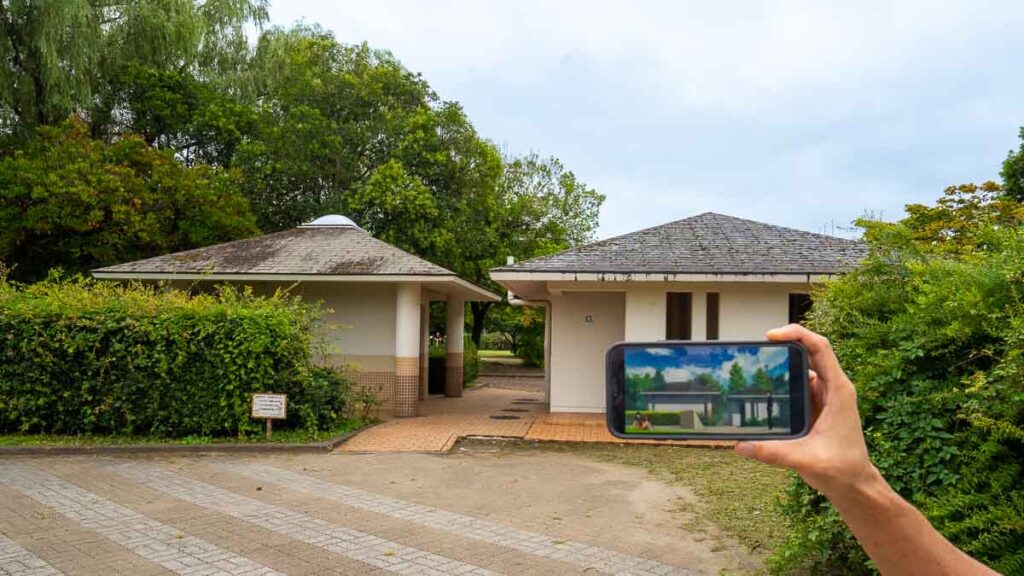
At first glance, Tomizawa Park seems like just another green escape in the city, but for fans of the anime Haikyu!!, it’s become a must-visit pilgrimage spot! The park sits right next to Kamei Arena, the legendary stage for the Miyagi Prefecture playoffs in the series.
While the arena itself is closed for renovations until March 2027, fans can still relive the spirit of the matches by visiting locations in the park that inspired scenes from the series.
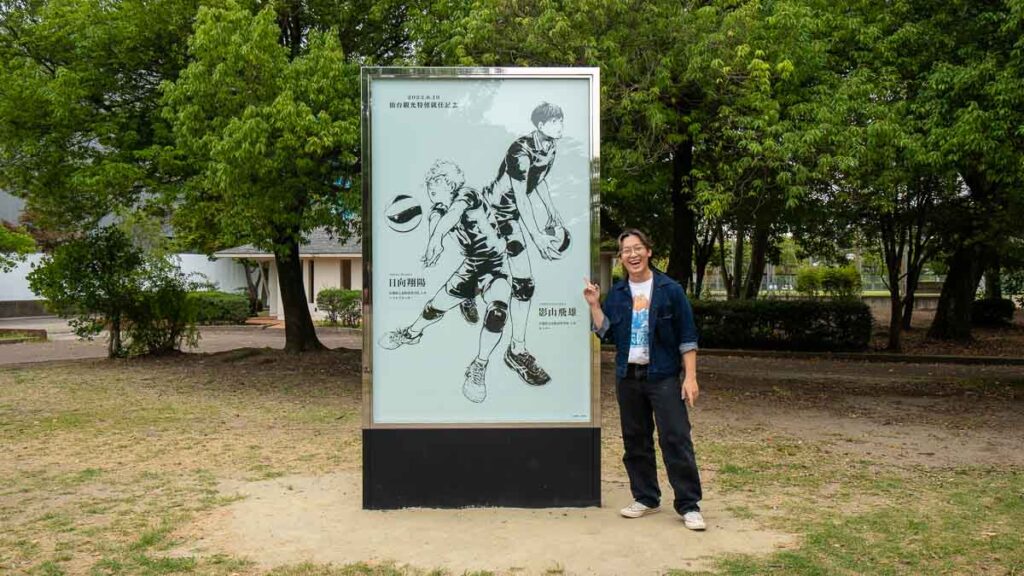
Don’t miss out on a special Haikyu!! monument! Once housed within Kamei Arena, it now stands proudly in the park as a key stop for any true fan.
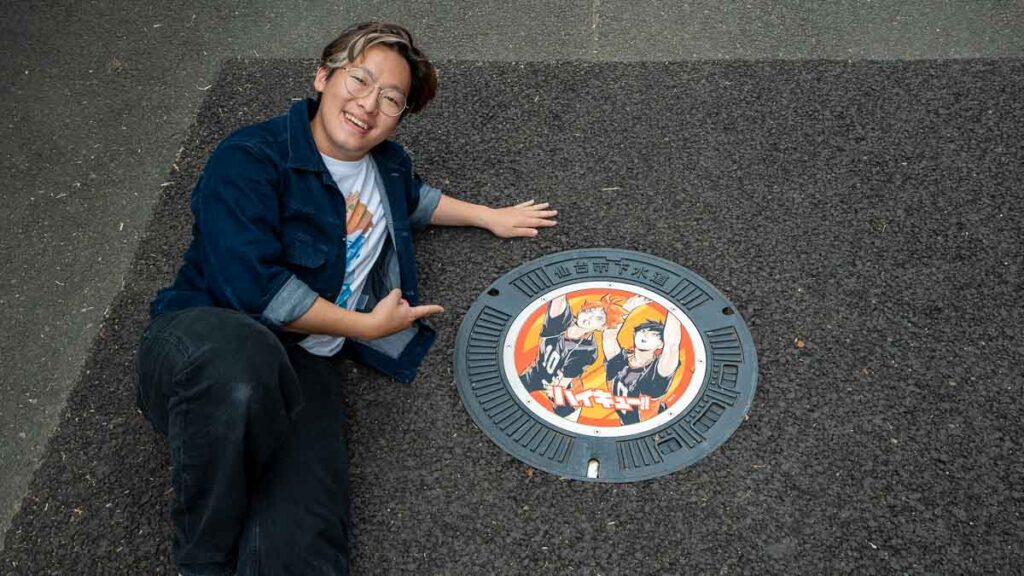
And while you’re exploring, keep your eyes on the ground. Haikyu!! manhole covers featuring different teams and characters are scattered around, turning a casual stroll into an anime treasure hunt.
Aside from Tomizawa Park, there are other real-world locations in Tohoku that inspired the settings of anime hits like Demon Slayer, Jujutsu Kaisen and even several Studio Ghibli classics!
While I didn’t have time to chase down every spot, it would be easy to weave a few anime pilgrimage destinations into your Tohoku itinerary. Just pick your favourites and slot them in.
Opening hours: 24hrs
Address: 1-chōme-2-2 Tomizawa, Taihaku Ward, Sendai, Miyagi 982-0032, Japan
How to get there: 2min walk from Tomizawa Station (Google Maps)
Savour Sendai’s signature dish at Gyutan Kaku
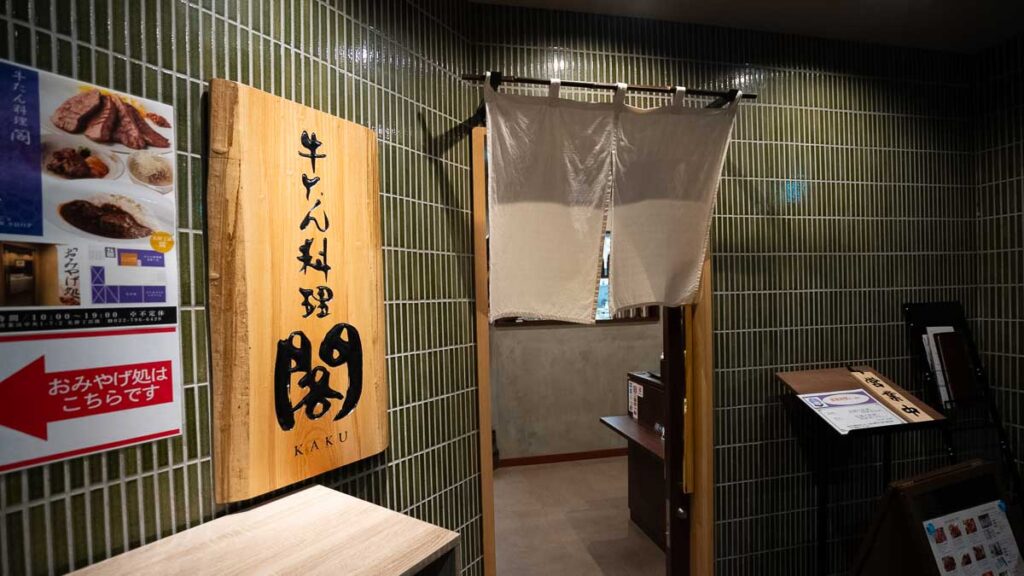
A trip to Sendai isn’t complete without sinking your teeth into the city’s most iconic dish: gyutan, or grilled beef tongue.
At Gyutan Kaku, I had the Grilled Tongue Set Meal (¥2500) which comes with four slices of tongue, along with a side of barley rice, oxtail soup, and crisp pickles to balance the taste.
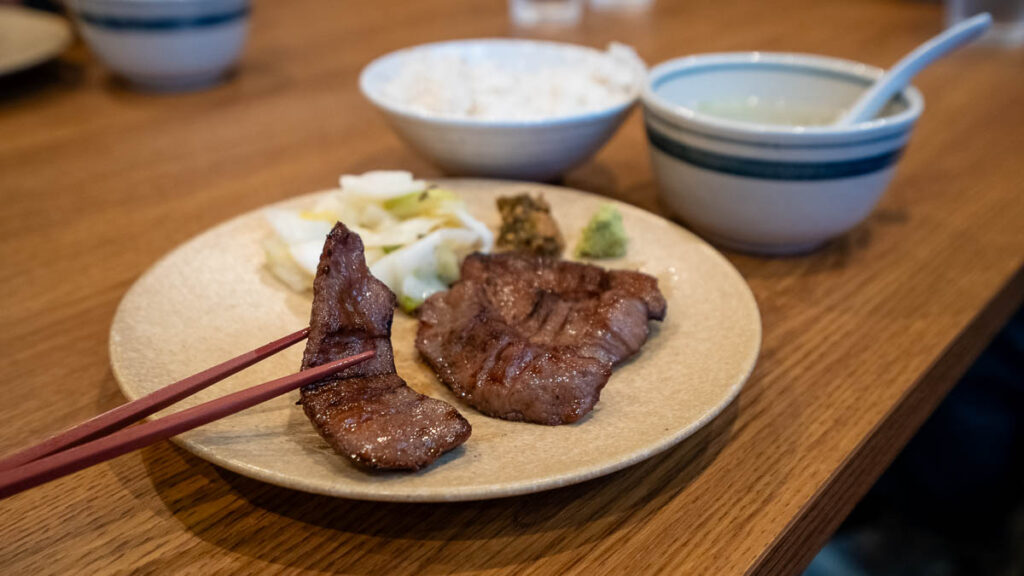
As strange as a serving of beef tongue sounds, it was melt-in-your-mouth tender with a rich smoky flavour that had me reaching for more before I even finished my first bite. Four slices were definitely not enough for this Sendai specialty!
Opening hours: 11:30AM – 2:30PM (Mon – Fri), 11AM – 2:30PM (Sat – Sun & PH)
Address: 1 Chome-7-2, RI Nakakecho Building 2, 2nd Floor , 980-0021 Miyagi, Sendai, Aoba Ward, Central, Japan
How to get there: 3min walk from Sendai Station (Google Maps)
Have a matcha moment at Kanrantei Tea House
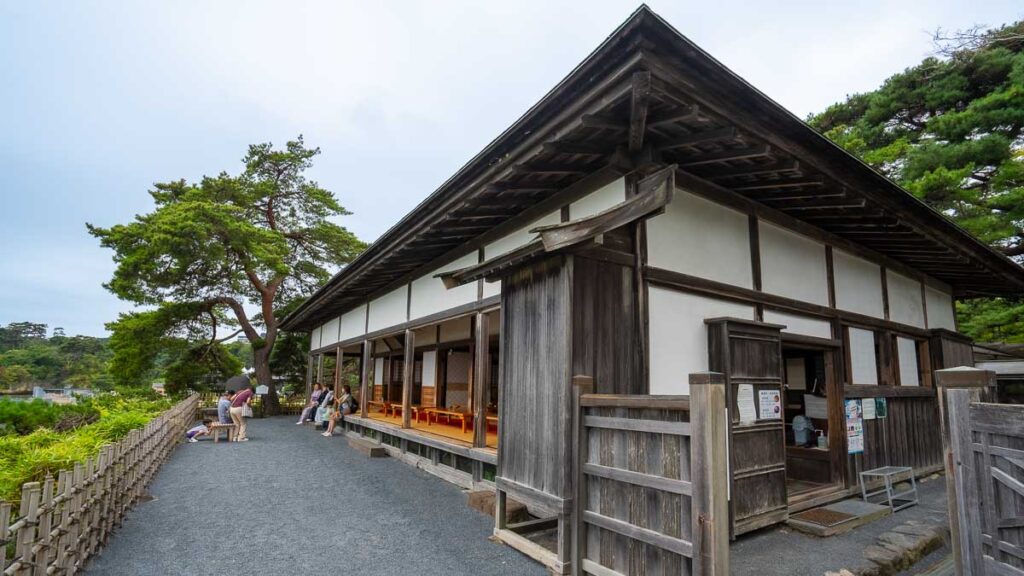
Our next stop took us to the iconic Matsushima Bay. But before cruising through its waters, we took a pause at the Kanrantei Tea House, a historic gem perched above the water.
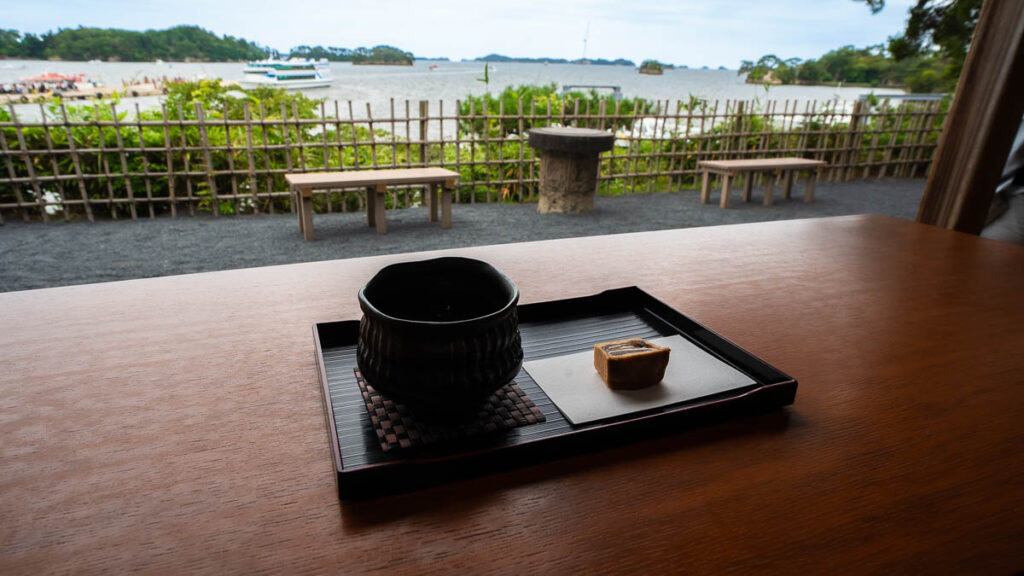
This isn’t just any teahouse, though. Samurai lords used to unwind here, sipping tea while soaking in the scenery. Following in their footsteps, I purchased a traditional matcha and dessert set for ¥700 and spent a few blissful minutes savouring traditional sweets amidst the sweeping atmosphere.
Entrance fee: ¥200/pax (~S$1.50)
Opening hours: 8:30AM – 5:00PM (April – October), 8:30AM – 4:30PM (November – March)
Address: Japan, 981-0213 Miyagi, Miyagi District, Matsushima, Chonai 56
How to get there: 4min walk from Matsushimakaigan Station (Google Maps)
Cruise through Matsushima Bay
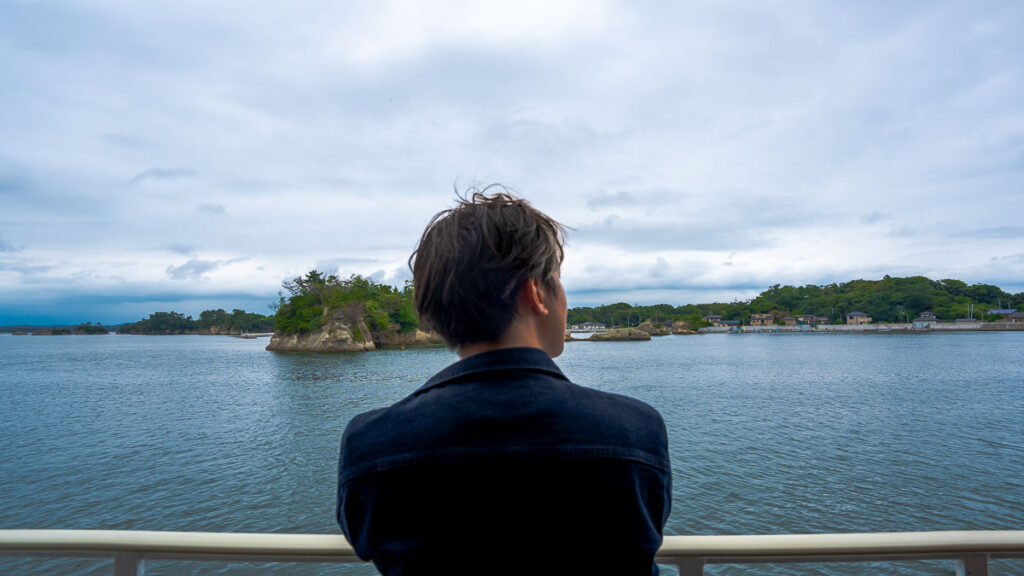
Celebrated as one of the Three Most Scenic Views of Japan, Matsushima Bay is sprinkled with over 200 pine-covered islands. To take it all in, we hopped on the Matsushima shima-meguri sightseeing cruise, a breezy 50-minute ride that runs hourly from 9AM to 4PM, and probably the easiest way to cover the most ground (or water).
Each island has its own quirky shape and story. There’s Niojima, shaped like the fierce temple guardians it’s named after. Then there’s Kanejima, whose hollow rocks ring like temple bells when the waves crash just right.
And finally, Futagojima, the adorable “twin islands” that look like inseparable siblings.
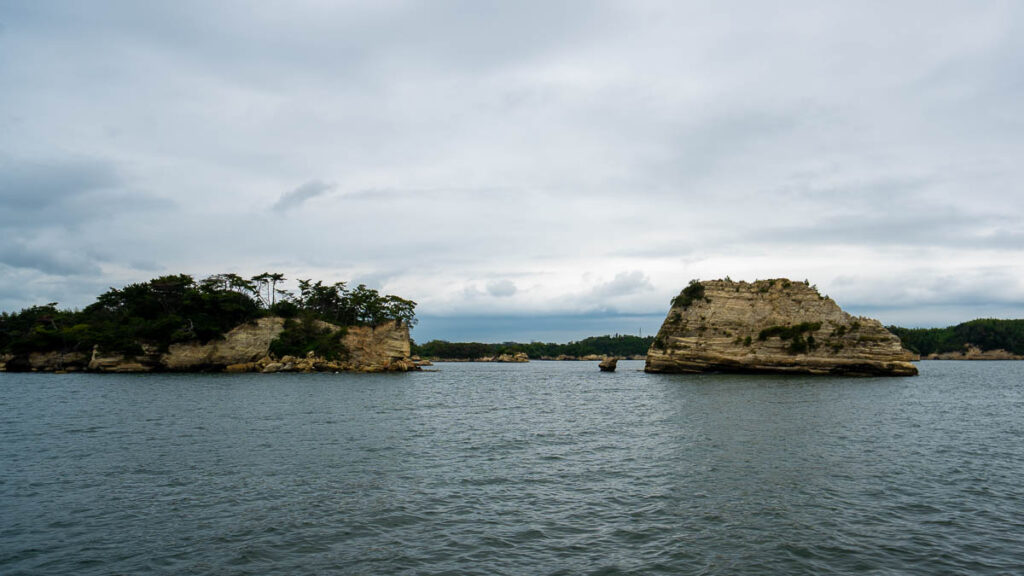
Cruising the bay during the summer is especially rewarding as you can linger on the open deck, to enjoy the views of lush greenery without shivering under a winter coat.
And if you’ve got time to spare, what about setting foot on some of the islands! The most iconic would be Fukuurajima, accessible via a striking 252m vermillion bridge. Legend says it’s famous for chance romantic encounters — so who knows — maybe your trip won’t just be scenic, but serendipitous!
*Pro tip: Sit on the right side of the cruise for the best vantage points!
Cost: From ¥1,500/pax (~S$14); with additional ¥600 (~S$5.50) fee for access to open deck
Opening hours: 9AM – 4PM
Address: Matsushima, Chonai−85, Miyagi District, Miyagi 981-0213, Japan
How to get there: 7min walk from Matsushimakaigan Station (Google Maps)
Snack like a Jujutsu Sorcerer at Ocha no Igeta
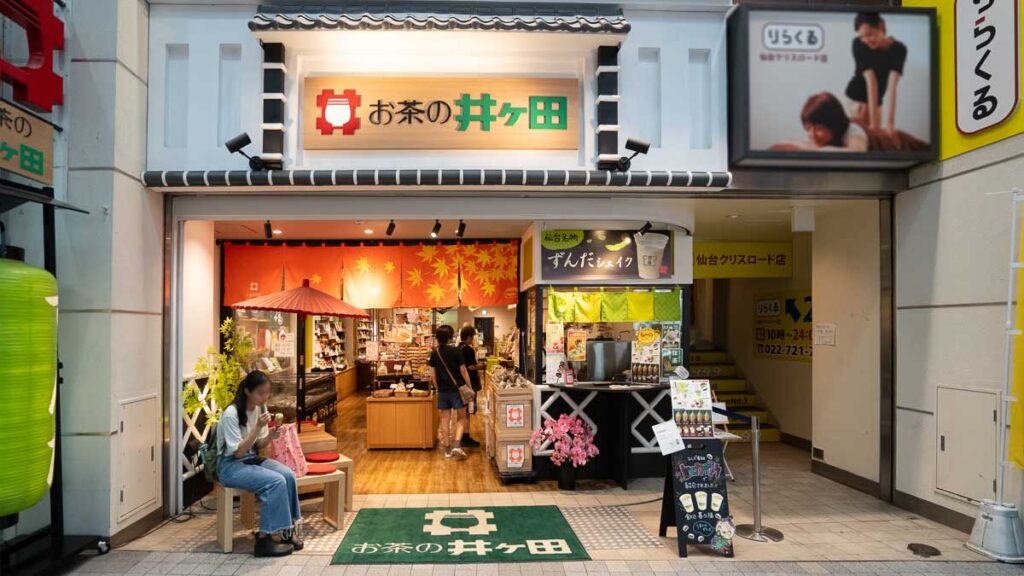
Located in the heart of Sendai, Ocha no Igeta has been brewing quality tea for over a century. Step inside though, and you’ll find more than just roasted hojicha or rich matcha. The store also serves up a tempting array of tea-inspired treats.
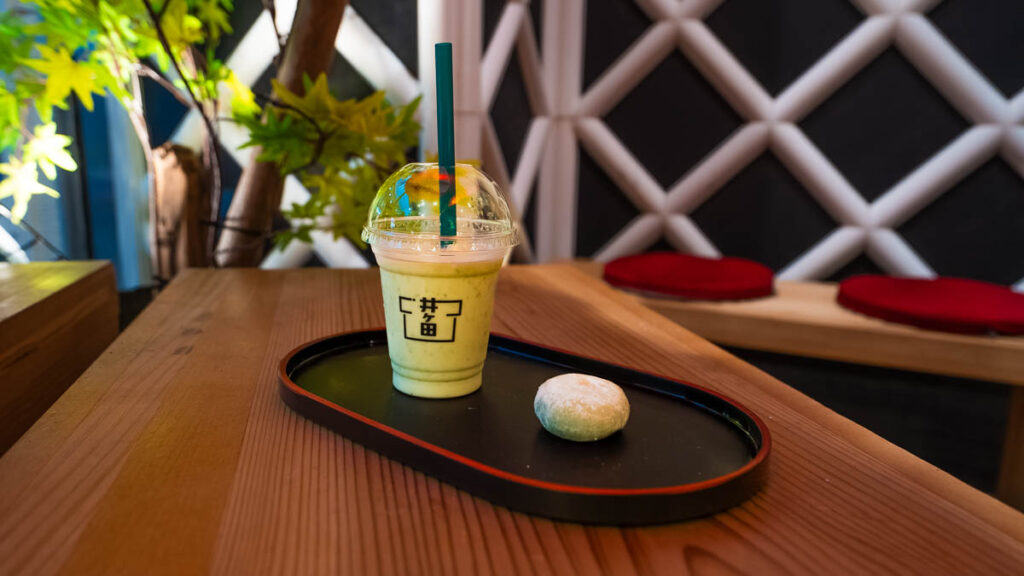
Lately, one snack has been stealing the spotlight: Kikufuku Manju (¥150, tax included). Jujutsu Kaisen fans will recognise it instantly as the go-to snack for everyone’s favourite blindfolded sorcerer, Satoru Gojo.
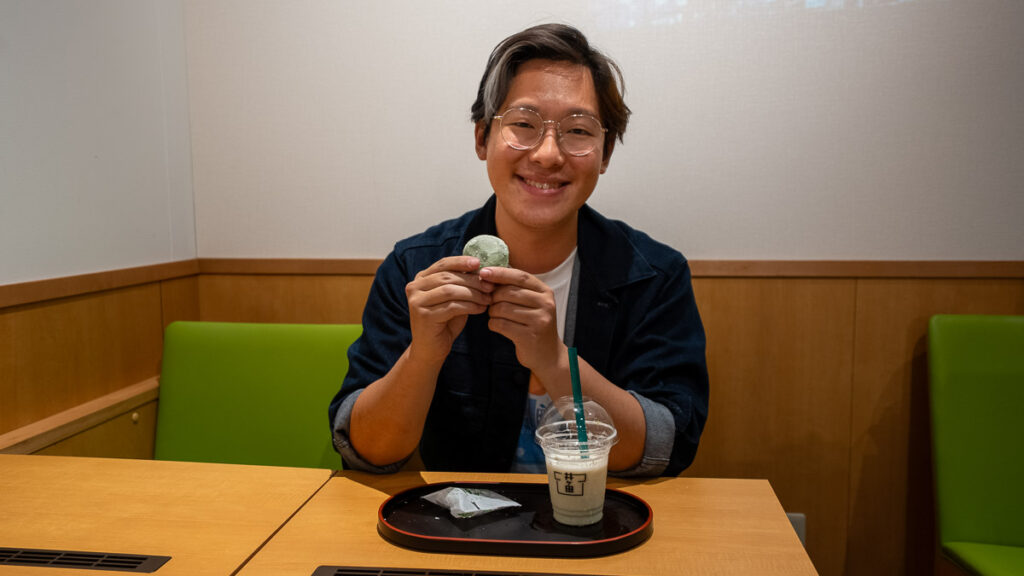
Naturally, I had to try it. And after one bite into its chewy mochi skin, washed down with a creamy zunda (edamame paste) shake (¥600, tax included), I completely understood why Gojo couldn’t resist stocking up!
Opening hours: 10AM – 7:30PM
Address: Shobundo Building 1F, 2 Chome-5-9, Aoba Ward, Central, Miyagi, Sendai, 980-0021
How to get there: 2min walk from Aobadori Station (Google Maps)
Taste traditional cooking at Ganso Robata
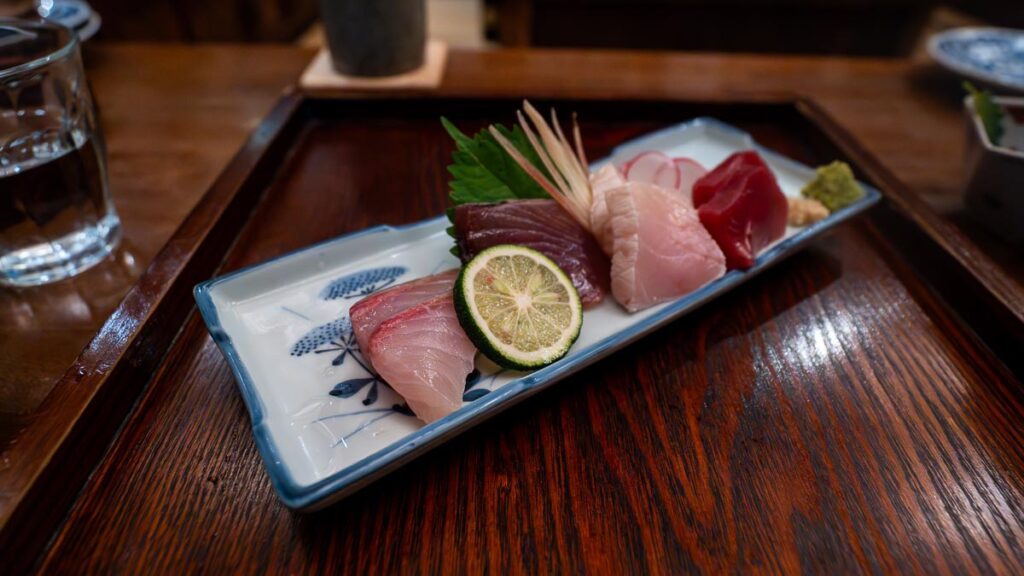
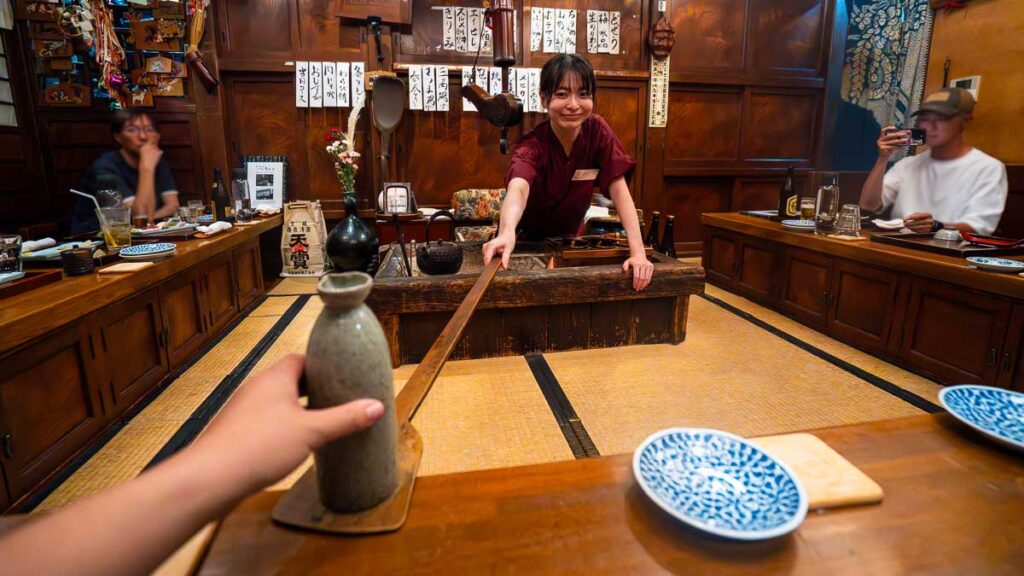
Ganso Robata is a Tohoku cuisine izakaya in Sendai that’s been serving up smoky, local flavours since 1950. It utilises the traditional style of cooking, where fresh seafood, meat, and vegetables bring the old spirit of Japan’s rustic dining to life.
I was transported back in time into a nostalgic Showa-era tavern, seated around a centralised hearth. The staff, dressed in traditional garb, heated up sake on the spot and served it to us on long paddles.
If you’re really hungry, the chef’s special course offers 11 beautifully prepared dishes for ¥6,800, a seasonal lineup that changes based on what’s freshest in stock. But if that feels like too much of a delicious challenge, you can also order a la carte and curate your own feast.
Opening hours: 5PM – 11PM
Address: YS Big Building, 1F, Room B, 2-10-28 Kokubuncho, Aoba-ku, Sendai City, Miyagi Prefecture, 980-0803
How to get there: 3min walk from Kotodaikoen Station (Google Maps)
Step into Sendai’s nightlife at a Yokocho bar
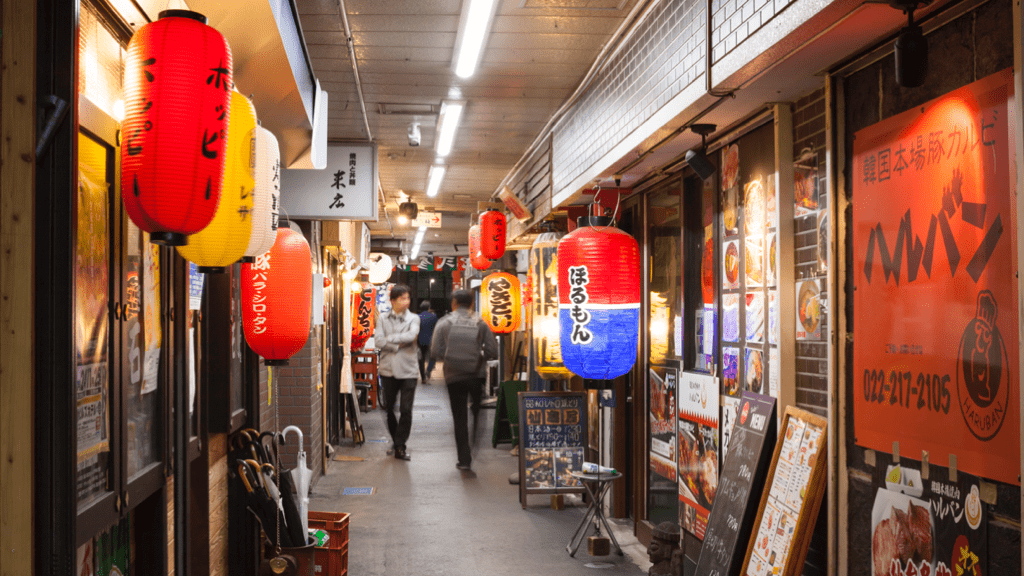
Photo credit: Discover Sendai
After a hearty meal, it’s common to see locals winding down at a Yokocho bar, cosy standing bars tucked away in narrow alleys.
In Sendai, the most well-known alleys are Iroha Yokocho, which started as Miyagi’s first public market, and Bunka Yokocho, named after a Taisho-era movie theatre. Walking down the former, we were spoiled for choice with rows of inviting bars, but eventually decided on Kaki Goya Rokko.
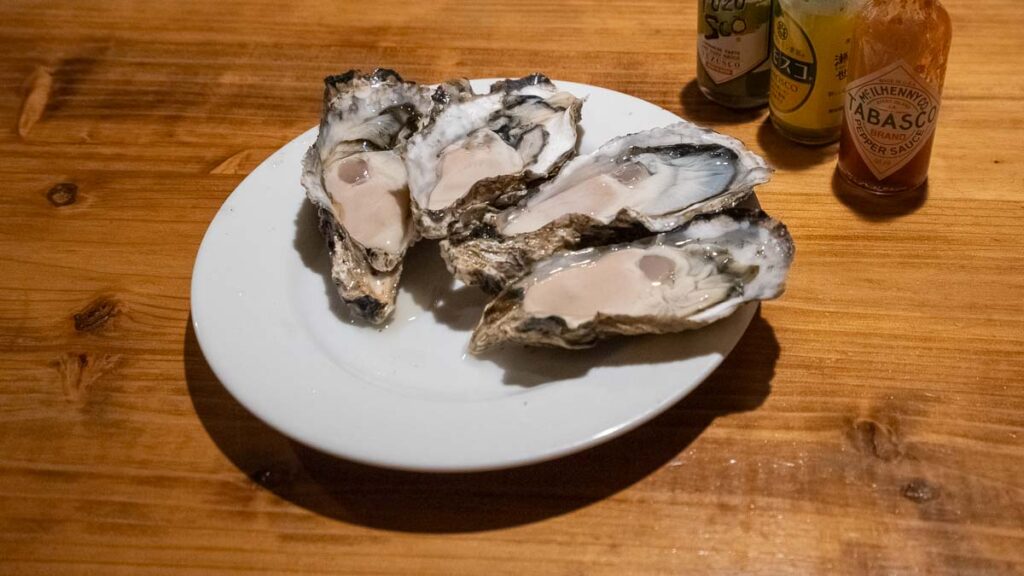
Not just a place to quench your thirst, Kaki Goya Rokko is known for its fresh oysters locally sourced from Miyagi’s coastline. They go for ¥100 each (raw or steamed) and pair nicely with a glass of sake or a pint of beer.
With room for just about 10 people, you’ll be rubbing elbows with fellow diners at the bar, but the lively atmosphere more than makes up for it. Who knows, you might even make some fast friends by the night’s end!
Opening hours: 3PM – 12AM
Address: 2 Chome-3 Ichibancho, Aoba Ward, Sendai, Miyagi 980-0811, Japan
How to get there: 3min walk from Aoba-dori Ichibancho Station (Google Maps)
Where to stay in Miyagi: There are several budget-friendly accommodations near JR Sendai Station, ranging from capsule hotels and business hotels, to hostels with shared dorms. This area is convenient as you’ll have easy access to Shinkansen and local train lines with many restaurants, and convenience stores just steps away.
Day 2: Miyagi to Iwate
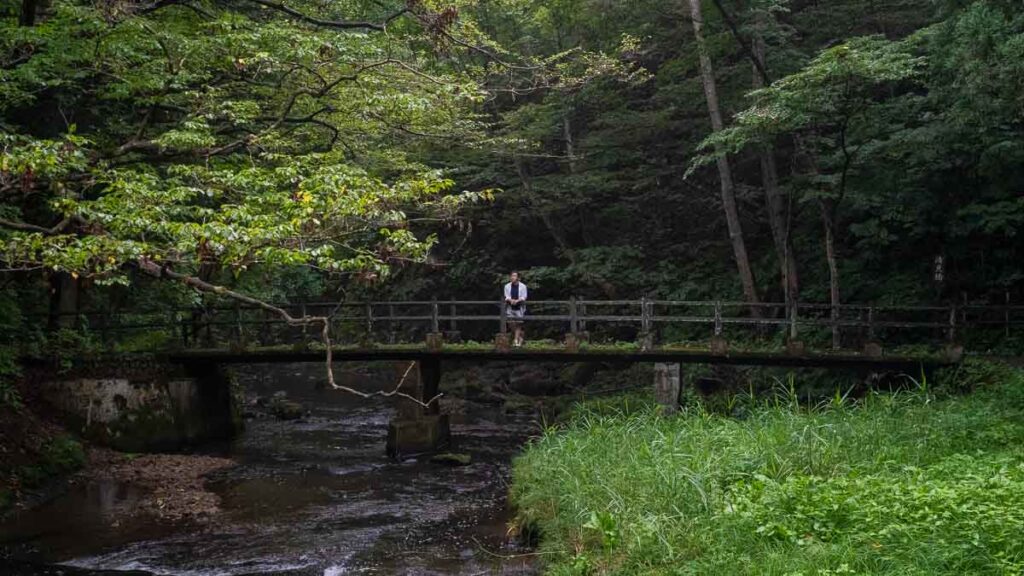
As Japan’s second-largest prefecture, Iwate is overflowing with natural beauty. Beyond the capital city of Morioka, you’ll find breathtaking spots like the rugged Sanriku Coast and the tranquil Geibikei Gorge. The prefecture also sits on a volcanically-active region, which means it’s an ideal spot for hot spring towns and resorts.
As for local cuisine, don’t miss out on Morioka’s “Three Great Noodles”: Wanko Soba, Reimen, and Jajamen. You’ll want to indulge in a bowl before leaving!
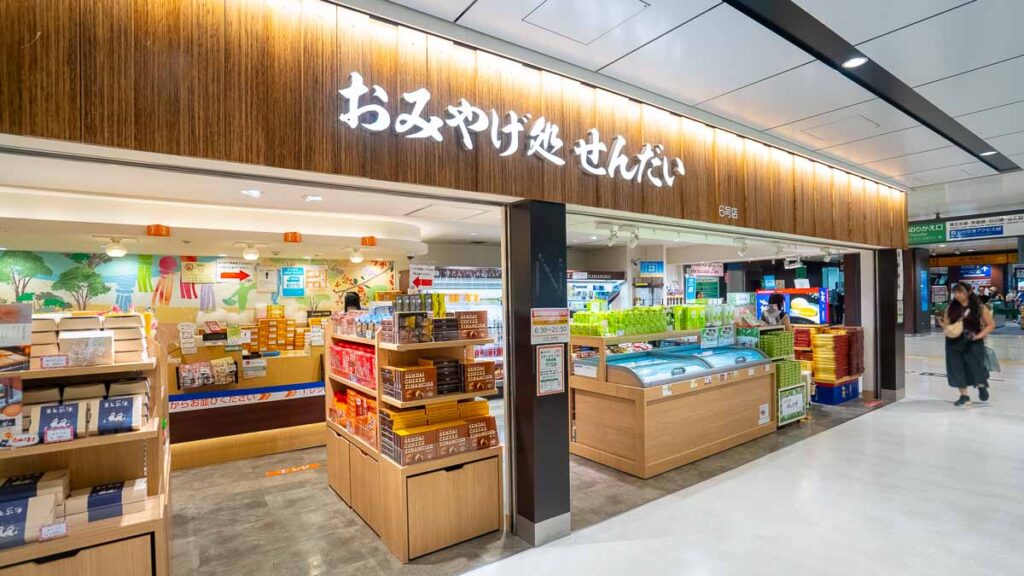
Buy Miyagi specialities at Souvenir Shop Sendai 6
Day 2 kicked off with a Shinkansen ride to Shin-Hanamaki Station in Iwate Prefecture. You can use the JR EAST PASS (Tohoku area) for this one, too!
But not before a quick detour for souvenirs! Souvenir Shop Sendai 6 is packed with sweet treats and local goodies, such as Hagi no Tsuki — a light custard-filled sponge cake resembling a full moon. Be sure to share Sendai’s famous omiyage (souvenir) to your friends and family back home.
And the best part? It’s conveniently located inside the Shinkansen Central ticket gate, so early birds can browse to their heart’s content while waiting for the train.
Opening hours: 6:30AM – 9:50PM
Address: 1 Chome-1 Central, Aoba Ward, Sendai, Floor 3F, Miyagi 980-0021, Japan
How to get there: Inside Sendai Station (Google Maps)
Challenge your appetite at Yamanekoken
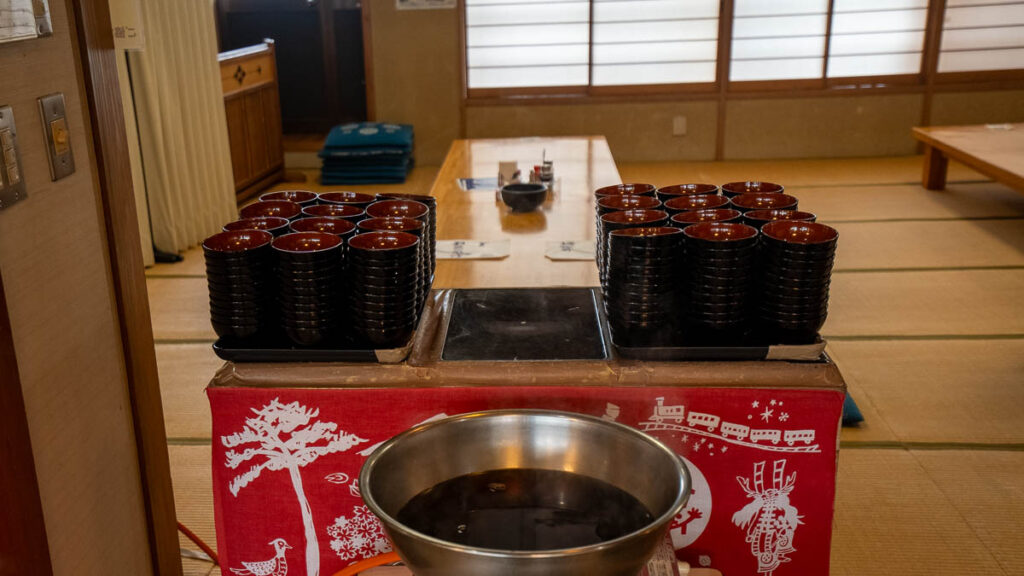
By the time the Shinkansen rolled into Shin-Hanamaki Station, I was more than ready for food. Luckily, lunch was just around the corner.
Located on the second floor of Ginga Plaza, Yamanekoken is a restaurant specialising in servings of wanko soba, one of Morioka’s “three great noodles.” But wanko soba isn’t just a bowl of noodles, there’s a challenge that comes with it too.
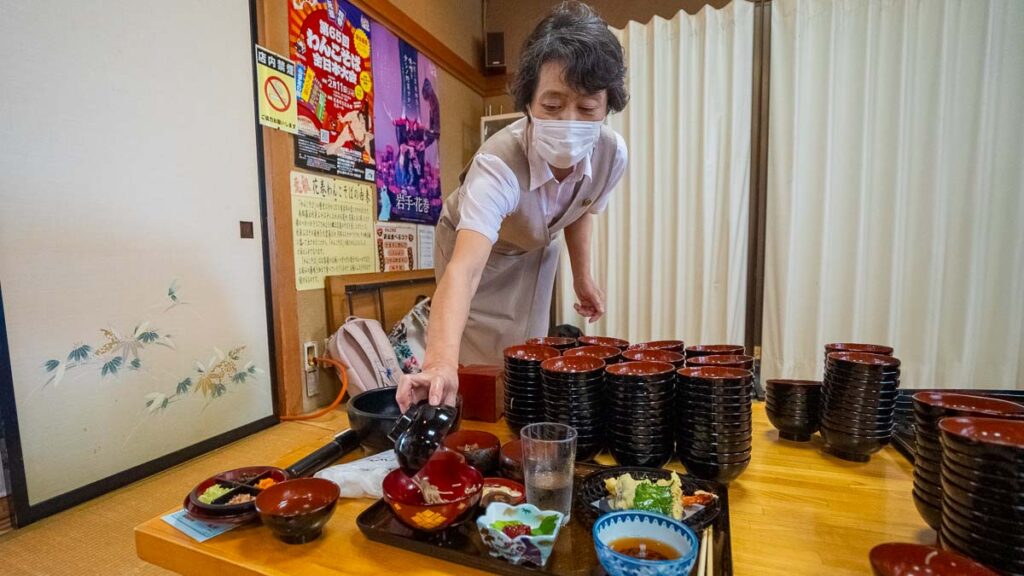
“Hai, don don!”
The rules are simple: eat as much soba as you can. Servers stand by ready to refill your bowl the moment it’s empty, cheering you on with a rhythmic “hai, don don!” (please eat more) until you admit defeat by covering your bowl with a lid.
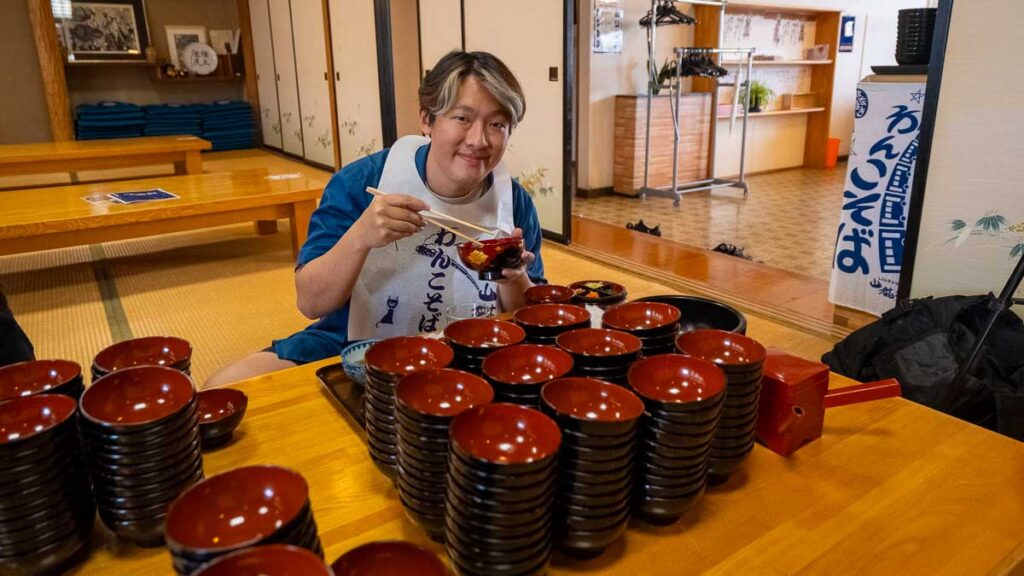
How do you eat like you’re running out of food?
Going in, I figured I’d pace myself at 50 bowls, the average most people manage. That may sound like a lot, but the portions aren’t big!
Each time I wanted to stop, another scoop slid into my bowl before I could cap it, and before I knew it, I’d slurped my way through 110 bowls of soba!
The wanko soba challenge comes from the spirit of omotenashi — Japanese hospitality — where servers are always ready to refill your bowl, cheer you on, and make sure you’re fully satisfied.
Opening hours: 10AM – 5PM (closed on Mon)
Address: 1-chome-3-3, Koshio, Hanamaki, 025-0012 Iwate, Japan
How to get there: 5min walk from Shin-Hanamaki Station (Google Maps)
Go rafting on the Kitakami River
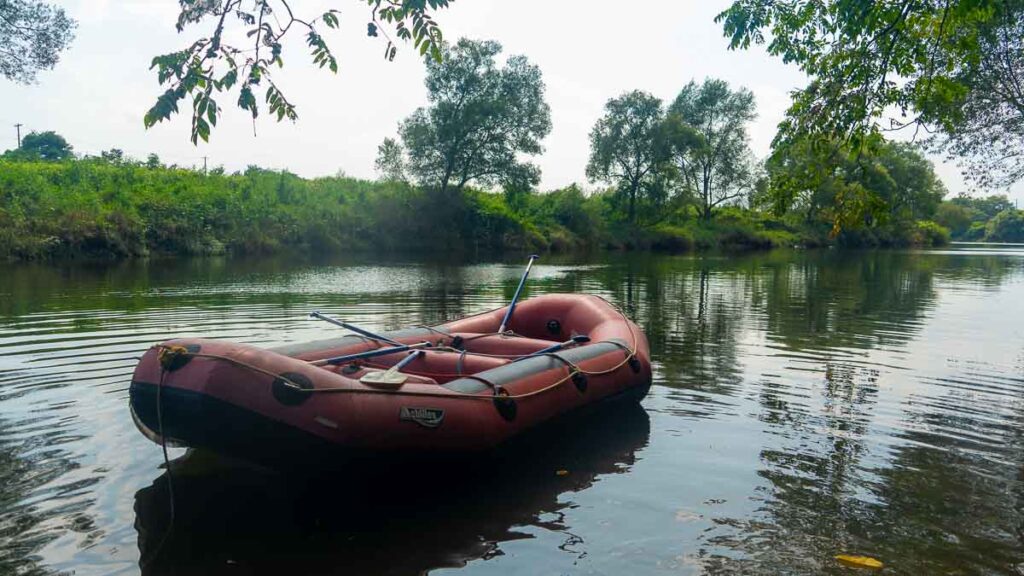
Stretching an impressive 250km, the Kitakami River is the fifth largest river in Japan, and the largest in the Tohoku region.
While winter makes it far too cold to set foot in its waters, summer turns it into the perfect escape from the heat, and what better way to enjoy it than by drifting downstream in a canoe!
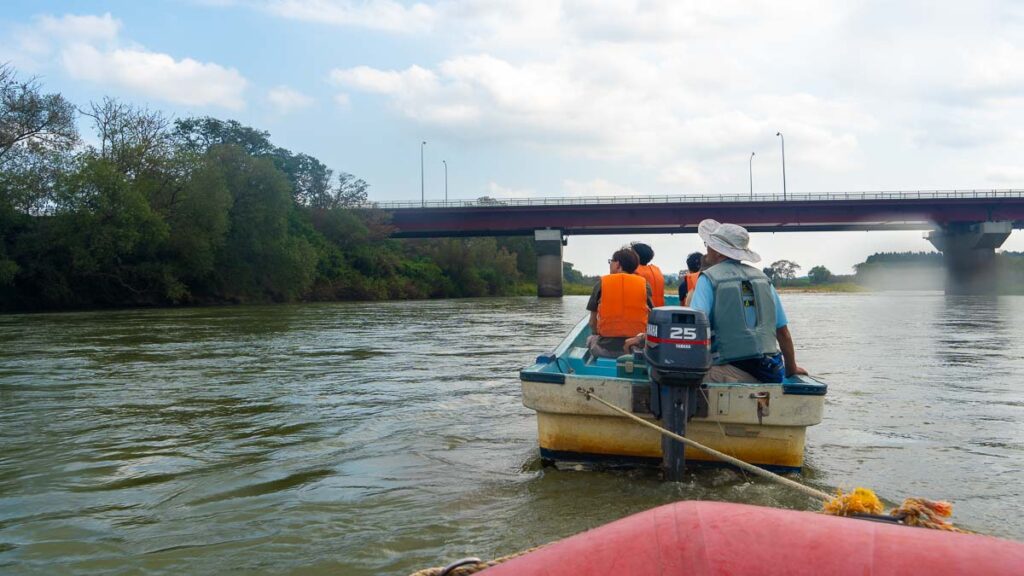
After meeting our guides from Hanamaki Sportsland along the riverbank, we hopped into the inflatable raft and were whisked out to open waters via speedboat.
From there, it was all hands-on. We got to set our own pace and chose our own path, while our guides kept a watchful eye.
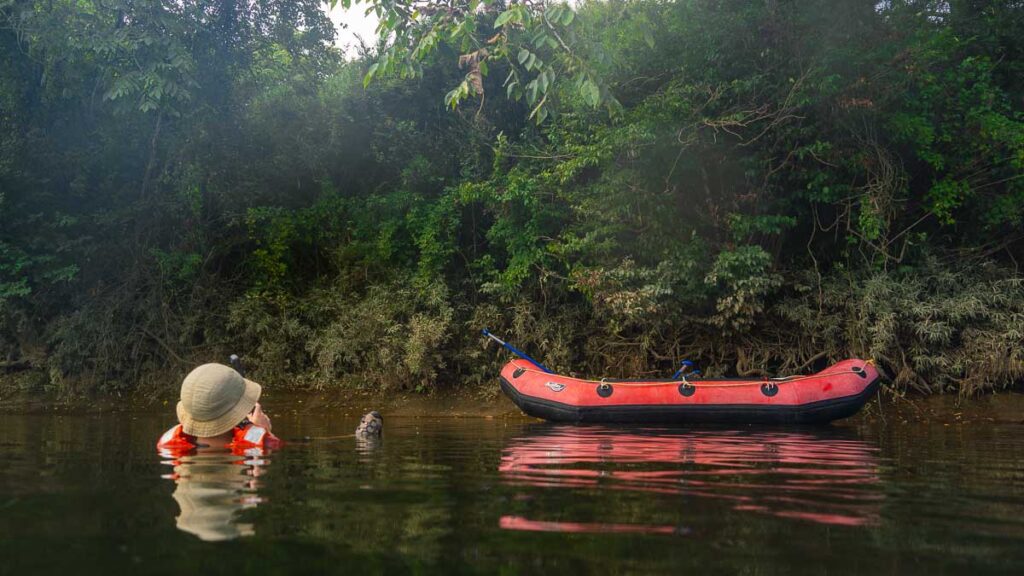
Don’t worry about battling rapids though, the waters are calm with only a gentle current. In fact, we could even hop in for a refreshing swim, or pull up along the riverbank for tea and biscuits.
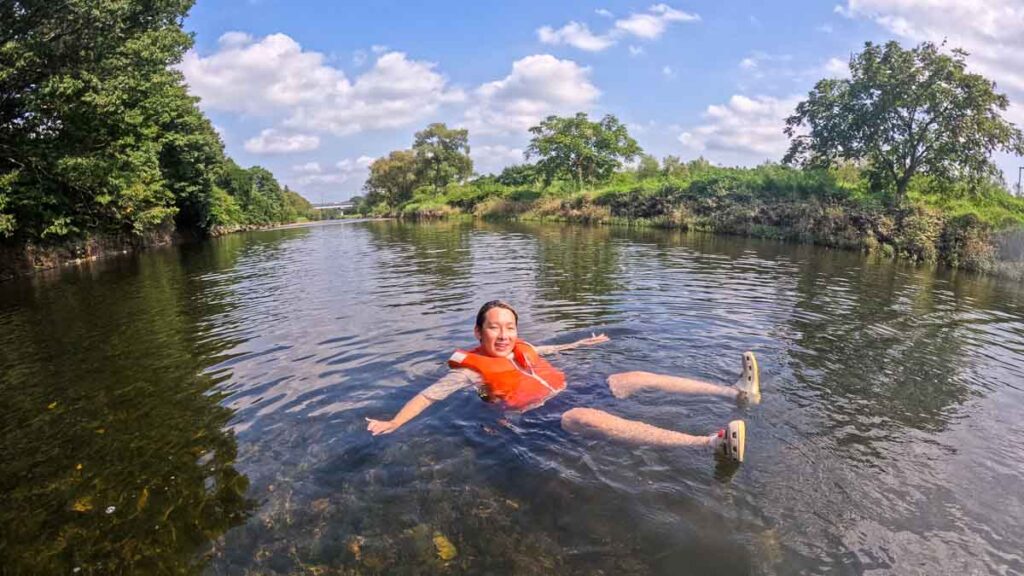
Truth be told, we probably spent more time frolicking in the waters than actual paddling.
Cost: ¥5,500/pax (~S$50)
Opening hours: 9AM – 4PM
Address: 1232 Junichome, Hanamaki, Iwate 025-0022, Japan
How to get there: 13min drive from Shin-Hanamaki Station (Google Maps)
Take it slow in Hanamaki Onsen
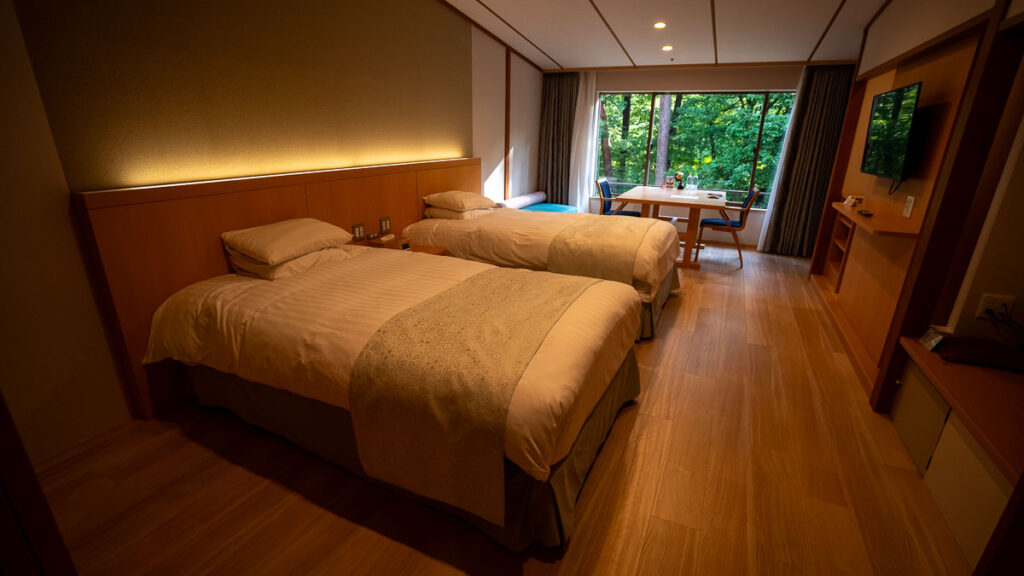
There are a lot of relaxing things to do in the Hanamaki Onsen area — perfect for recharging before the rest of the trip.
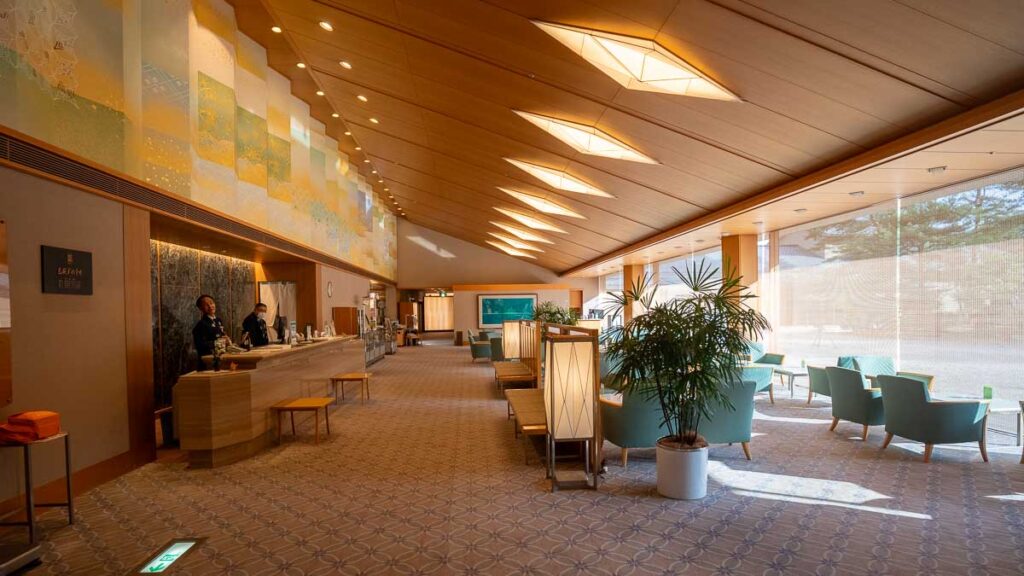
First, I check-in at Kashoen Ryokan for the night. This luxurious ryokan, the crown jewel of the Hanamaki Onsen Group, combines traditional Japanese elegance with modern comfort.
Soak your cares away in the hot spring — including private ones right in your room — or stroll through a beautifully-manicured courtyard garden in your stylish yukata (provided for free).
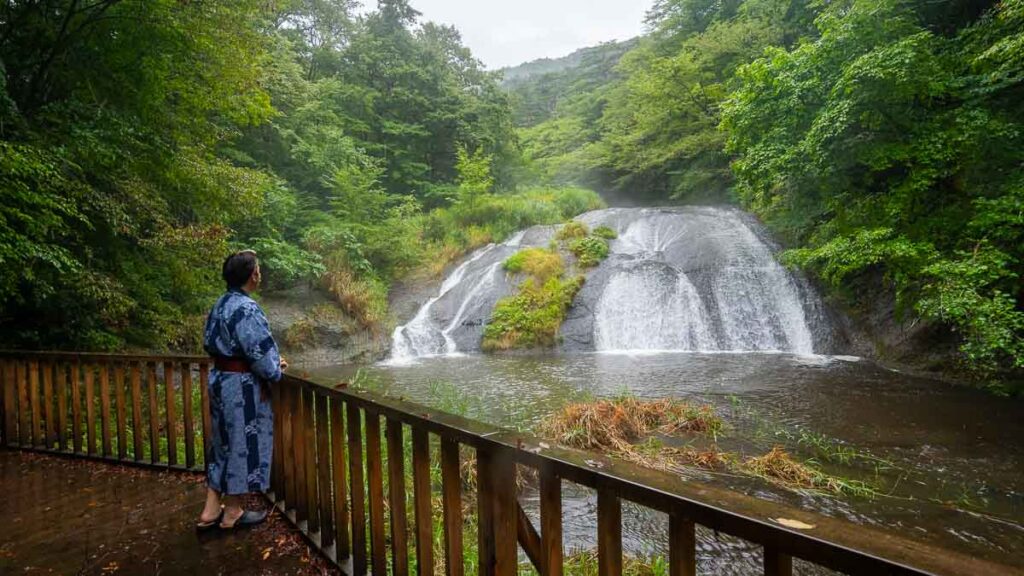
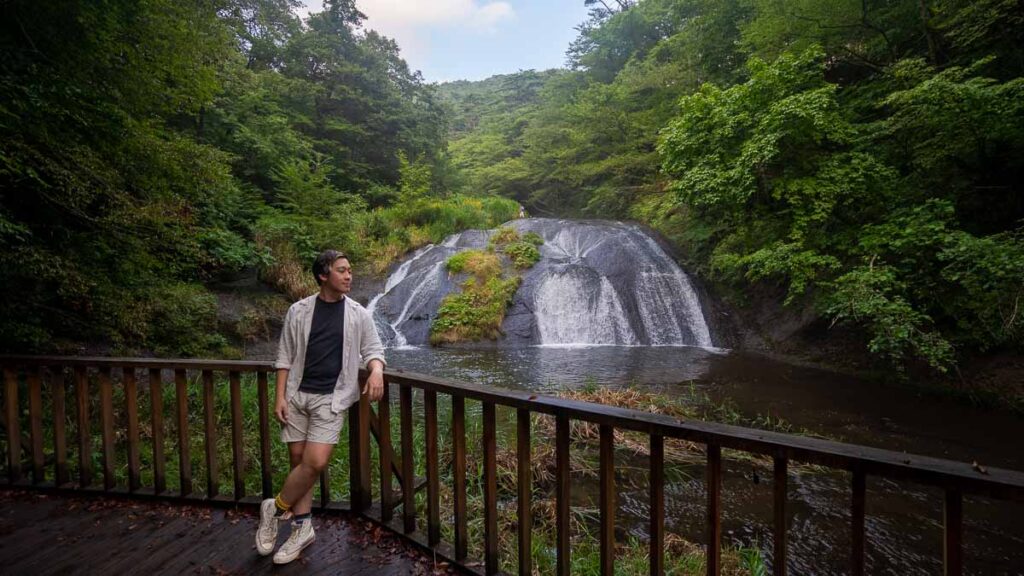
Then I visited the nearby Kamabuchi Falls — it may not be the tallest at 8.5m, but it certainly stands out with its unique charm.
Its name comes from the large rock it cascades over, said to resemble an upside-down rice bowl — a fittingly quaint image for such a tranquil spot.
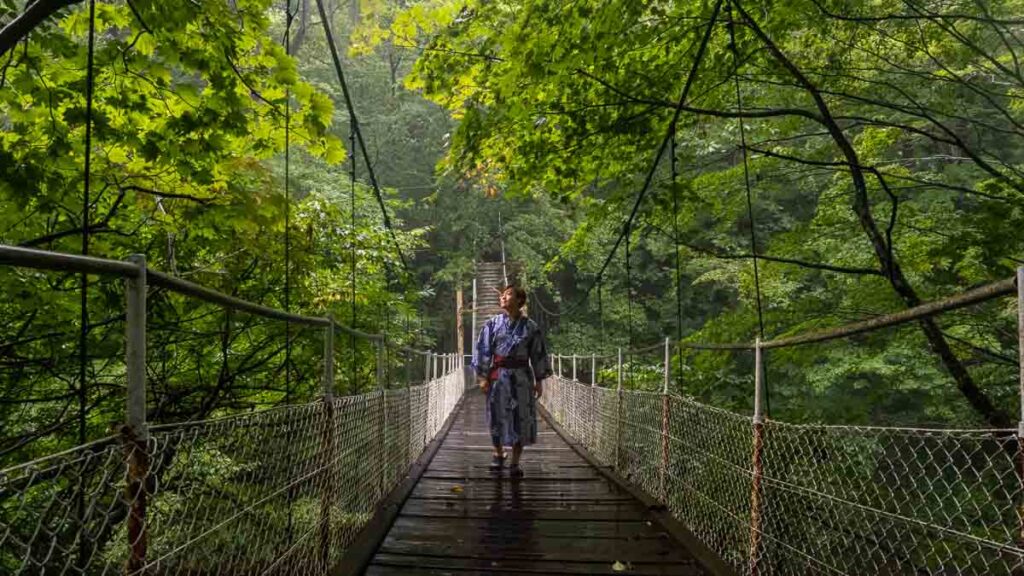
Unlike many scenic waterfalls that require a long trek to reach, the Kamabuchi Falls are delightfully accessible, just a short 180m stroll from the onsen.
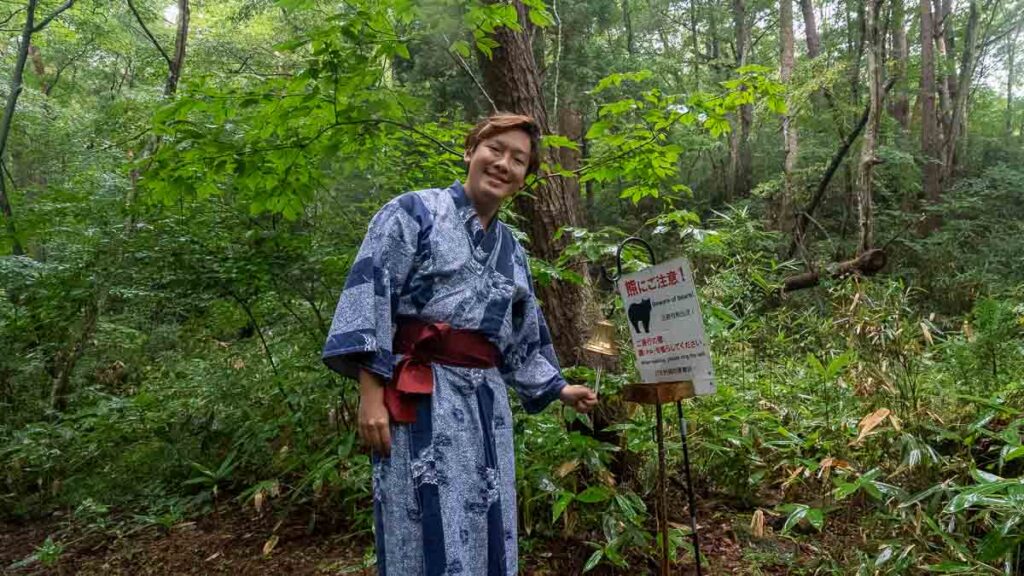
Keep your eyes peeled and you’ll spot little bells hanging along the path that aren’t just decorative, but meant to be rung to ward off bears.
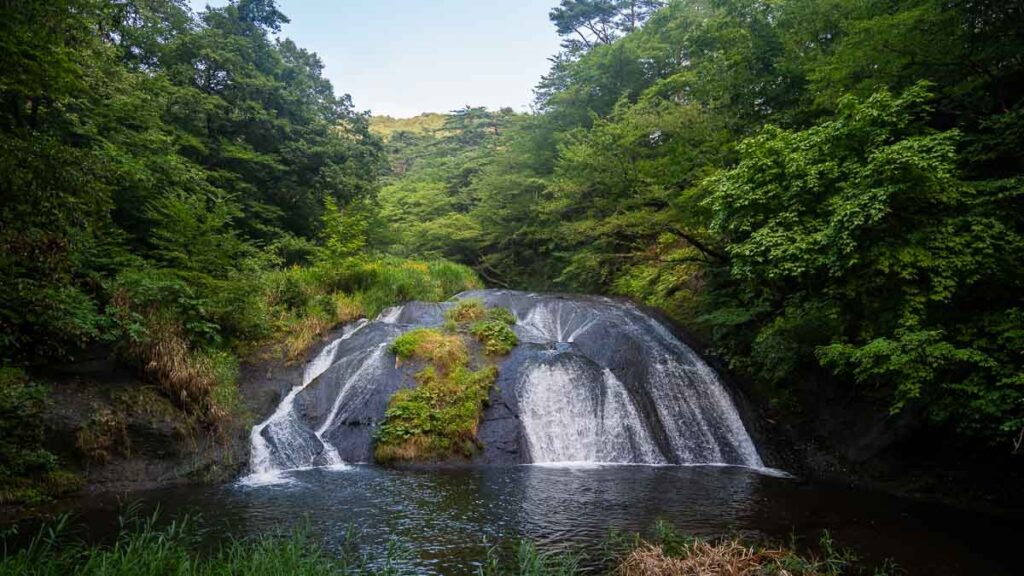
When I finally arrived, the falls greeted me with a quiet charm: water spilling steadily over smooth rock into the river below, framed by the deep greens of summer.
After sunset, we sat down for a feast at the ryokan‘s restaurant. The lavish dinner unfolded slowly, course by course, featuring tender Maesawa beef — served shabu-shabu style, or grilled on ceramic plates — and paired with fresh local seafood from Iwate.
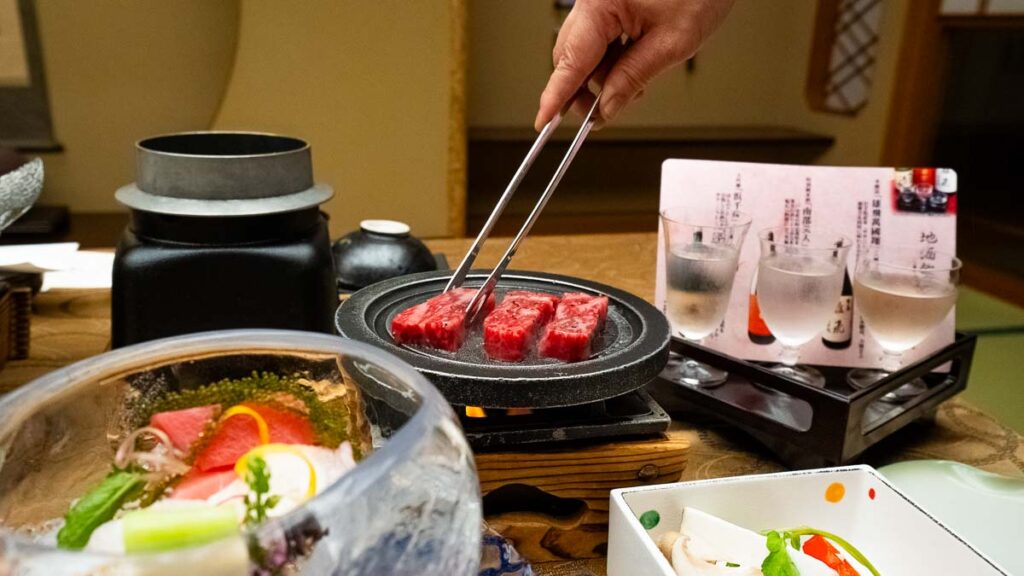
Nothing felt flashy or overdone. The flavours were rooted in the season and the region, and together, they gave me a clearer sense of Iwate than any guidebook could.
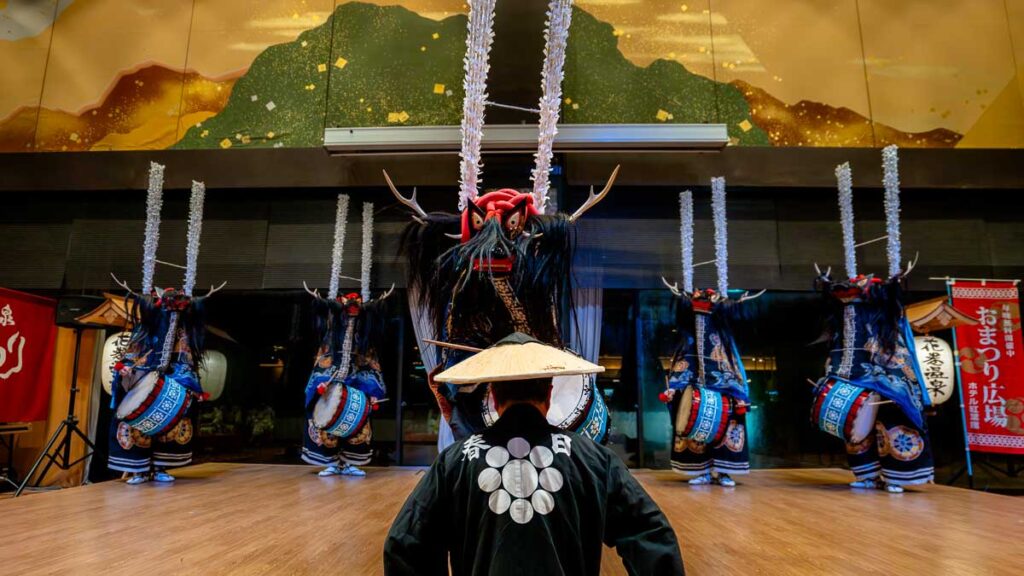
End the day by witnessing the Shishi-odori, or the Deer Dance, a folk tradition said to honour the spirit of a deer wrongfully slain by a hunter. Dancers wear intricately-crafted costumes and headpieces, embodying the deer’s spirit in a ritual that’s both a prayer for peace, and a way to ward off evil spirits.
This centuries-old performance is especially vibrant in Iwate, where it’s become a highlight at festivals and cultural events.
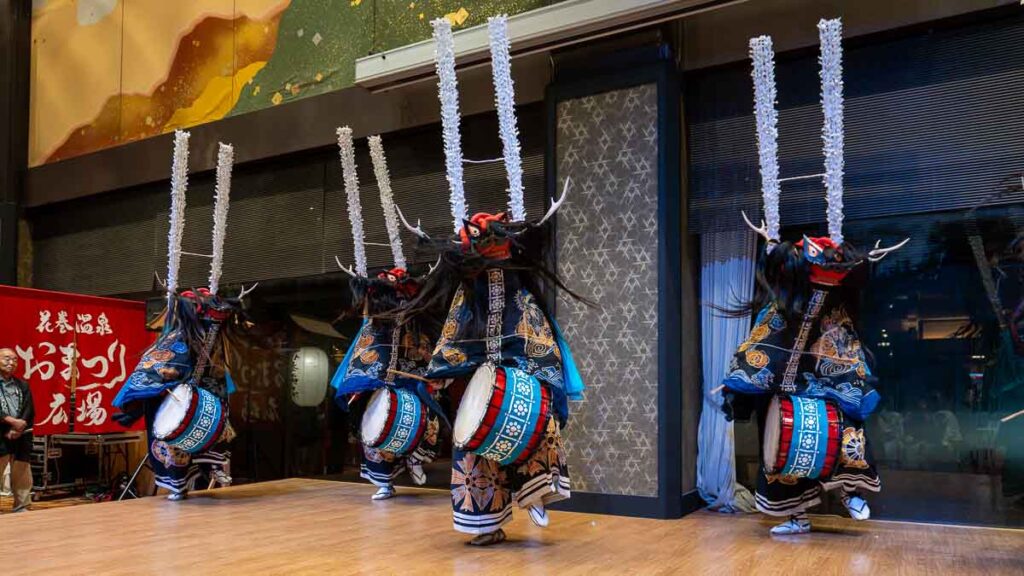
Fortunately, you don’t need to wait for a major festival to witness the dance in action. Every day at Hotel Koyokan (8:30PM), a dance related to the local traditional festival is performed.
I chanced upon the Shishi-odori performance while I was there, and watching it was nothing short of hypnotic. Performers move rhythmically to the beat of taiko drums and flutes, their wooden antlers and colourful costumes bringing the deer to life in mesmerising formations.
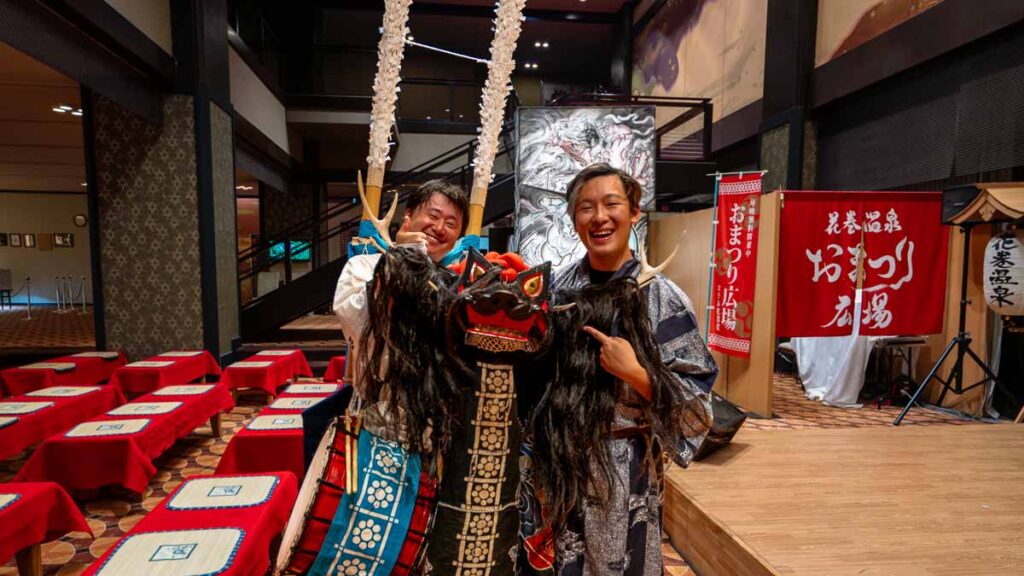
But what really amazed me was how effortlessly the dancers moved under their elaborate attires.
We got to try them on after the show, and trust me, it’s no easy feat. The headpiece alone is heavy, restrictive, and obscures your vision. Yet the dancers still managed to perform with unbelievable agility. Me? I’d be tripping over my antlers in seconds if asked to emulate the dance!
Kashoen Ryokan
Cost: From ¥24,200/night (~S$210, 2 pax)
Address: 1-125 Yumoto, Hanamaki, Iwate 025-0304, Japan
How to get there: 30min free shuttle bus ride from JR Shin-Hanamaki Station (Google Maps)
Kamabuchi Falls
Opening hours: 24hrs
Address: Dai 1 Chiwari Yumoto, Hanamaki, Iwate 025-0304, Japan
How to get there: 5min walk from Kashoen Ryokan (Google Maps)
Day 3: Iwate to Aomori
Sip on Sake at the Nanbu Toji Museum
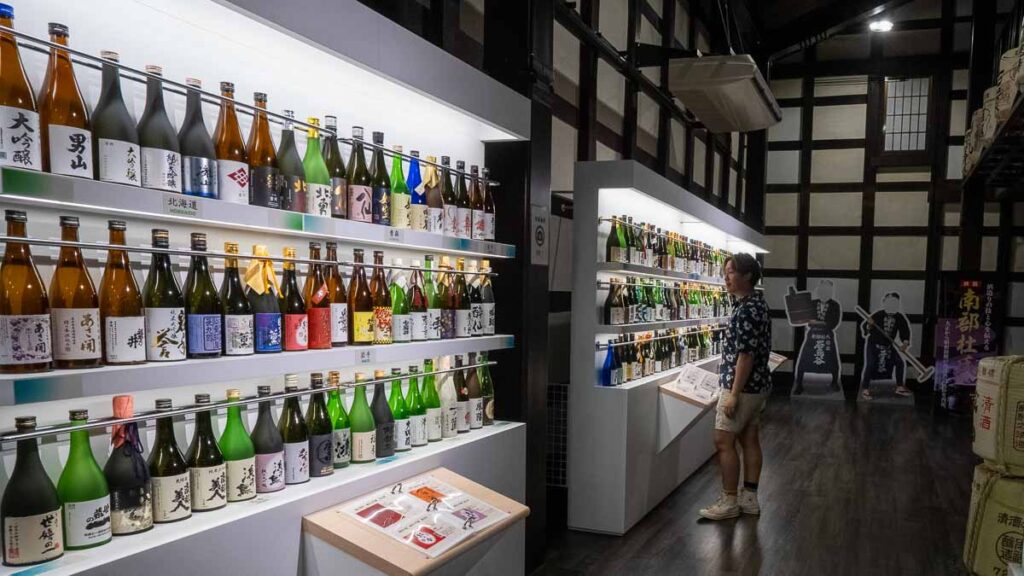
Sake-tasting is made even better with a gashapon machine.
Inside the Ishidōriya Roadside Station in Hanamaki, the Nanbu Toji Densho-kan is anything but your typical museum. Housed in a former sake brewery, it celebrates the legacy of the Nanbu Toji, master brewers whose skill and dedication shaped Iwate’s rich sake culture.
Step inside, and you’ll discover the techniques and traditions that went into perfecting every drop of sake.
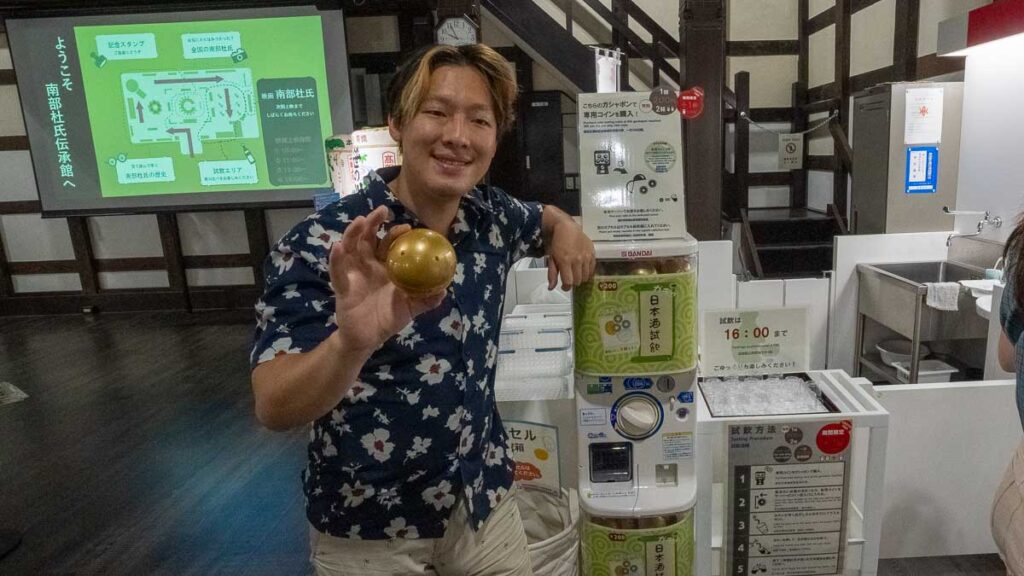
But this isn’t just a place to read about history, it’s a place to taste it. And in true Japanese fashion, sake tastings are dispensed via gashapon machine. Just pop in ¥200, spin the handle, and out comes a capsule with two tokens.
Each token gets you a pour from one of more than six varieties of sake, letting you sample and explore at your own pace. And if you’re feeling extra indulgent, don’t miss the sake treats, proof that Iwate’s signature drink isn’t just for sipping, but for savouring in every form.
Opening hours: 9AM – 4:30PM
Address: Dai 7 Chiwari-17-3 Ishidoriyacho Nakaterabayashi, Hanamaki, Iwate 028-3171, Japan
How to get there: 17min walk from Ishidoriya Station, or 15min drive from Kashoen Ryokan (Google Maps)
Interact with animals at Koiwai Farm
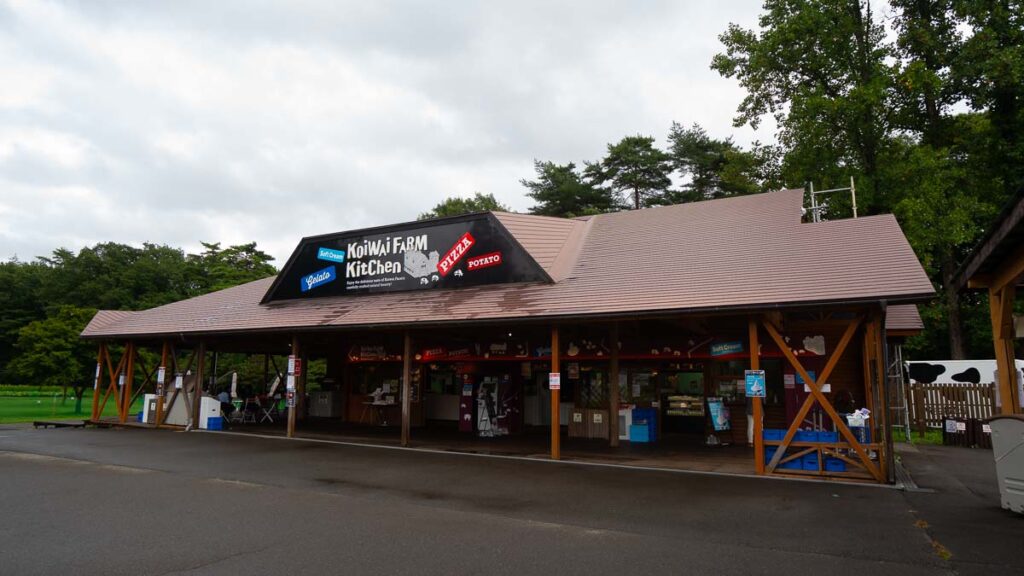
Spread out over an impressive 3,000 hectares, Koiwai Farm is one of Japan’s largest private farms, with wide-open pastures set against the dramatic backdrop of Mount Iwate.
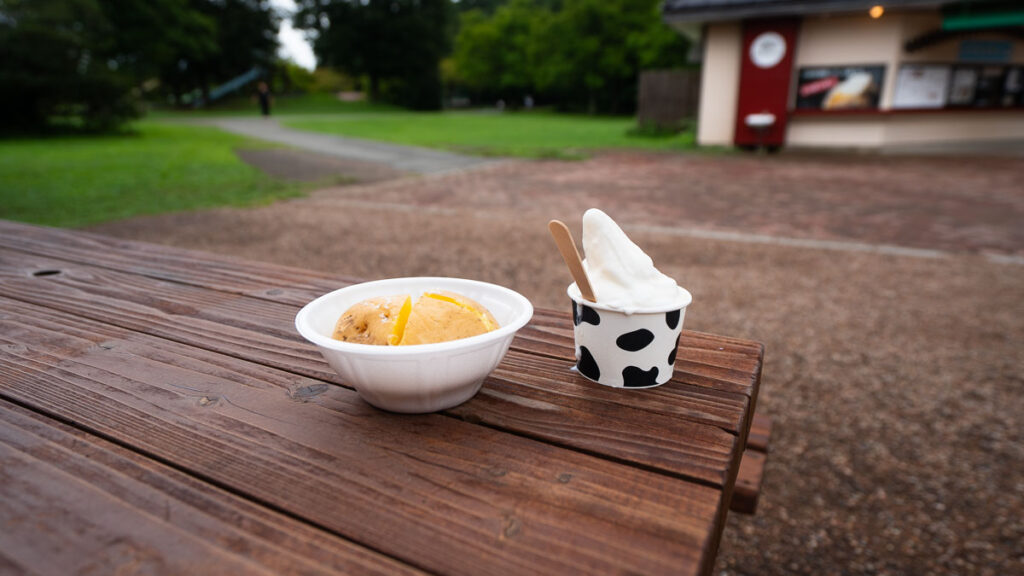
Established in 1891, the farm still preserves its heritage, with 21 traditional silos and barns designated as cultural properties that are still in use today.
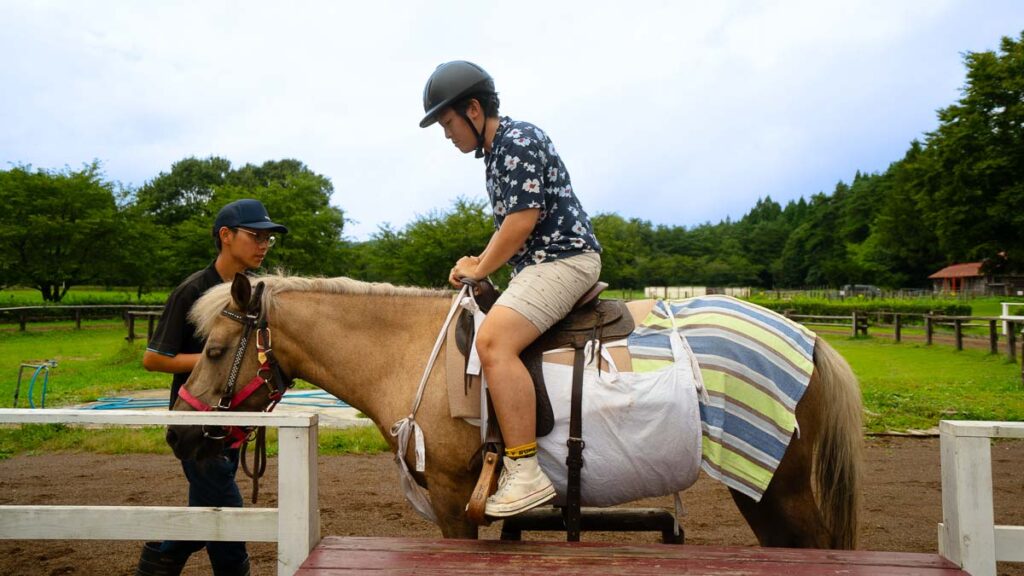
Visitors can get hands-on with the animals, from feeding sheep to watching friendly cows, or even saddling up for a horseback ride. And of course, no trip here is complete without tasting the farm’s famously fresh produce: creamy soft-serve ice cream (made with farm-fresh milk), and fluffy steamed potatoes slathered in Koiwai’s rich fermented butter.
Entrance Fee: ¥800/pax (~S$7)
Opening hours: 9AM – 5PM (Last entry at 4PM)
Address: 36-1 Maruyachi, Shizukuishi, Iwate District, Iwate 020-0507, Japan
How to get there: 6min bus ride from Koiwai Station (Koiwai Farm Line Bus) (Google Maps)
Nebuta Museum WA-RASSE
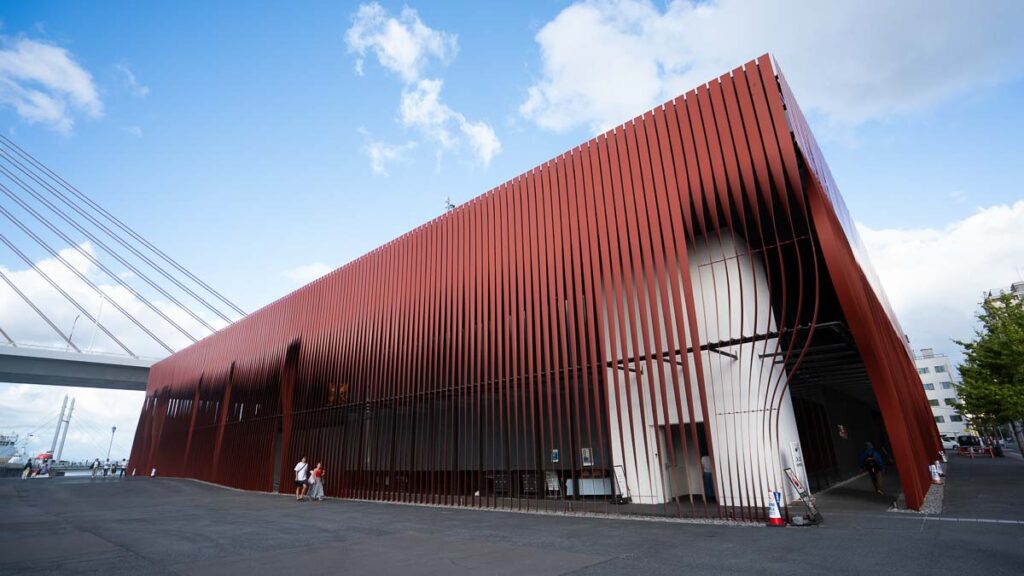
Moving on from Iwate, we next visited Aomori, the northernmost prefecture of Tohoku.
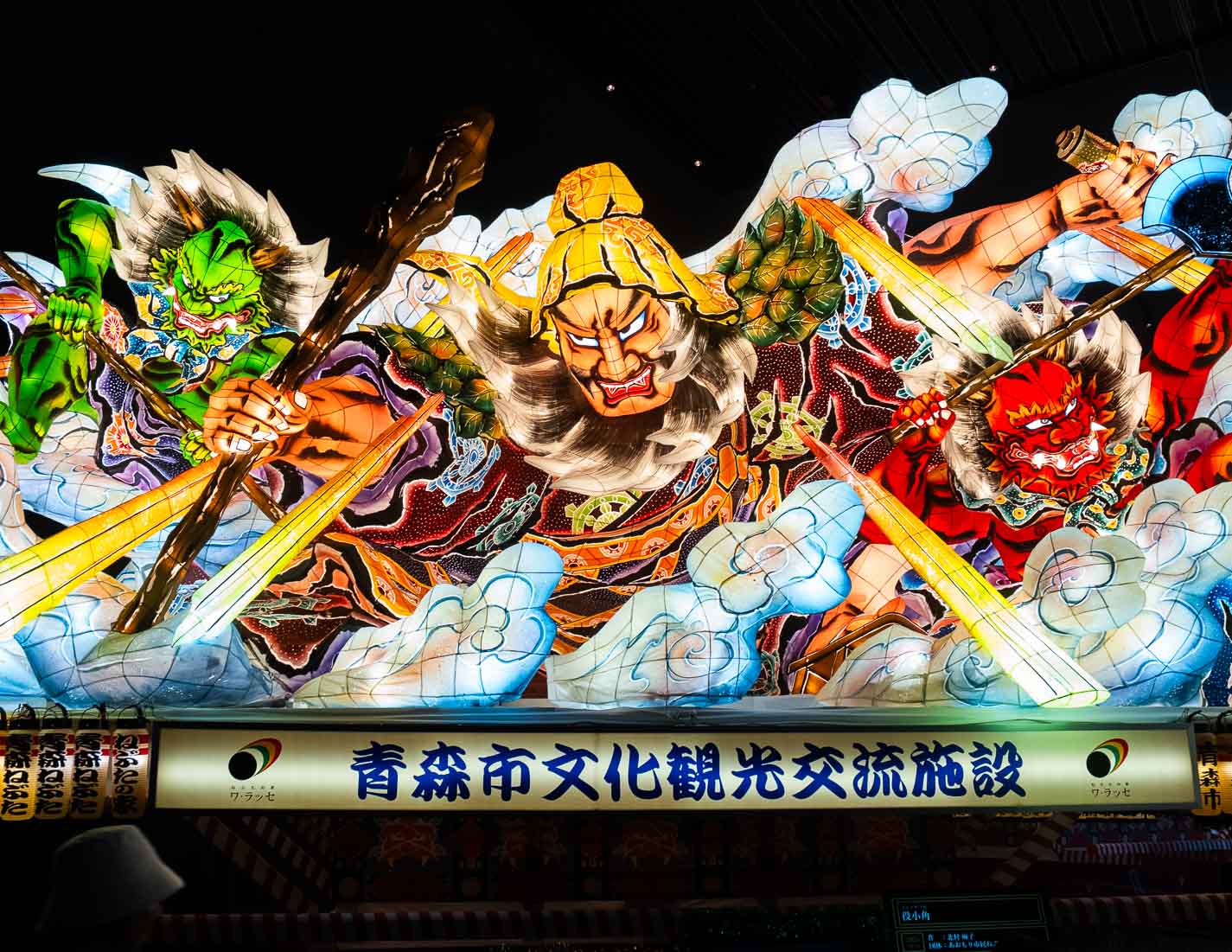
One of the highlights of summer in Aomori is the Nebuta Festival, held in early August to celebrate the harvest with massive glowing floats, booming taiko drums, and the lively Haneto dance.
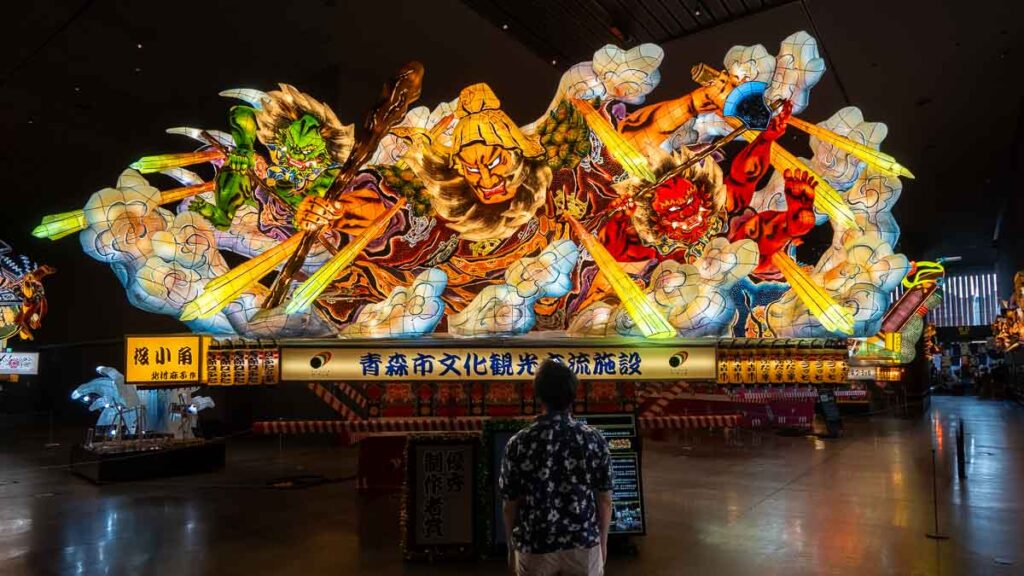
The festival is a unique experience for summertime visitors, but even if your timing doesn’t match the festival, the Nebuta WA-RASSE Museum brings a similar excitement all year round.
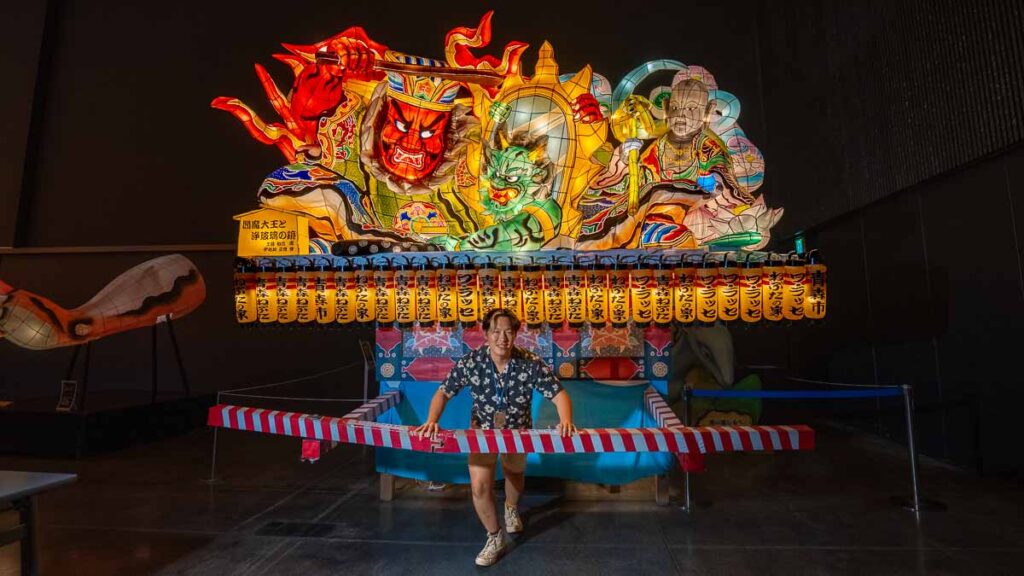
I was awed by the towering floats from past festivals in the museum. Each one features intricately-designed scenes from Japanese folklore.
We also got to try taiko drumming, practice Haneto dance moves, and see how these masterpieces are crafted behind the scenes.
Entrance Fee: ¥620/pax (~S$5.50)
Opening hours: 9AM – 7PM (May to August, Last entry at 6:30PM), 9AM – 6PM (September to April, Last entry at 5:30PM)
Address: 1 Chome-1-1 Yasukata, Aomori, 030-0803, Japan
How to get there: 1min walk from Aomori Station (Google Maps)
Grab apple products at A-FACTORY
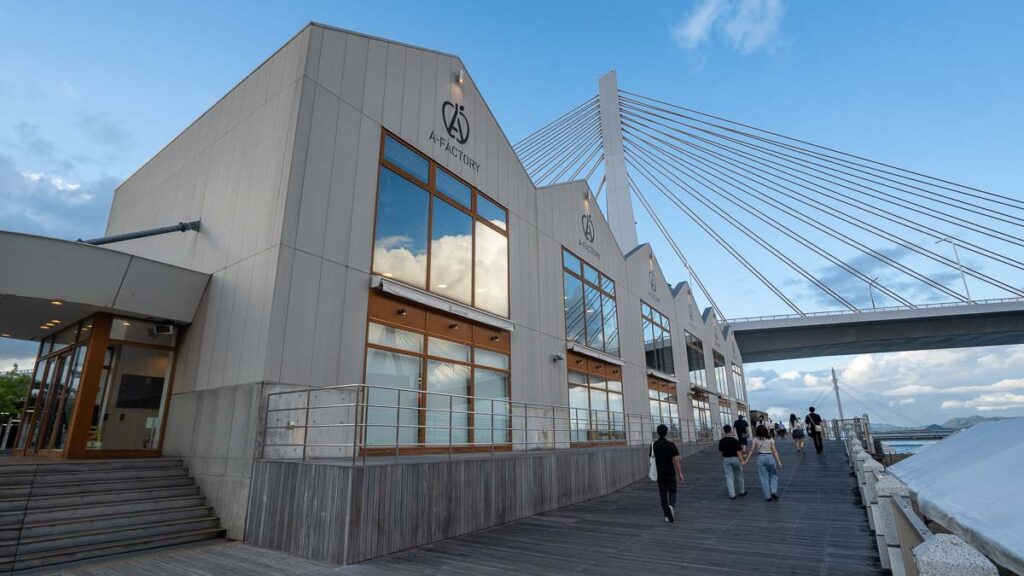
Located right beside the Nebuta Warasse Museum is A-FACTORY, a must-visit for anyone looking to experience the city’s famous apples at their finest. From crisp, freshly pressed juice to artisanal ciders, the market-style facility showcases the region’s top apple products alongside local snacks, sweets, and souvenirs.
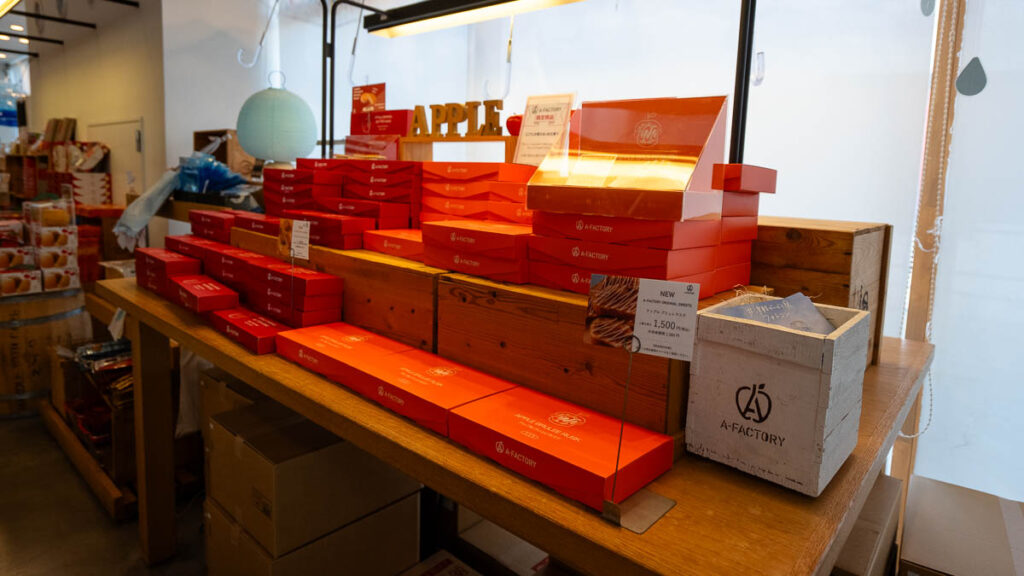
Inside, the café takes things up a notch, creatively blending Aomori’s signature fruit into everything, from delicate apple tarts to quirky apple burgers.
Opening hours: 10AM – 7PM
Address: 1 Chome-4-2 Yanakawa, Aomori, 038-0012, Japan
How to get there: 1min walk from Aomori Station (Google Maps)
Accommodation: ReLabo Medical Spa & Stay
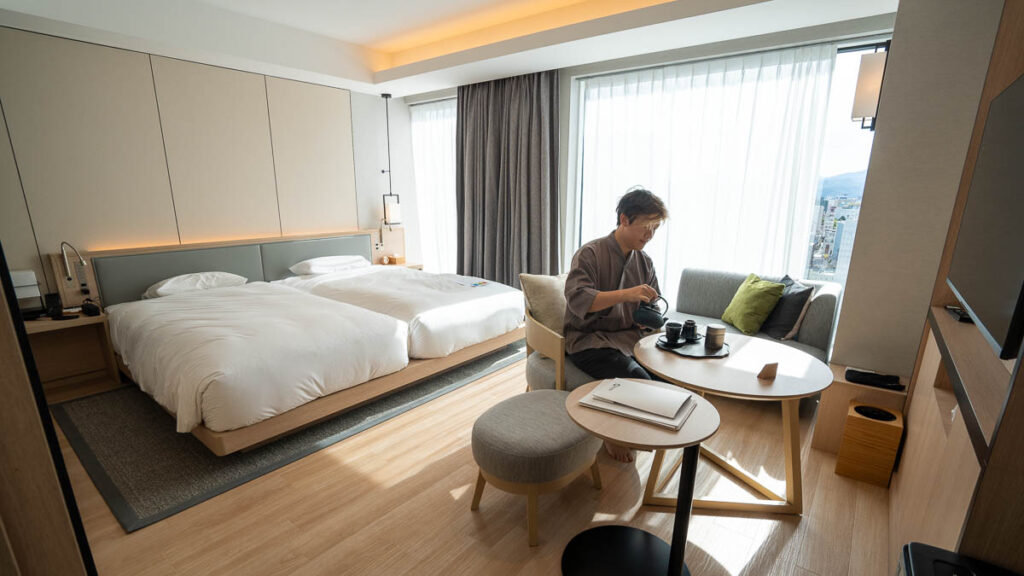
ReLabo Medical Spa & Stay in Aomori City is a next-level wellness hotel that combines comfort, style, and holistic relaxation.
Located on the upper floors of the JR Aomori Station East Exit Building, it offers easy access to transportation, shopping, and local attractions. The hotel features thoughtfully-designed rooms, from tranquil Zen Rooms to spacious Emperor Suites with panoramic views, catering to both relaxation seekers and health junkies.
Guests can unwind in the spa with hot spring baths and personalised treatments, join yoga and meditation sessions, or stay active in the state-of-the-art fitness centre.
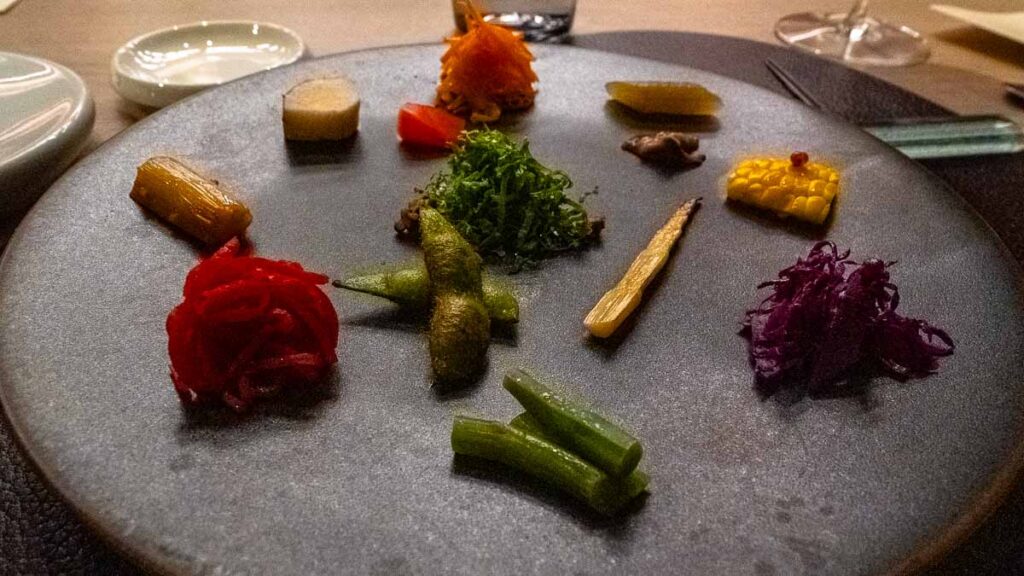
While you’re in ReLabo, don’t miss out on a meal at their Wellness Gastronomy restaurant. Instead of heavy decadent dishes, we indulged in nutritious yet delicious meals with seasonal Aomori ingredients.
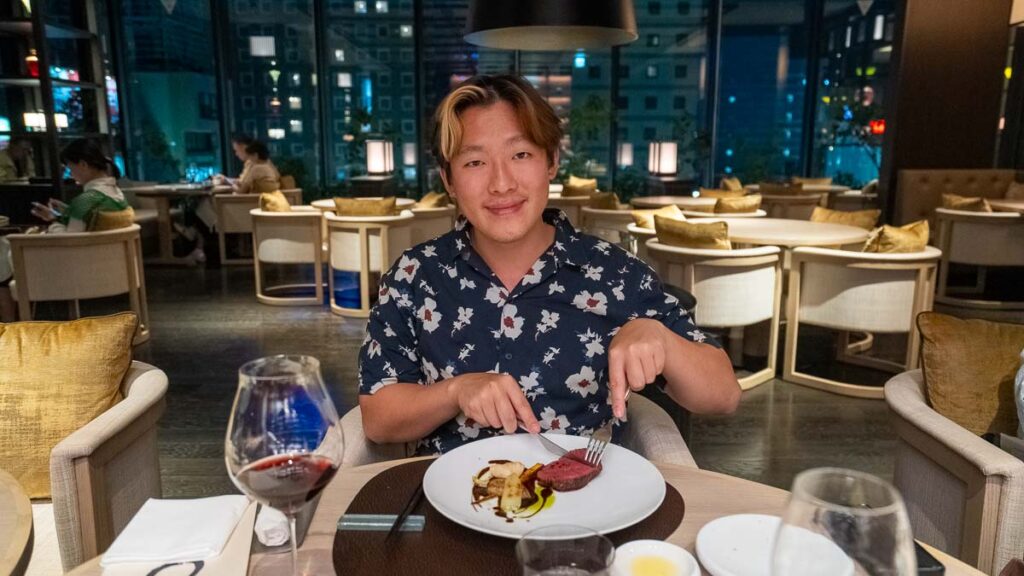
Just ask the sommelier, and they’ll recommend you the best wine pairing for your meal!
Cost: From ¥17,000/night (~S$150, 2 pax; excluding yoga classes and other activities)
Address: 1 Chome−1−5 Aomori Station East Exit Building, Yanakawa, 038-0012 Aomori, Japan
How to get there: Directly connected to Aomori Station (Google Maps)
Day 4: Aomori
Get the freshest pick at Tsugaru Yume Apple Farm
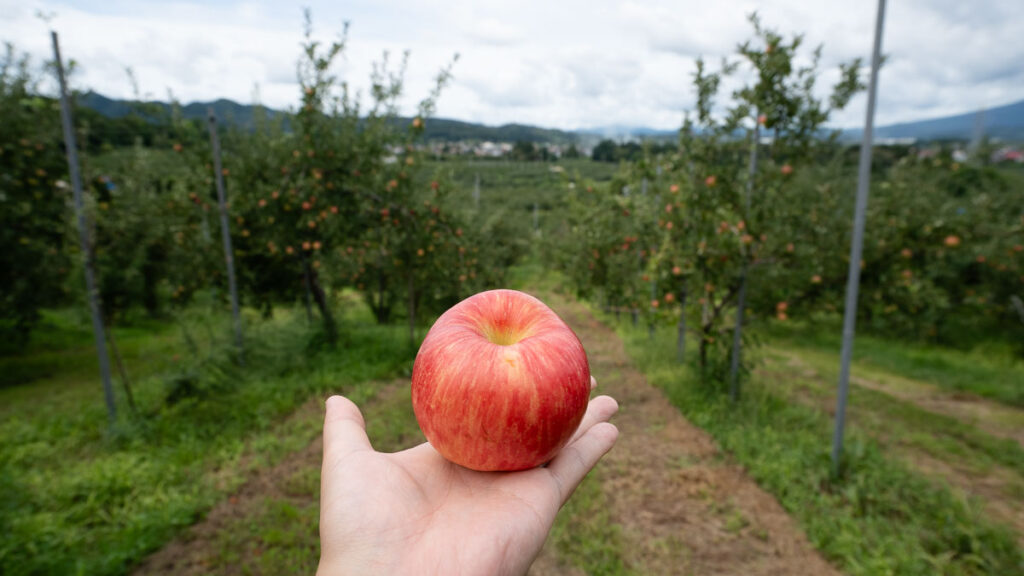
A visit to Tsuragu Yume Apple Farm is the ultimate way to taste the flavours of Aomori, Japan’s apple capital. Nestled against the stunning backdrop of Mount Iwaki, the park lets you pick your own apples straight from the tree for ¥330 per kilogram.
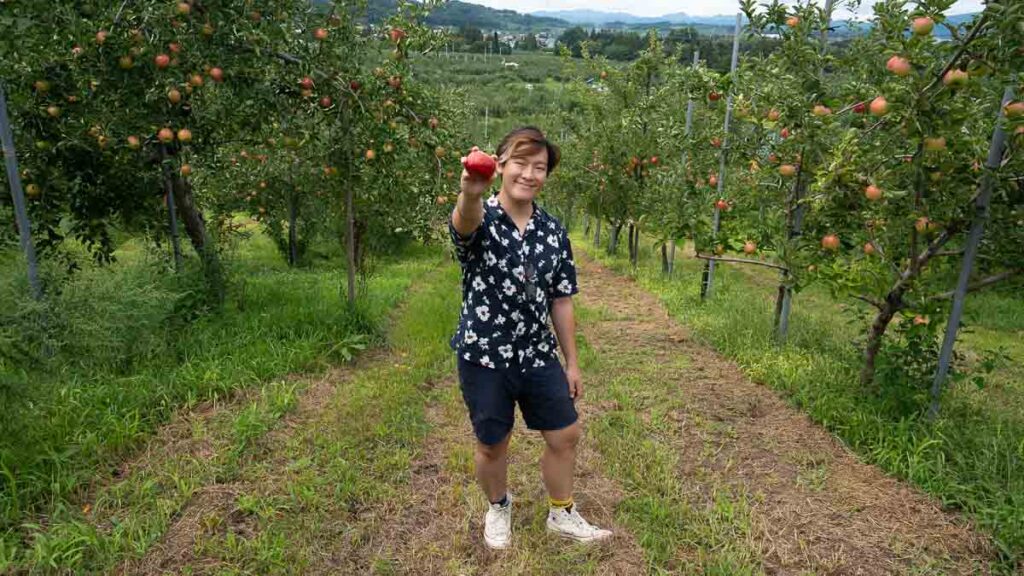
There’s something undeniably satisfying about biting into a sun-warmed apple you picked yourself. The hands-on experience makes you appreciate the care behind every harvest, and honestly, it tastes even better than you imagined.
Entrance fee: ¥1,300/pax (~S$12)
Opening hours: 9AM – 5PM
Address: 44-4 Yamazaki, Kozawa, Hirosaki, Aomori 036-8265, Japan
How to get there: 5min drive from Seiaichuko-Mae Station (Google Maps)
Admire festival floats at Tsugaru-han Neputa Village
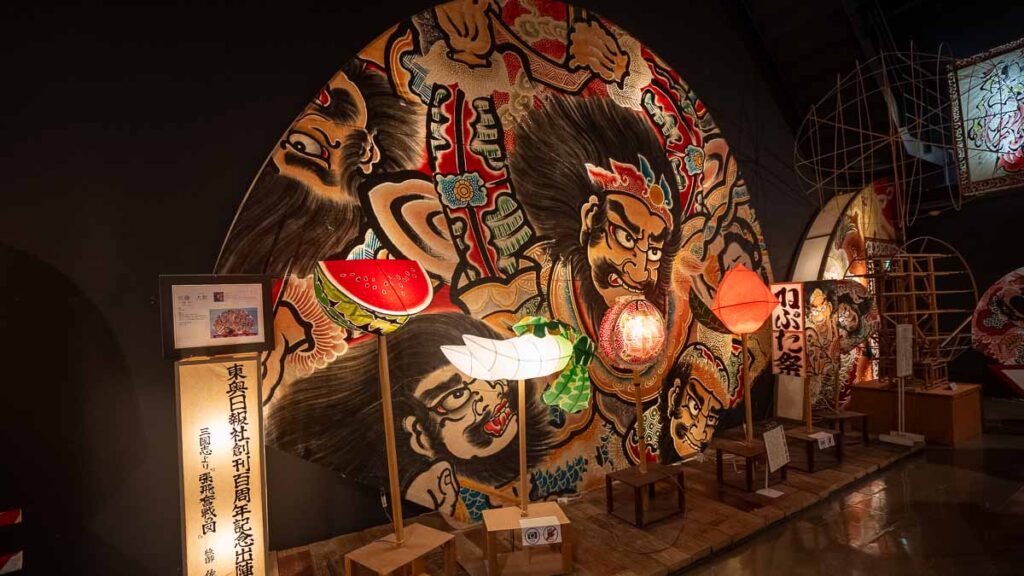
If you want a taste of Aomori’s vibrant festival culture year-round, head to Tsugaru-han Neputa Village in Hirosaki. This cultural centre brings the famous Hirosaki Neputa Festival to life, with towering illuminated floats on display—massive painted fan-shaped structures depicting fierce warriors and legendary scenes.
*Note: Neputa refers to fan-shaped floats, while nebuta refers to large 3D warrior-figure floats — like the ones seen in Nebuta Museum WA-RASSE. There is a separate festival for the latter, called the Aomori Nebuta Festival.
Beyond just admiring the floats, you can watch artisans at work crafting traditional lanterns, try your hand at making local handicrafts, or even bang on the festival drums yourself.
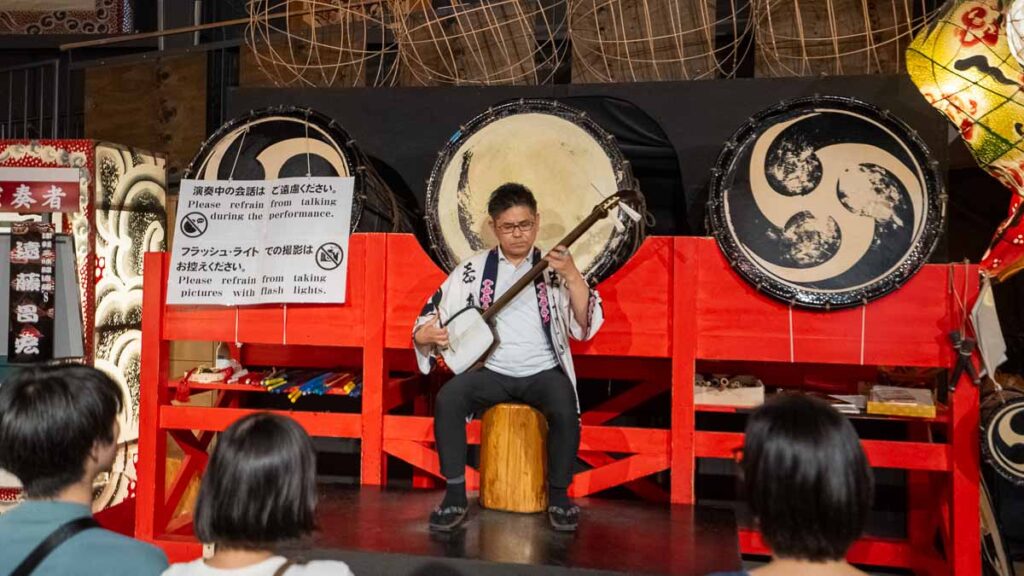
The village also showcases Tsugaru traditions like shamisen performances, offering a deeper dive into the region’s music, art, and folklore.
Opening hours: 9AM – 5PM
Address: 61 Kamekocho, Hirosaki City, Aomori Prefecture, 036-8332, Japan
How to get there: 14min bus ride from Chuohirosaki Station (Bus No. 480) (Google Maps)
Savour fresh scallops at Tsugaru-Umaiya
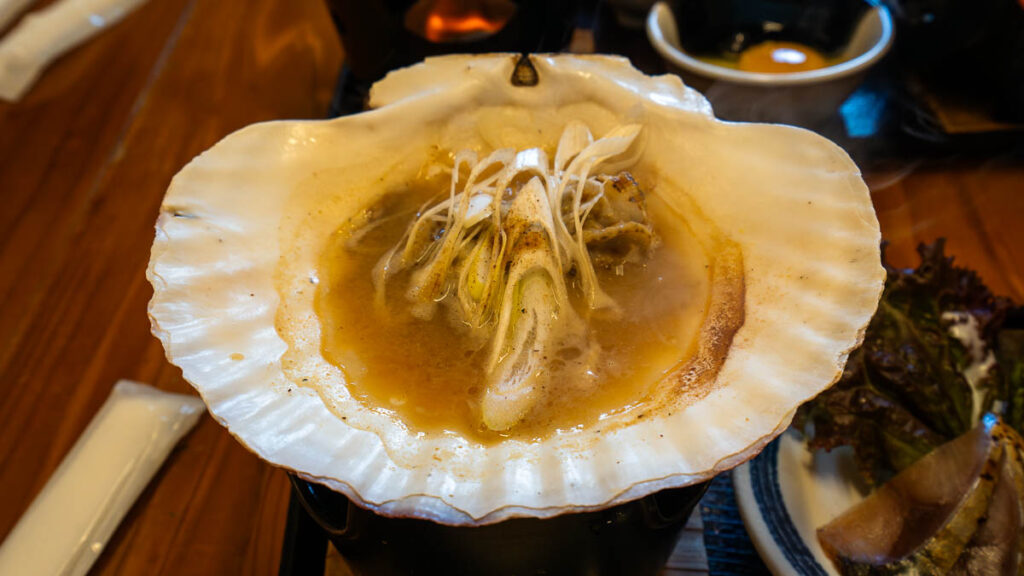
Before you leave, head over to Tsugaru-Umaiya for a traditional Hirosaki meal: kaiyaki miso. This dish is served in a shell, combining fresh Mutsu Bay scallops with a miso-based broth, leeks, and a beaten egg. All of these are simmered together until the egg sets into a custard-like texture.
The scallops are tender and sweet, while complementing the savoury miso and the richness of the egg. It’s a comforting choice for those seeking an authentic taste of Aomori’s coastal cuisine.
Opening hours: 11AM – 3PM
Address: 〒036-8332 Aomori, Hirosaki, Kamenokomachi, 61 津軽藩ねぷた村内
How to get there: Inside Tsugaru-han Neputa Village (Google Maps)
Craft your own lantern at Irodori Workshop
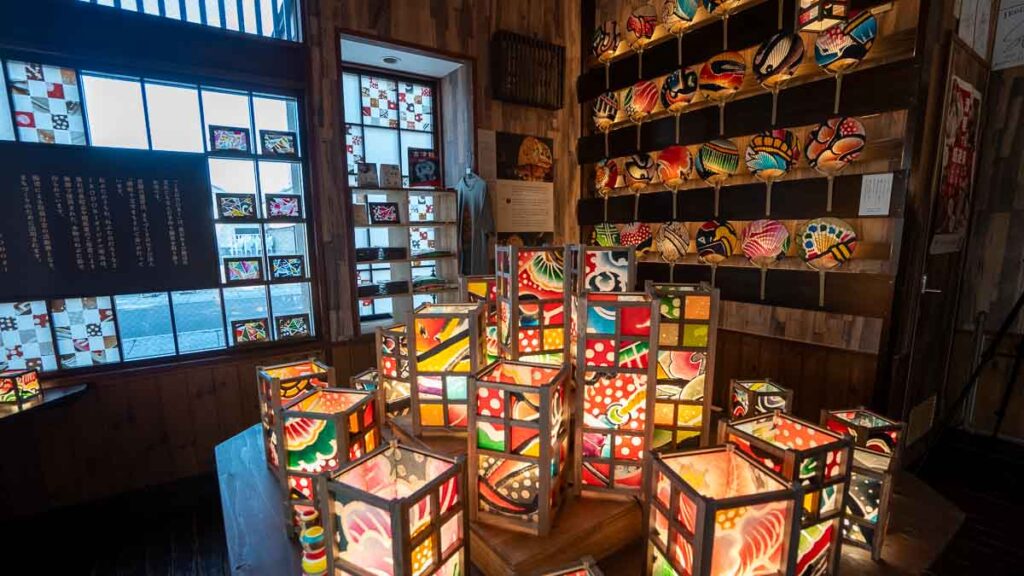
Craft your very own festival lantern at the Irodori Workshop in Aomori, a hands-on way to connect with the magic of the Nebuta Festival.
The 50-minute workshop provides materials to design lantern frames recycled from floats used in previous years’ festivals. Guided step-by-step, we decorated our own lantern, turning it into a colourful glowing creation.
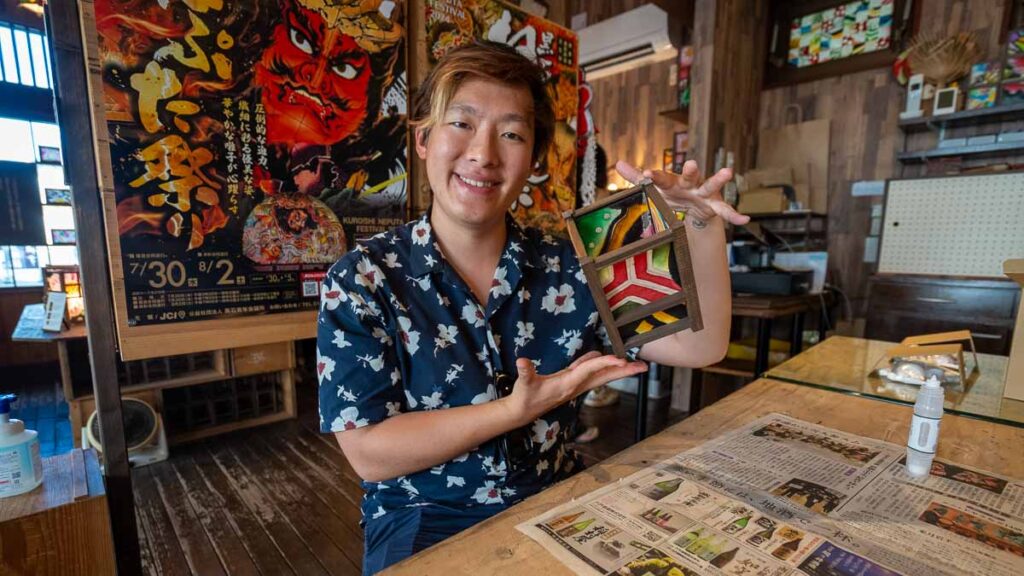
And by the end, I got a little piece of Aomori’s festival spirit to take home.
Cost: From ¥4,400/pax (~S$38.50)
Opening hours: 11AM – 3PM (Mon – Fri), 10AM – 4PM (Sat – Sun), closed on Tue
Address: 38 Nakamachi, Kuroishi, Aomori 036-0377, Japan
How to get there: 11min walk from Kuroishi Station (Google Maps)
Marvel at the Inkadate Village’s Rice Paddy Art
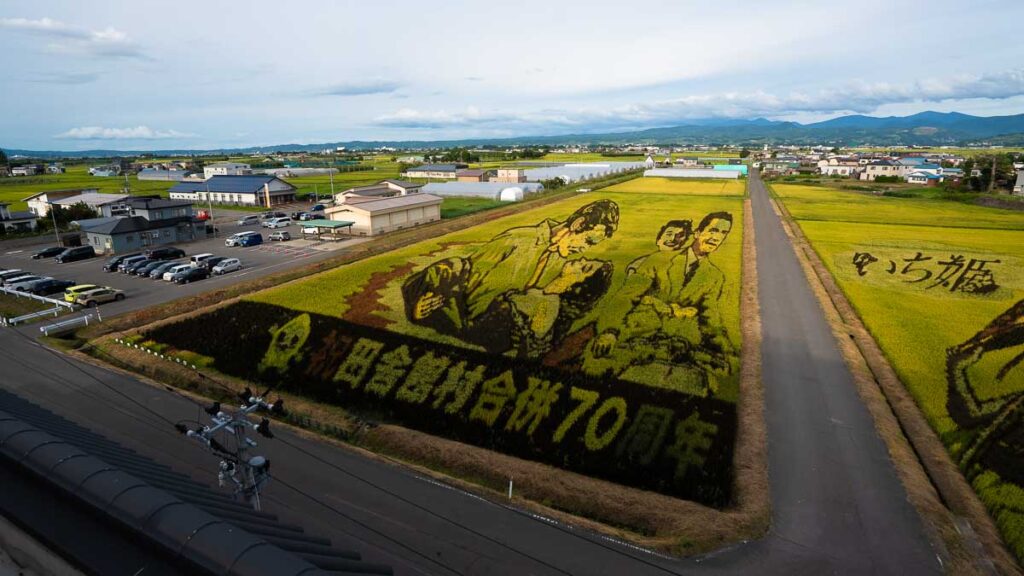
Inakadate, a small village in Aomori, has turned rice farming into an art form with its famous rice paddy art.
Each year, farmers plant different varieties of rice to create enormous, intricate designs — from historical figures to pop culture characters — that can only be fully appreciated from above.
The effect is nothing short of spectacular, with colours shifting from bright greens in summer to golden colours in autumn.
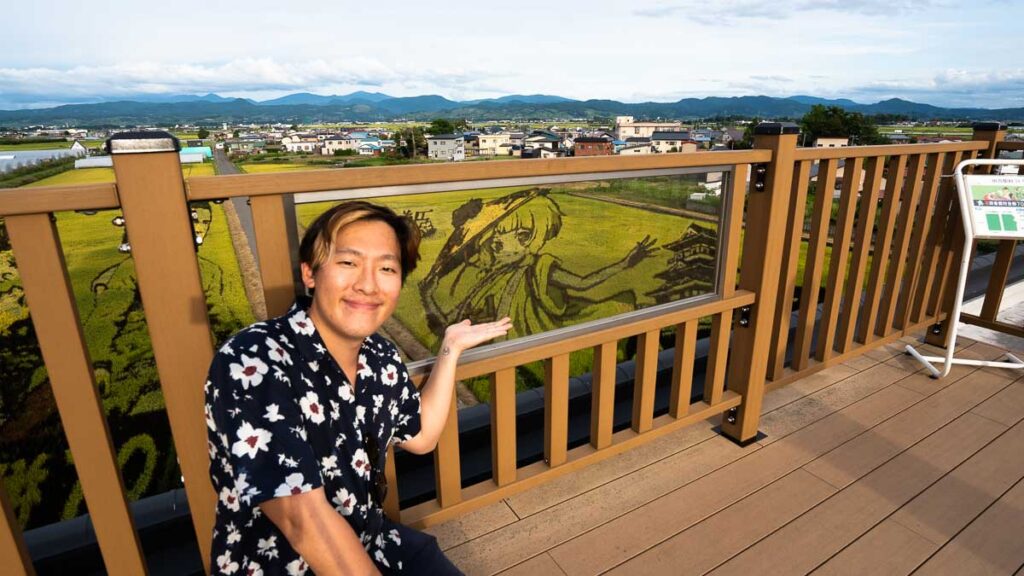
Visit between mid-July to mid-August when the rice is at its peak, and step onto one of the observation towers to admire its scale and detail. This is truly one of Japan’s most unique and visually stunning rural experiences.
Entrance fee: ¥300/pax (~S$2.70)
Opening hours: 9AM – 5PM (closed on Tue)
Address: 123-1 Nakatsuji, Inakadate Village, Tsugaru County, Aomori 038-1113, Japan
How to get there: 9min drive from Kuroishi City (Google Maps)
Accommodation: KAI Tsugaru
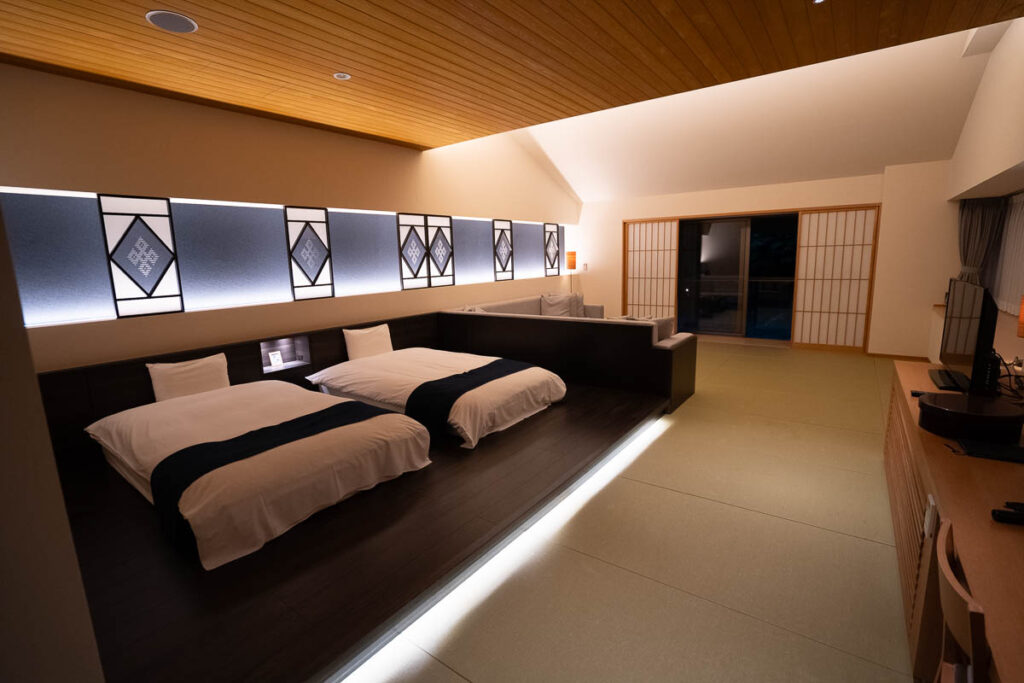
Nestled in the tranquil Owani Onsen area near Hirosaki, Hoshino Resorts KAI Tsugaru offers an immersive blend of relaxation and cultural discovery.
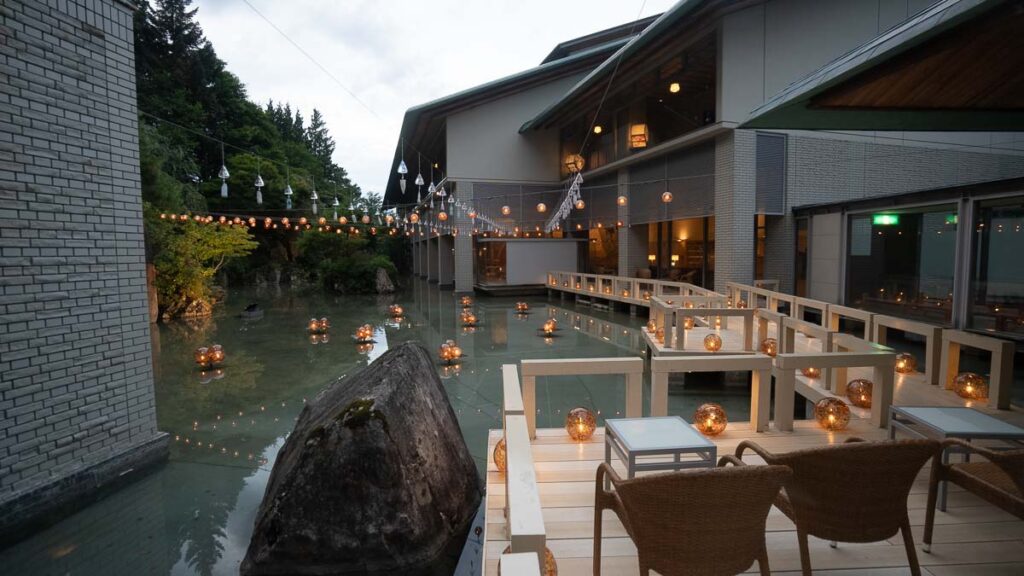
The resort features three distinctive hot spring baths. This includes an open-air igloo-style bath, and apple-scented indoor baths crafted from Aomori Hiba wood.
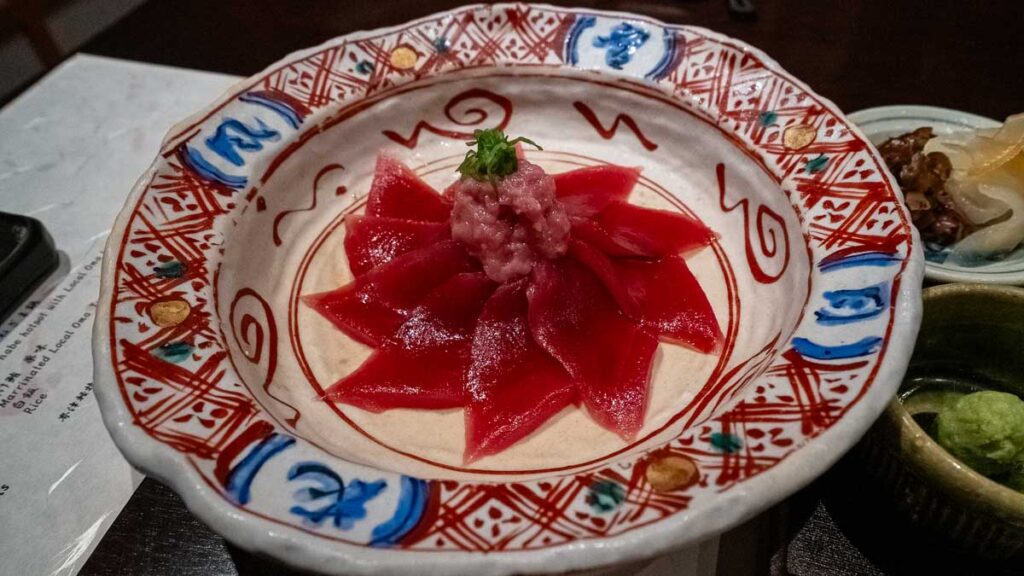
Dinner was a kaiseki course meal rooted in Aomori’s local flavours. For example, there was a generous amount of Oma tuna — served as sashimi, sushi, and even in their signature green onion-and tuna-hotpot. Scallops were grilled in their shells with miso as well.
The meal, while simple, highlighted the natural and seasonal flavours of the ingredients in a thoughtful way.
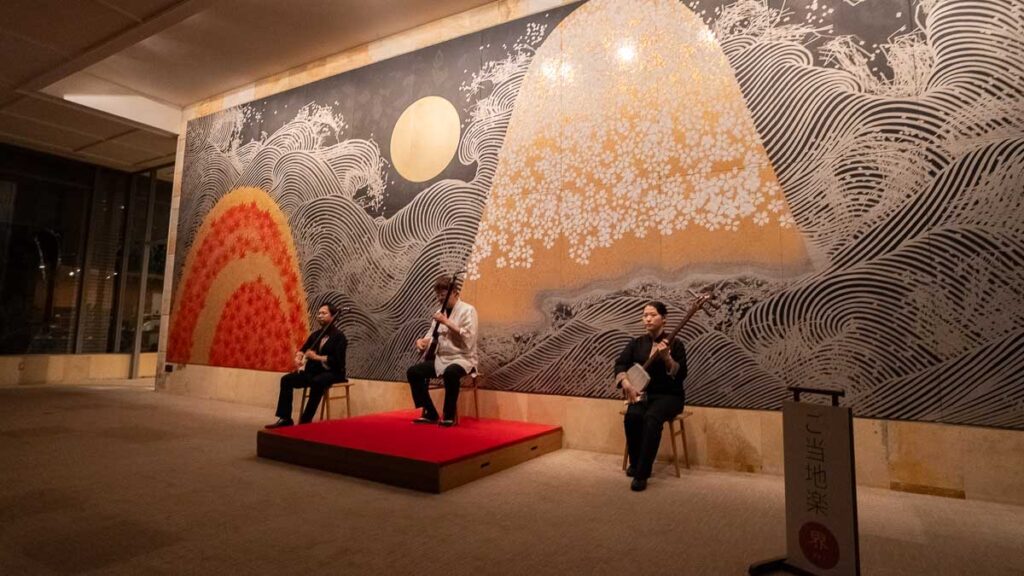
After our meal, we settled in for a live Tsugaru shamisen performance, showcasing the region’s traditional music in an intimate setting. After each performance, there is a short segment where guests are invited to try their hand at playing the shamisen to the famous song ‘Sakura Sakura’.
Cost: From ¥28,000/night (~S$490, 2 pax, incl. service charge, tax, breakfast, and dinner)
Address: Kamibotanmori-36-1 Owani, Minamitsugaru District, Aomori 038-0211, Japan
How to get there: Free shuttle bus from Owani Onsen Station (reservation required), or 5min drive from JR Owani Onsen Station (Google Maps)
Day 5: Akita
Ride the Resort Shirakami train
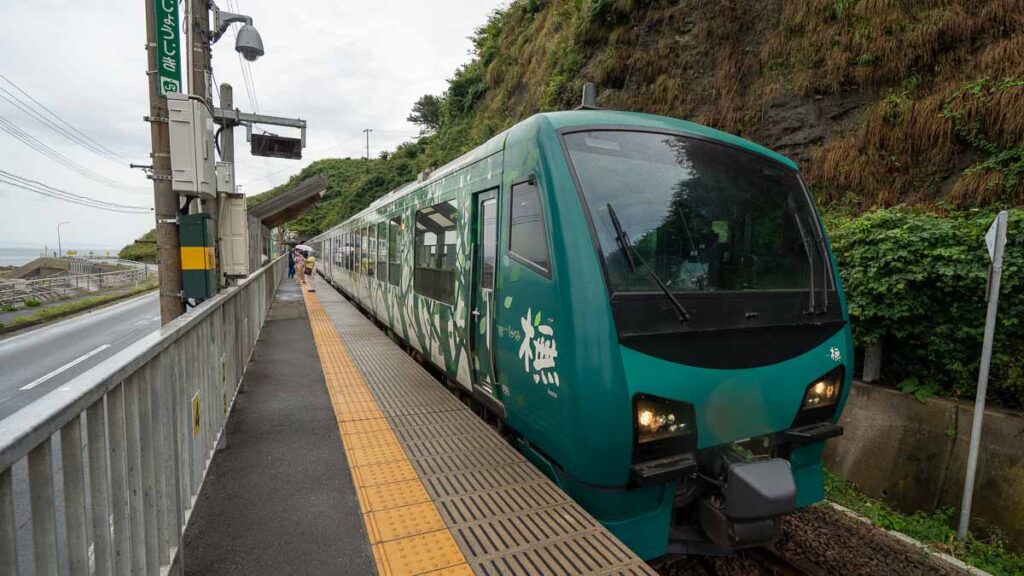
To get to Akita, we took the Resort Shirakami train for a slower, more scenic adventure. Yes, the journey is slower than taking a Local Express train. But what it lacks in speed, it more than makes up for in drama and charm.
The train cars themselves are works of art, each designed to reflect different icons of Tohoku.
As the train winds along the western coast of the region, you’re treated to uninterrupted views of the Japan Sea and Shirakami-Sanchi.
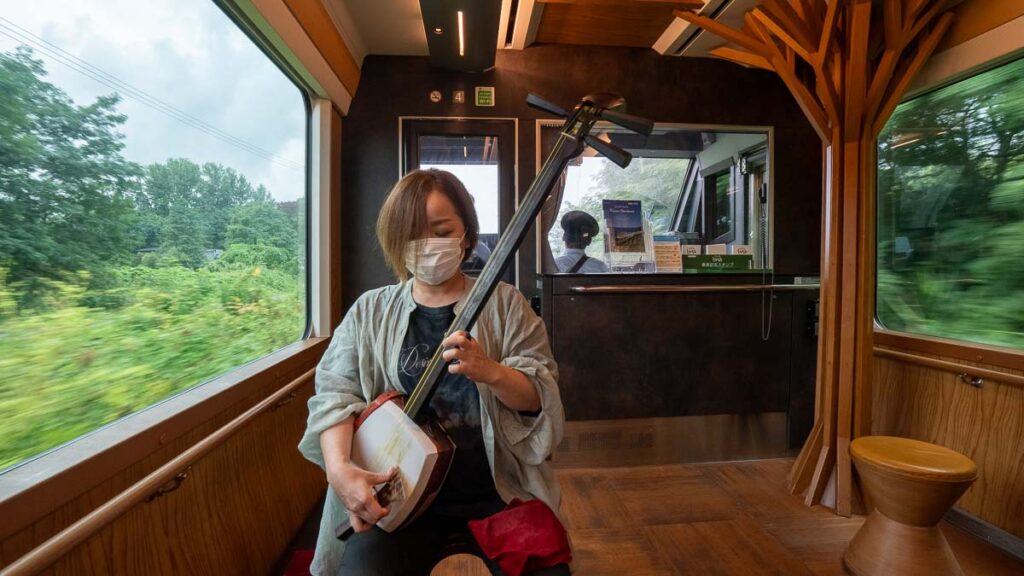
Onboard, live Tsugaru shamisen performances add a lively soundtrack to the scenery, and there are convenient stops along the way if you want to hop off and explore charming coastal towns or local sights.
Try horse meat at Sakuratei
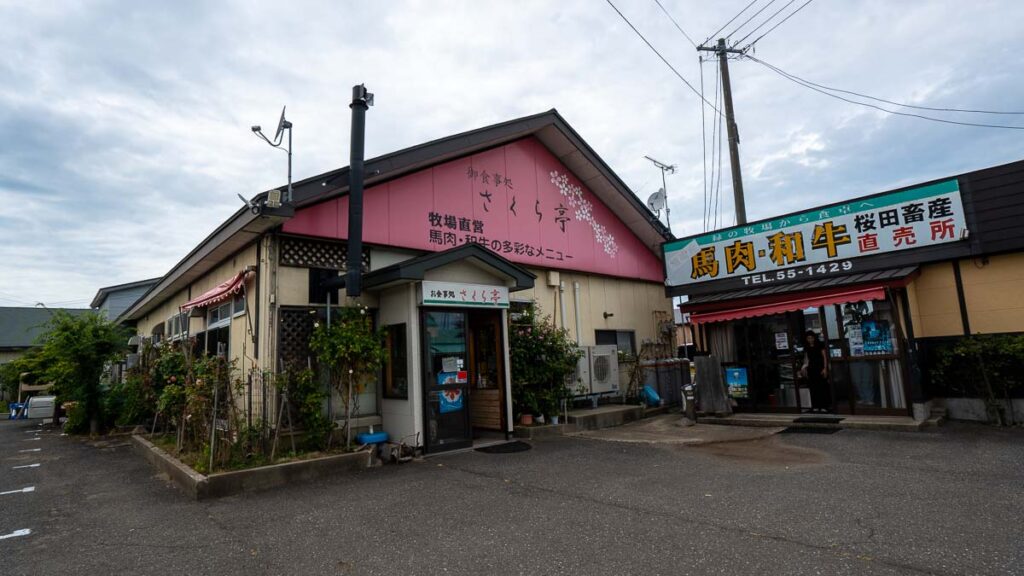
Ever felt hungry enough to eat a horse? At Sakuratei, you can!
This local restaurant specialises in horse meat, a regional delicacy prized for its tenderness and unique flavour. As part of a long-standing animal husbandry tradition, Sakuratei has spent over 50 years producing safe, high-quality horse meat and beef.
Though initially hesitant, I decided to give it a try as part of my mission to experience all that Tohoku has to offer. The dish, also known as Sakura Niku or “cherry blossom meat” for its delicate pink hue, arrived finely-minced and artfully arranged over a bowl of rice, accompanied by grated wasabi and soy sauce.
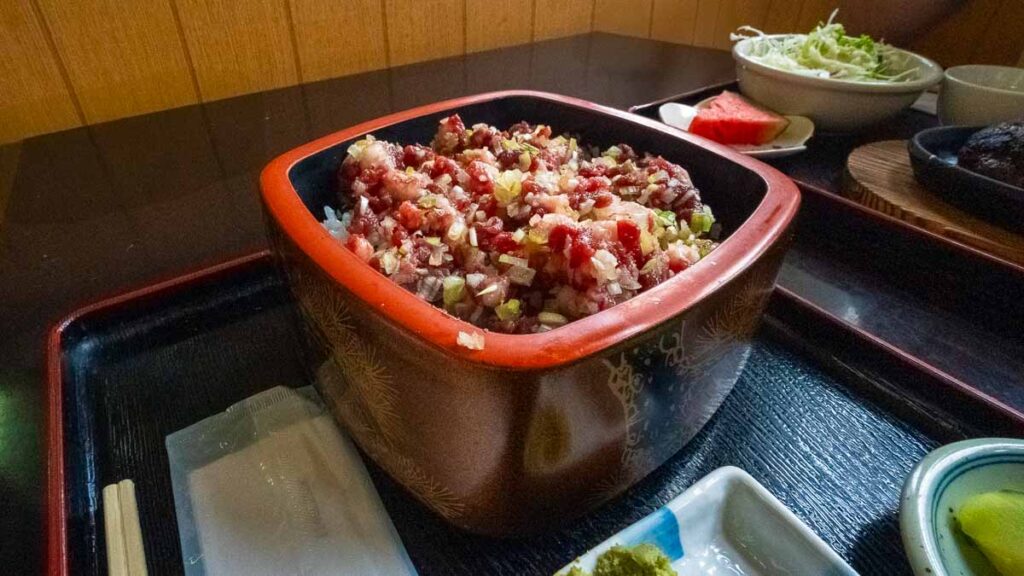
The first bite was unexpectedly tender, with a subtle sweetness that’s completely different from beef. It felt light, silky, and refreshingly clean, definitely a culinary experience to remember!
Opening hours: 11AM – 2PM
Address: Ukawazakai-5 Asanai, Noshiro, Akita 016-0179, Japan
How to get there: 12min drive from Moritake Station (Google Maps)
Encounter spirits at the Namahage Museum
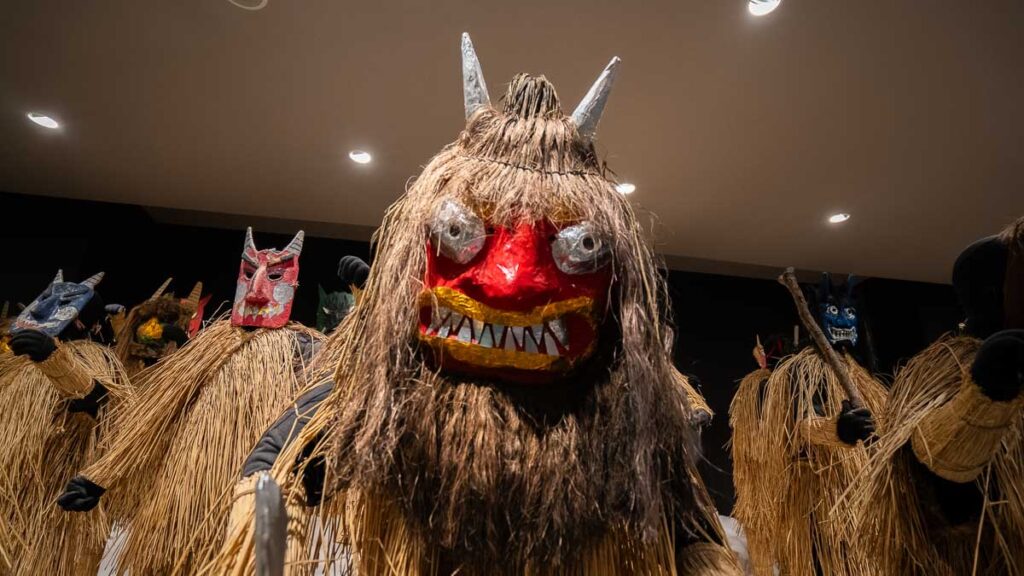
On Akita’s Oga Peninsula, the Namahage Museum celebrates one of the country’s most unique traditions: the Namahage.
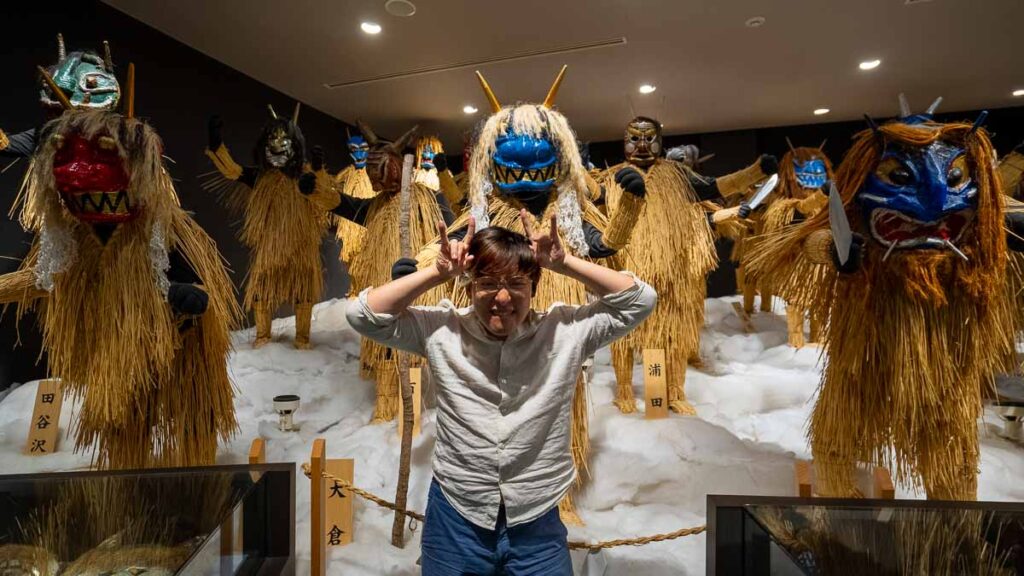
One of these is not like the others… 🧐
According to folklore, the straw-cloaked, mask-wearing Namahage descend from the mountains every New Year’s Eve, thundering into households to admonish lazy or disobedient children.
As terrifying as they seem, the Namahage are actually revered as benevolent beings, ushering in good fortune for the year ahead. Over time, the tale has also doubled as an effective way to keep mischievous kids in line.
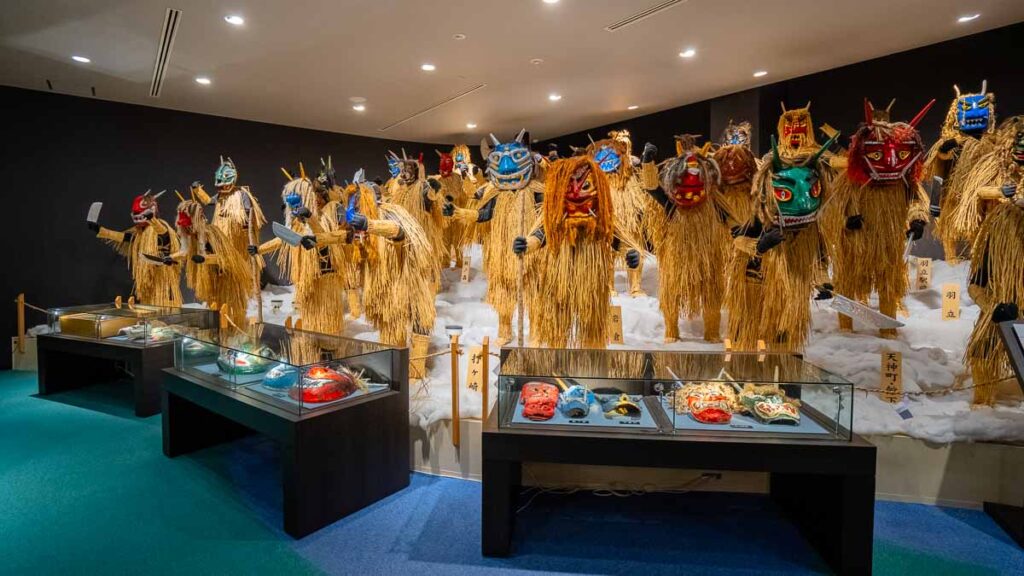
Nearly every region has its own version of the Namahage, a testament to how deep rooted the folklore is, and the museum brings them together in one impressive display — with over 150 masks and costumes in total.
I even had the chance to try on the heavy straw robes myself, stepping into the role of a Namahage for a fun photo op.
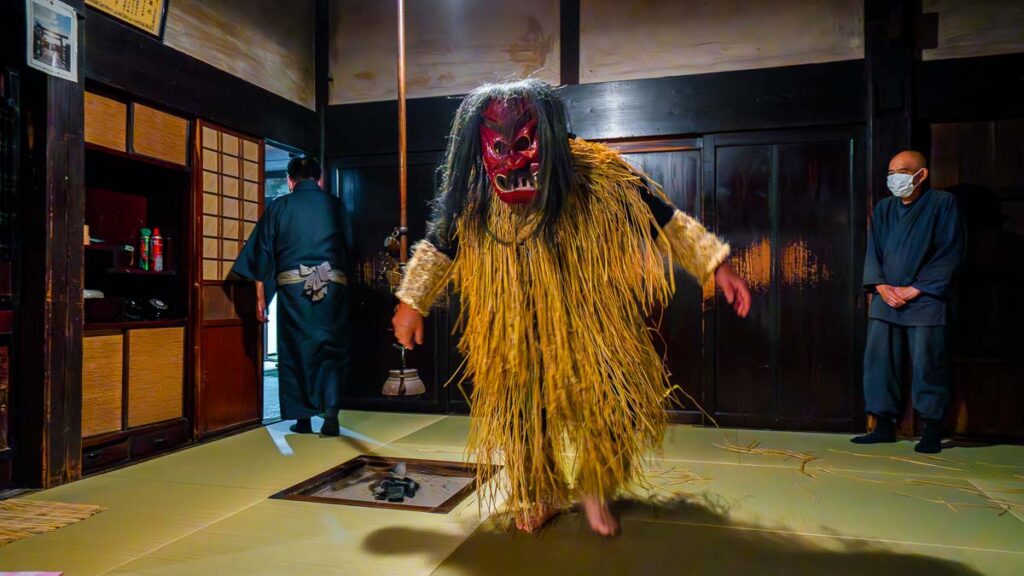
The real highlight though, is the interactive performance. We were ushered into a dimly-lit house, where the Namahage themselves burst in, approaching the crowd with cries of “Any naughty kids around?!”
I found it all quite amusing, though I can’t say the same for the frightened children in the crowd!
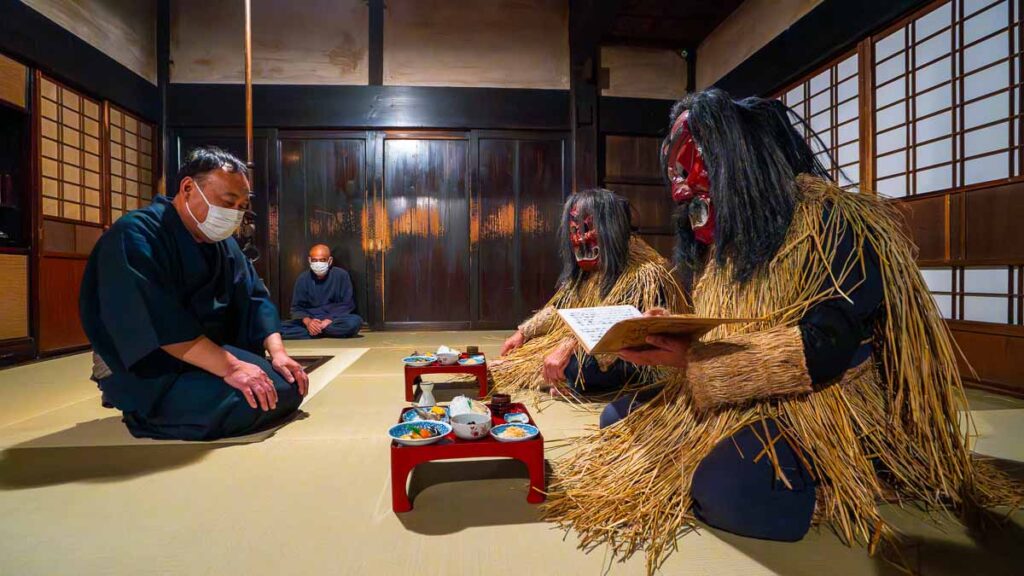
Eventually, the head of the household calms the Namahage with offerings of food and sake, and they will retreat in peace, but not before shedding stray bits of straw.
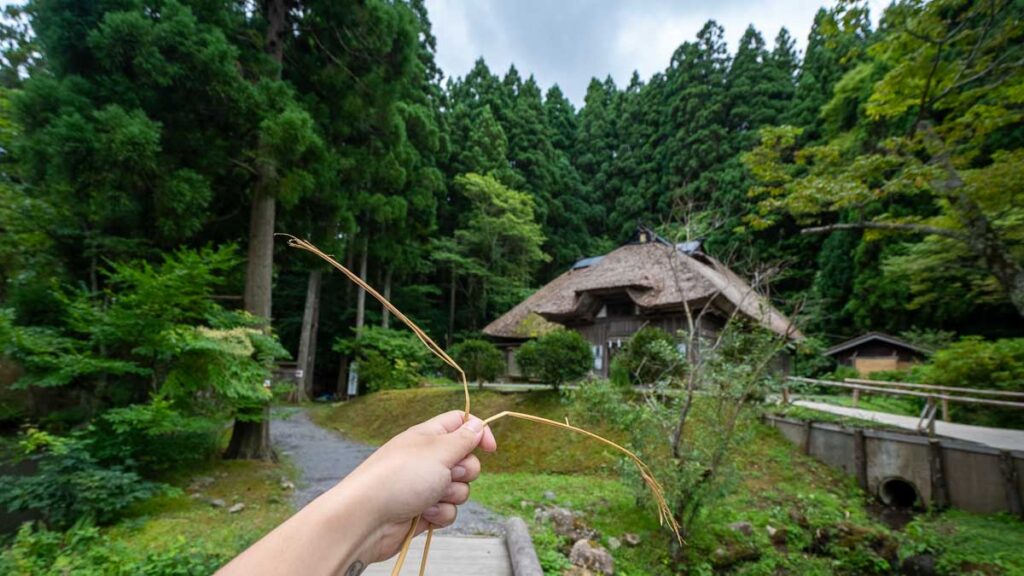
I faced the Namahage and I got these strands of straw!
Locals believe these strands bring good fortune, so don’t hesitate to pocket one as a lucky souvenir!
Entrance fee: ¥660/pax (~S$6)
Opening hours: 8:30AM – 5PM
Address: Mizukuisawa Kitaurashinzan, Oga, Akita 010-0685, Japan
How to get there: 1hr shuttle bus ride from Oga Station (reservation required) (Google Maps)
Take a photo with the Namahage statues
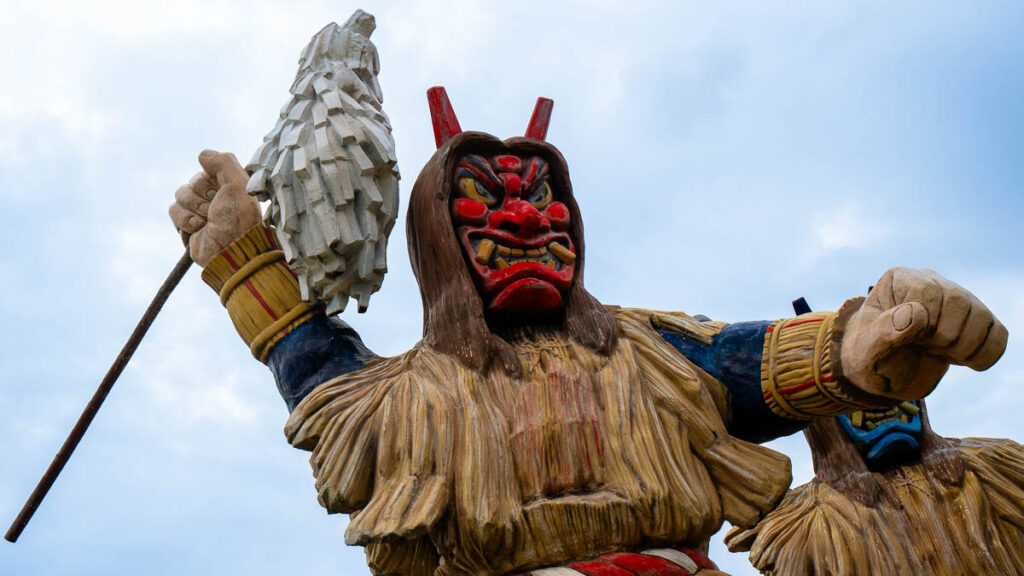
Before exiting the Oga Peninsula, keep an eye out for the two towering Namahage statues at the Oga Tourist Information Center.
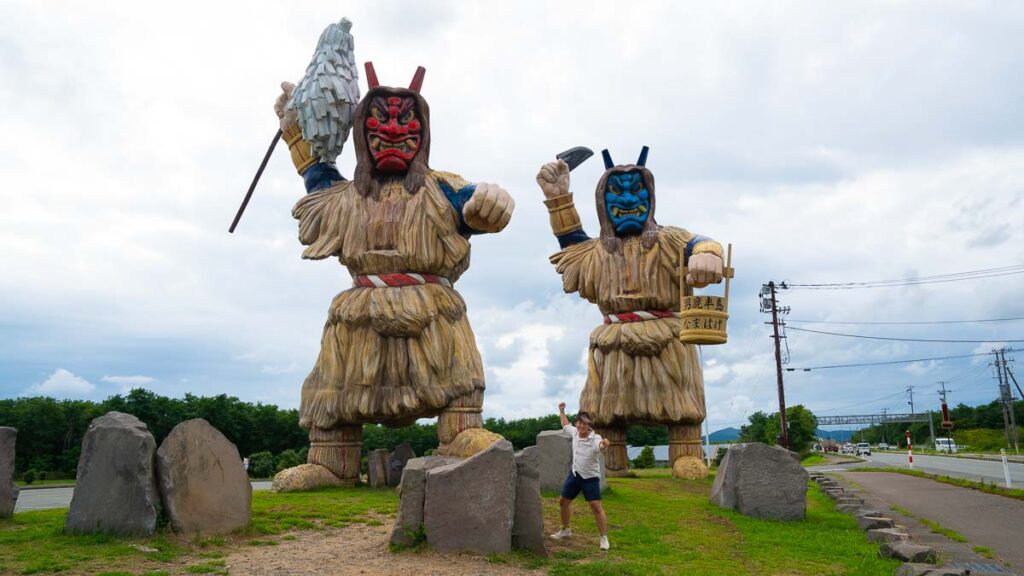
Standing imposingly at the entrance, these colossal figures perfectly capture the fearsome yet protective spirit of the Namahage, and make for a dramatic photo opportunity!
Opening hours: 24hrs
Address: Ikko Funakoshi, Oga, Akita 010-0341, Japan
How to get there: 4min drive from Funakoshi Station (Google Maps)
End on a high note at Selion Tower
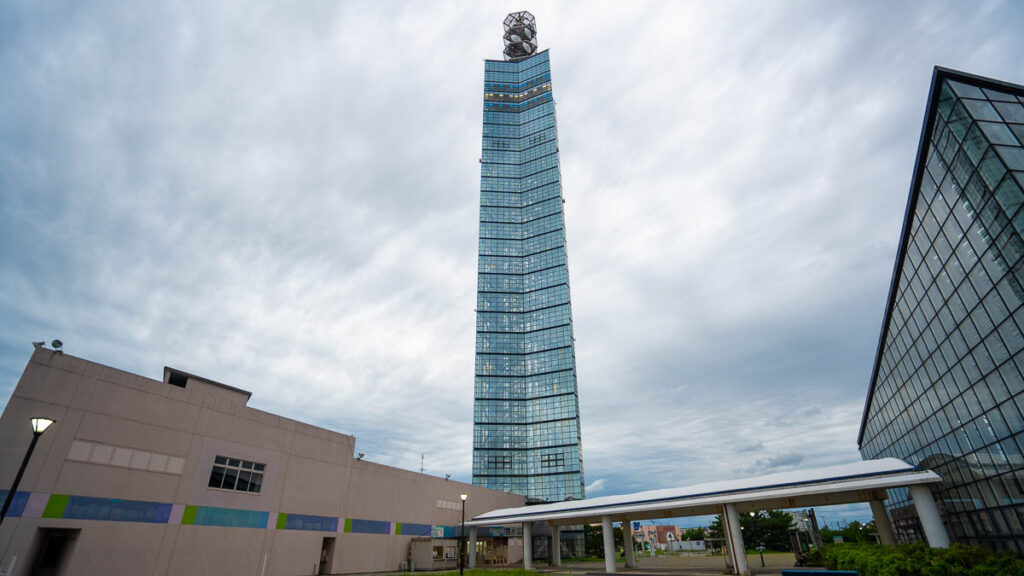
Our final stop for the trip took us to The Selion Tower, which offers panoramic views of Akita city and its surrounding landscapes.
The observation deck is a great spot for photos, and a fitting place to bid farewell to Tohoku.
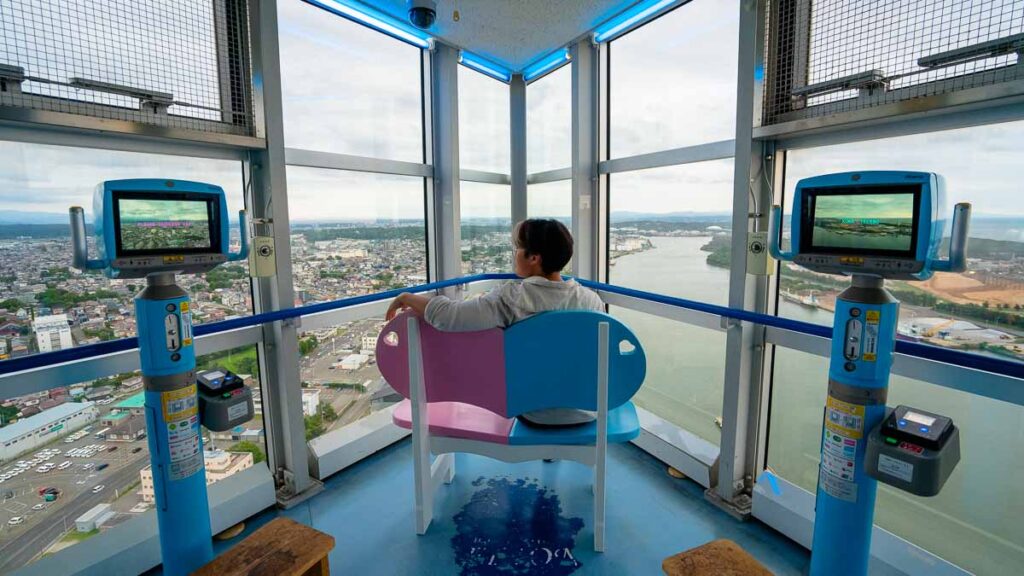
It’s also an ideal stop for some last-minute souvenir-shopping before you head off, with a variety of local treats and keepsakes to bring a piece of Akita home with you.
Entrance fee: Free
Opening hours: 9:30AM – 9PM
Address: 1-9-1 Tsuchizakiminatonishi, Akita 011-0945, Japan
How to get there: 19min bus ride from Tsuchizaki Station (Bus 追分線) (Google Maps)
Getting to and around Tohoku
Flights to Tohoku
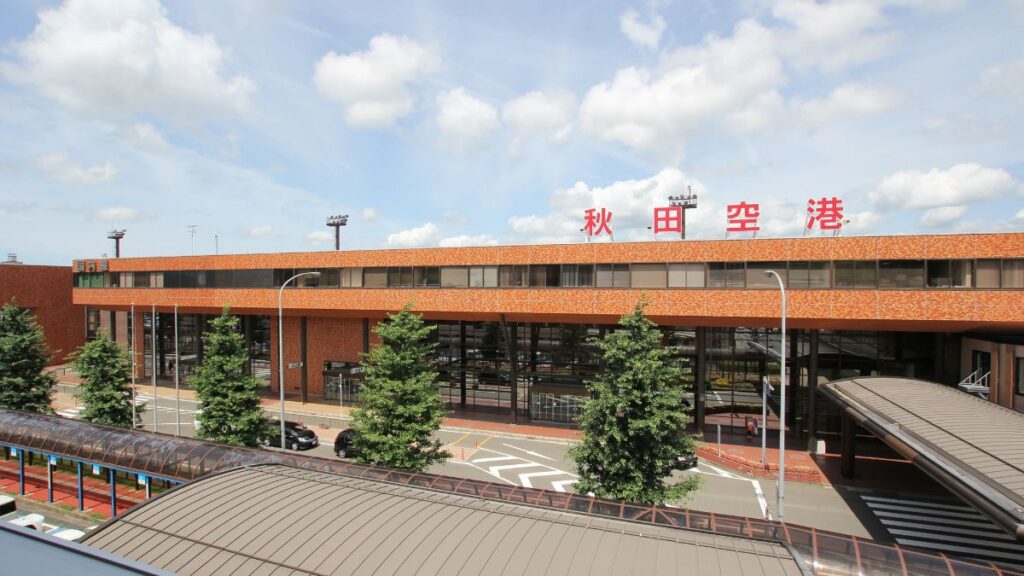
Akita Airport.
There are currently no direct flights from Singapore to Tohoku. So the best way to get there is to fly to Tokyo (Haneda Airport or Narita International Airport) or Fukuoka (Fukuoka Airport), since they are international hubs with onward connections into the Tohoku region:
| Origin | Destinations |
| Haneda Airport | Aomori, Akita, Yamagata |
| Narita International Airport | Miyagi |
| Fukuoka Airport | Iwate, Miyagi |
Domestic flights from other international hubs such as Osaka, Nagoya, and Hokkaido are also available. View the full list of flights here.
Shinkansen trains
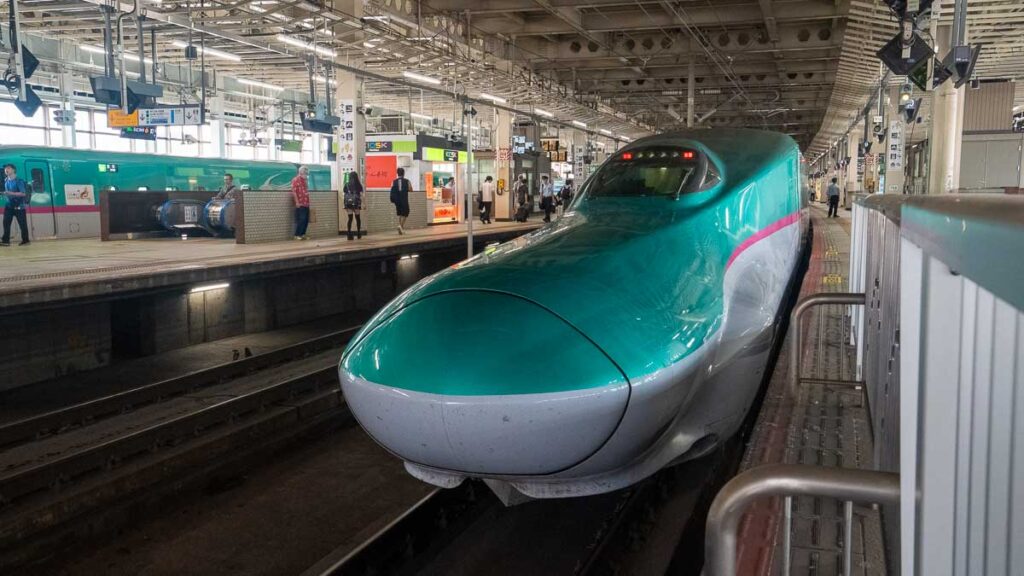
Once you’re in Japan, you can ride the Shinkansen bullet train to get to Tohoku, instead of taking a domestic flight.
The Shinkansen trains are also the fastest way to zip between major Tohoku cities like Sendai, Morioka, and Akita. With comfortable seating, punctual departures, and scenic views along the way, they’re easily the best choice for long-distance travel. Fares typically range from ¥5,000–¥10,000 per person for a one-way trip, depending on distance and seat type.
If you’re planning multiple journeys, consider getting the JR East Pass. It covers unlimited rides on JR East trains (including the Shinkansen) and can save you a lot of money after just a couple of trips.
Resort Shirakami sightseeing trains
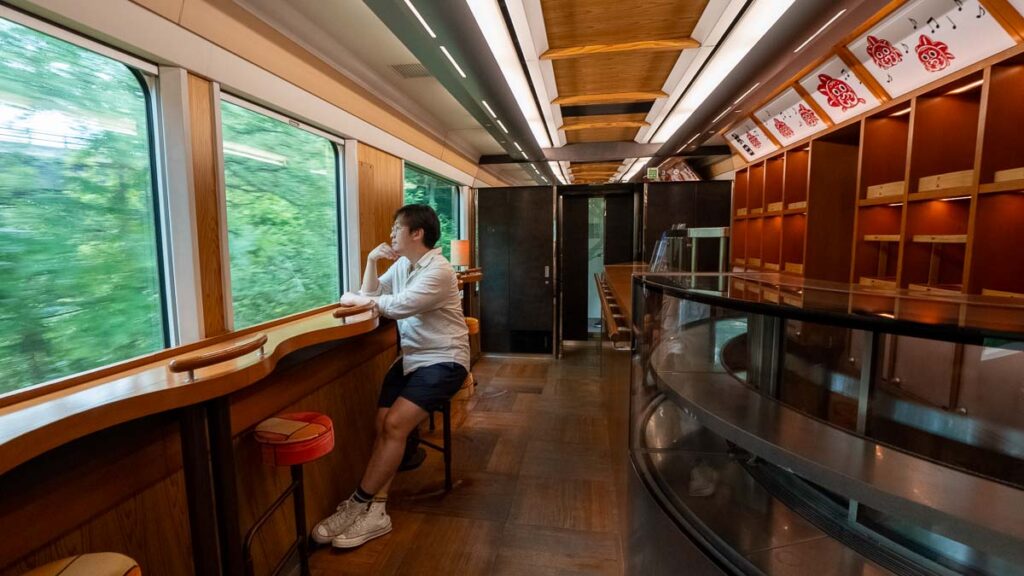
For a slower, more immersive journey, the Resort Shirakami sightseeing train goes through the Sea of Japan coast, offering panoramic views of the Shirakami Mountains. Onboard performances and stops at charming towns make the ride a highlight in itself.
One-way fares start around ¥3,000–¥5,000, with reserved seating costing a bit more.
Looking to explore more of Japan? Check out some of our other itineraries!
– 6D5N Kyoto-Based Japan Itinerary — Things to do Beyond Fushimi Inari Shrine and Nara Deer Park
– 6D5N First Timer’s Hokkaido Itinerary — A Relaxing Getaway for S$1.2k
– 3D2N Mt Fuji Itinerary Under S$570 — Road Trip From Tokyo
– 8-Day Tokyo to Osaka Japan Itinerary For First Timers Under S$690
Which of these spots in this Tohoku itinerary would you visit in the summer? Let us know in the comments below!
This post was brought to you by the Japan National Tourism Organization as part of a media familiarisation trip.
For more travel inspiration, follow us on Instagram, YouTube, Facebook and Telegram!