
Lai Chi Wo and Yim Tin Tsai villages were empty two decades ago. Now, they swell with urban residents, volunteers and returning villagers, but an uncertain future remains in their restored, changing shell.
Written by: Savanna Tai
Photos by: Brina Lai Min Xuan
Editor’s Note: This feature story was reported from the ground in Hong Kong by final-year journalism students from the Wee Kim Wee School of Communication and Information, Nanyang Technological University, Singapore, as part of their Going Overseas For Advanced Reporting (GO-FAR) journalism course.
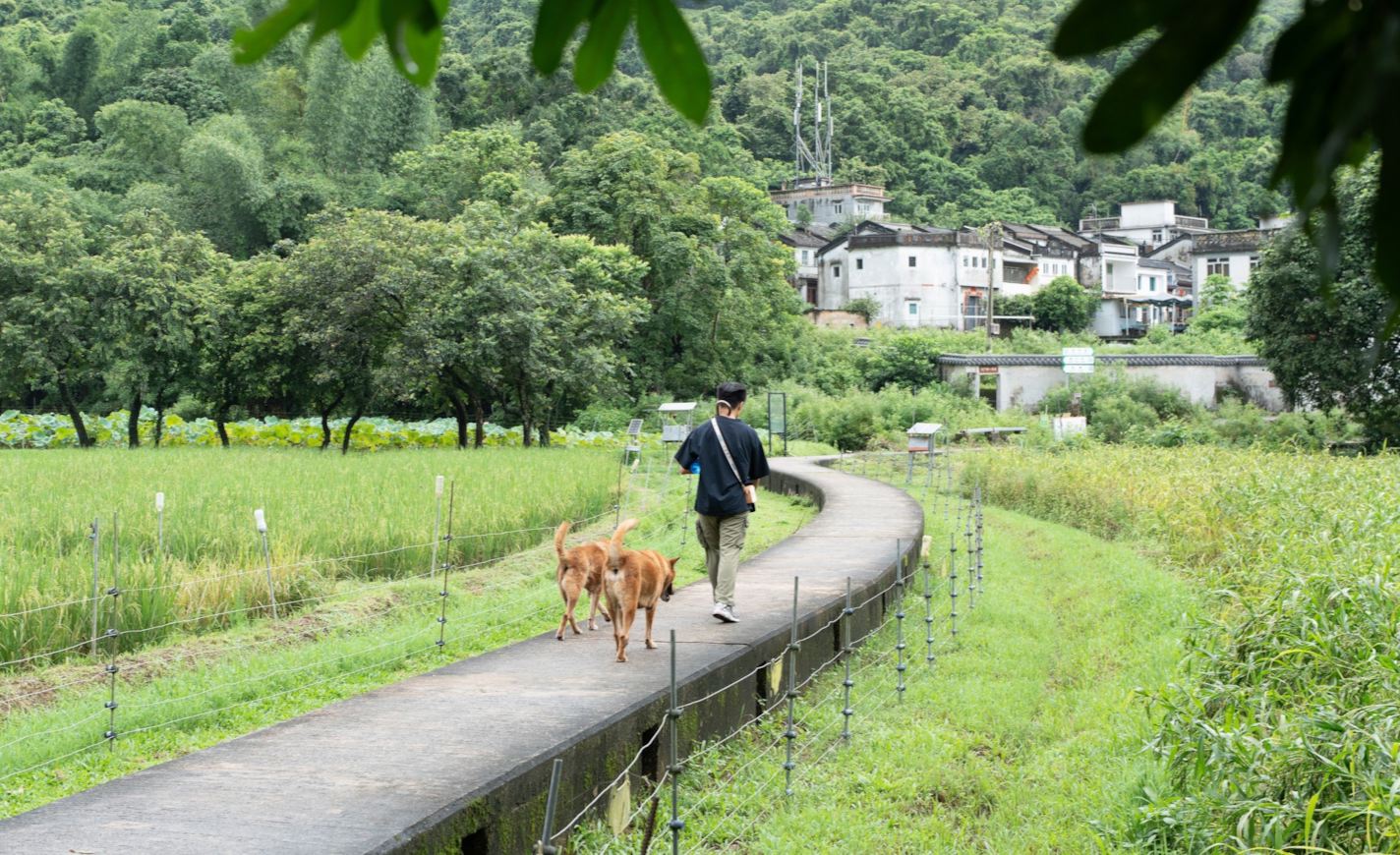
Frances Kwan, who owns recreation company Artion Outdoor, is accompanied by village dogs in the farmlands of Hakka village Lai Chi Wo. Kwan, who has volunteered in the village since 2022, also regularly brings tour groups there. PHOTO: BRINA LAI
Under the morning glow, 105-year-old Kiang Wong dons a straw hat and ambles down a hill to his fruit orchard in rural Hakka village Lai Chi Wo in northeastern Hong Kong’s New Territories.
When summer approaches, chilli, ginger and mandarin oranges sprout in his plot, and Wong’s tanned and creased hands tug at surrounding rogue weeds. His thriving orchard is a far cry from a decade ago, when overgrowth swallowed its plots.
Lai Chi Wo was a crumbling ghost town by the 1980s after its last villagers left in search of work and a better life. Wong, his daughter, and son-in-law are among just 25 residents in a settlement that once housed over a thousand.
In 2019, Wong returned to once-abandoned Lai Chi Wo from nearby border town Sha Tau Kok. There, joining in ongoing restoration efforts, the centenarian began clearing decades of overgrowth to resurrect his family’s orchard.
“I cleared the hills, cut the weeds, broke the stones, and rebuilt the steps with my own hands,” he added, weaving between Hakka and Cantonese.
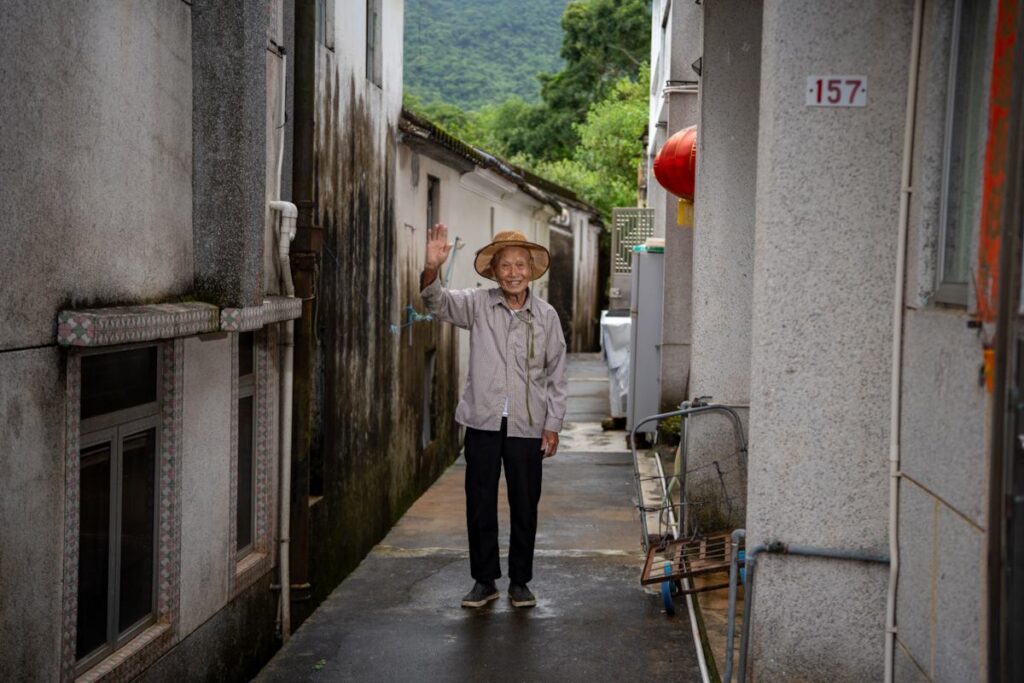
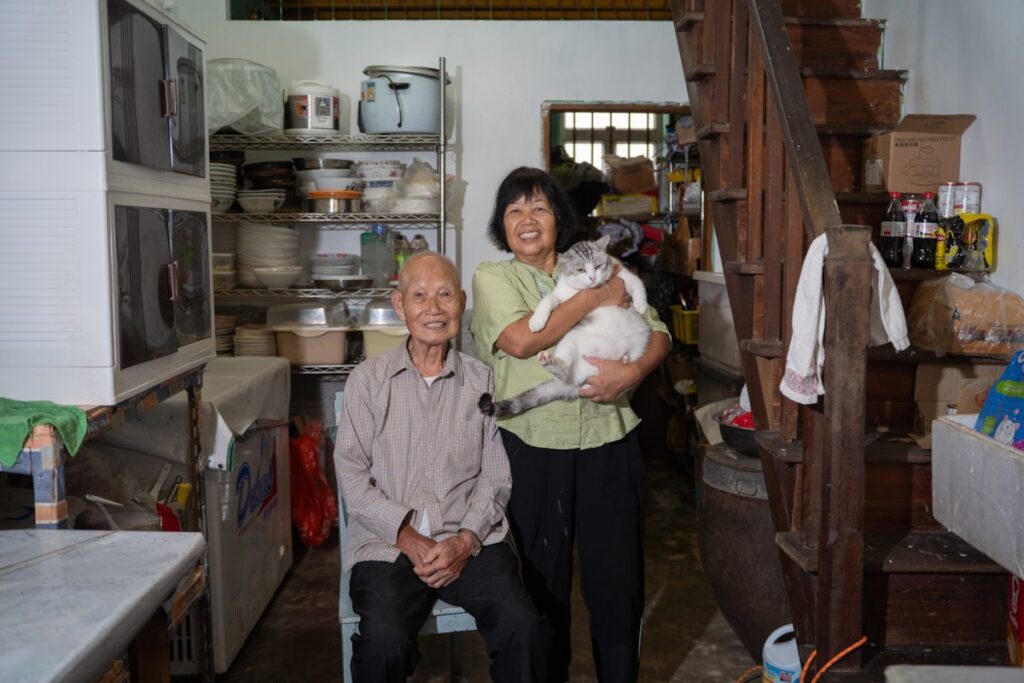
Kiang Wong, 105, returned to his ancestral home in rural Hakka village Lai Chi Wo in 2019 with his daughter Wong Kwan Ying and son-in-law amid ongoing village revitalisation efforts. PHOTOS: SAMUEL HE
Like other returning villagers, Wong was drawn back to his ancestral home, with dreams of living among restored brick houses, standing altars, and fertile farmlands.
But as returning villagers and urban newcomers keep rural villages like Lai Chi Wo and Yim Tin Tsai breathing in their own ways, these settlements continue to face an uncertain future.
Revitalisation Woes
In Lai Chi Wo, external parties first stepped in to fund revitalisation projects. In 2013, the University of Hong Kong (HKU) partnered with local bank HSBC to fund a nine-year programme to revive nearly six hectares of abandoned farmland and wetland.
Four years later, a HK$50 million (S$8 million) Hong Kong Jockey Club grant restored 15 of the village’s more than 200 houses, the majority of which became guest houses under the “Hakka Life Experience Village” initiative.
Opened in December 2022, the guesthouses cost HK$500 (S$81.53) per person a night — about the price of a budget hotel room in the city. These homes, leased to non-profit Hong Kong Countryside Foundation (HKCF), are privately owned by villagers who stood to earn a profit from rental income. But Jockey Club funding soon dried up, and bookings were few.
Village Chief Tsang Wai Yip, 53, who became a bridge between villagers and external parties, said the venture has bled cash since funding ended. It is now funded solely by HKCF.
Villagers who initially believed outsiders had come to swindle them out of their ancestral and property rights, grew more sceptical about whether operations would benefit them.
“They’d tell me, ‘You’re doing all these things, but there’s no profit.’ I told them that benefits aren’t just about money. If we don’t do this now, there will be nothing left,” said Tsang in Mandarin, whose village lineage spans 11 generations.
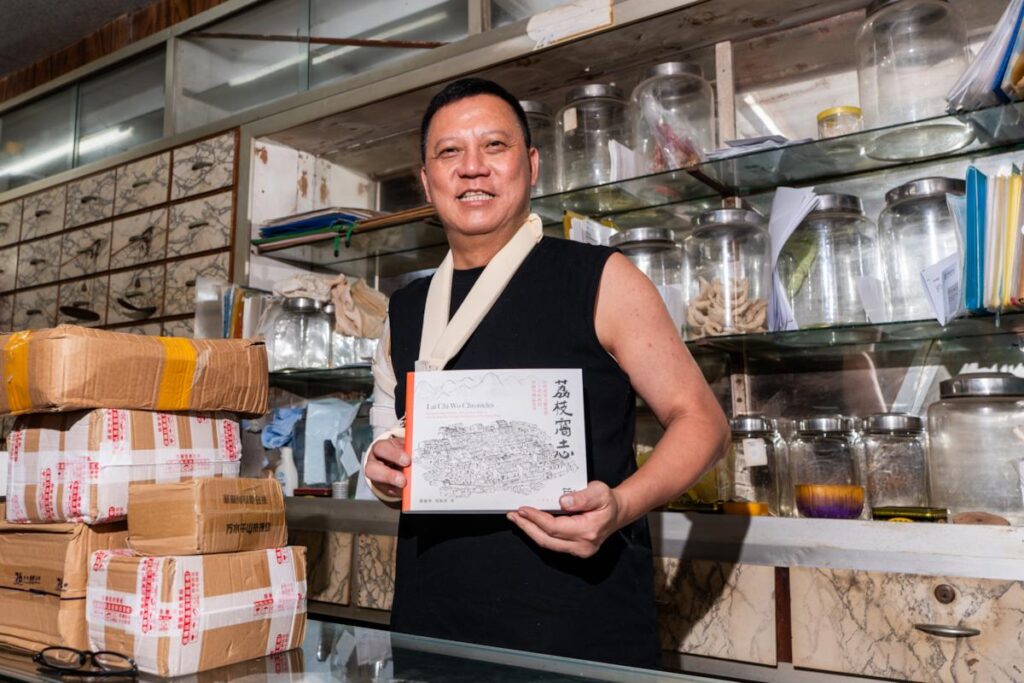
Lai Chi Wo Village Chief Tsang Wai Yip holds a copy of Lai Chi Wo Chronicles, authored by Patsy Cheng, which chronicles the village’s history and villagers’ stories, in his family’s Chinese medicine shop in Sha Tau Kok. As village descendants, Tsang took over his father to become Lai Chi Wo’s village chief in 2011, after his father had spent over 30 years in the role. PHOTO: BRINA LAI
Lai Chi Wo’s revitalisation efforts have also benefited surrounding villages, even connecting sister village Mui Tze Lam to a power grid, said Lai Chi Wo village chief Tsang.
Tsang Yuk On, Mui Tze Lam’s village chief and the vice-president of the Sha Tau Kok District Rural Committee, said that while the village has no remaining villagers today, it was once home to 16 families before it emptied out in the 1980s.
In the 2000s, Tsang had lobbied the government to reopen villages in the Sha Tau Kok frontier and engaged ferry operators, but much remains derelict today.
“My goal was simple: we shouldn’t waste these historical resources. Old houses, old schools, and old farmlands should all be revitalised. It makes no sense to just let productive land turn into wild jungle,” said the 71-year-old.
“What’s revitalised so far is only a fraction. Many houses still sit derelict because ownership issues haven’t been resolved,” he added.
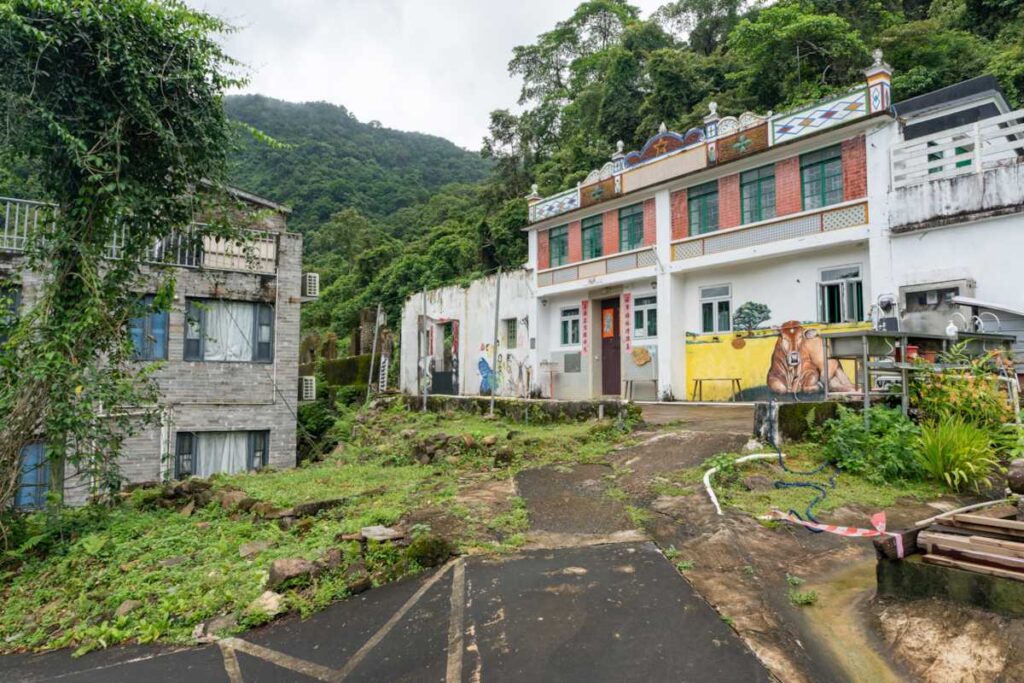
The entrance to Mui Tsz Lam village, with the chief’s house on the left and the restored Story House on the right. Once home to 16 families, the village is part of the 300-year-old Hing Chun Alliance of seven Hakka villages in Sha Tau Kok. PHOTO: BRINA LAI
About 30 kilometres south, another Hakka village faces a similar predicament. Yim Tin Tsai is home to Hong Kong’s only surviving salt pans — man-made ponds where salt water collects and evaporates into salt.
The village, whose name means “Little Salt Pan”, was abandoned in 1998 after its salt-making industry collapsed from cheaper mainland and Vietnamese salt imports.
Village Chief Chan Chong Yun, an eighth-generation villager, left jobs in real estate and insurance, hoping to revive his childhood home.
“I came here and did all the hard work myself,” the 63-year-old recalled. “I put everything aside and came here to establish the ferry kiosk.”
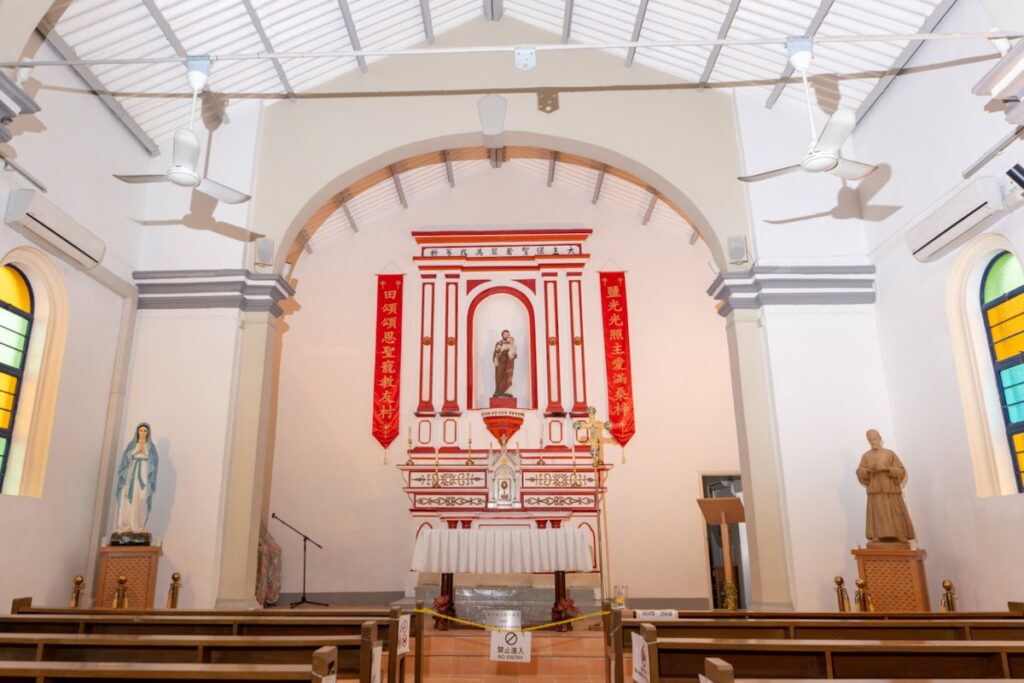
Chan also rallied support from the Catholic community — a faith once shared by all villagers — to restore the island’s St Joseph’s Chapel. Built in 1890, it draws about 400 visitors annually for St Joseph’s Feast Day and won UNESCO recognition for Cultural Heritage and Conservation in 2005.
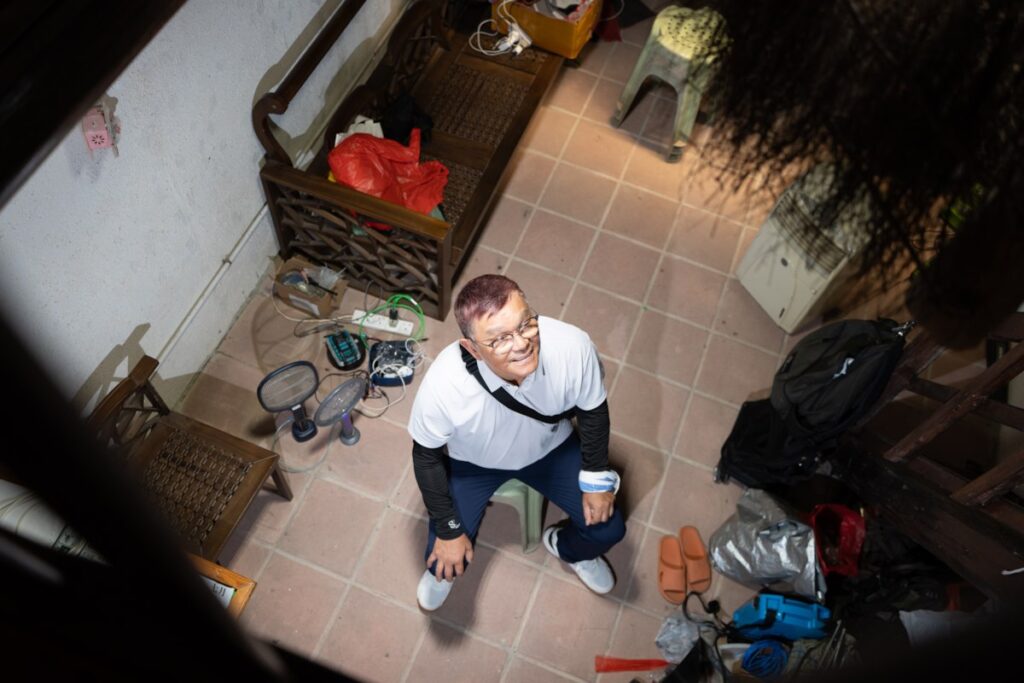
First: Yim Tin Tsai Village Chief Chan Chong Yun in his restored ancestral house, which he now rents to a volunteer. Chan became the village chief in 1999 and hoped to open the island to tourists, setting up the ferry kiosk and the village’s first restaurant in the 2000s. PHOTO: BRINA LAI
Second: Inside St Joseph Cathedral, with statues including the Virgin Mary and Saint Joseph Freinademetz. Built in 1890 and recognised as a UNESCO Asia-Pacific Award for Cultural Heritage Conservation in 2005, the chapel draws about 400 visitors annually for St Joseph’s Feast Day. PHOTO: BRINA LAI
A year later, he pooled his savings with a HK$4 million (S$65,000) donation from the Catholics to restore its salt pans.
Today, the salt pans, around a quarter of the size of a football field, produce about 24kg of crystals annually.
But the endeavour is loss-making, surviving on profits from school groups, tourists, and funding from the Catholics.
Even bottles of sea salt collected from the pans that sell for HK$50 (S$8) do little to keep operations afloat. Those bottles would have to sell for HK$200 (S$30) to break even, according to Yim Tin Tsai’s marketing representative.
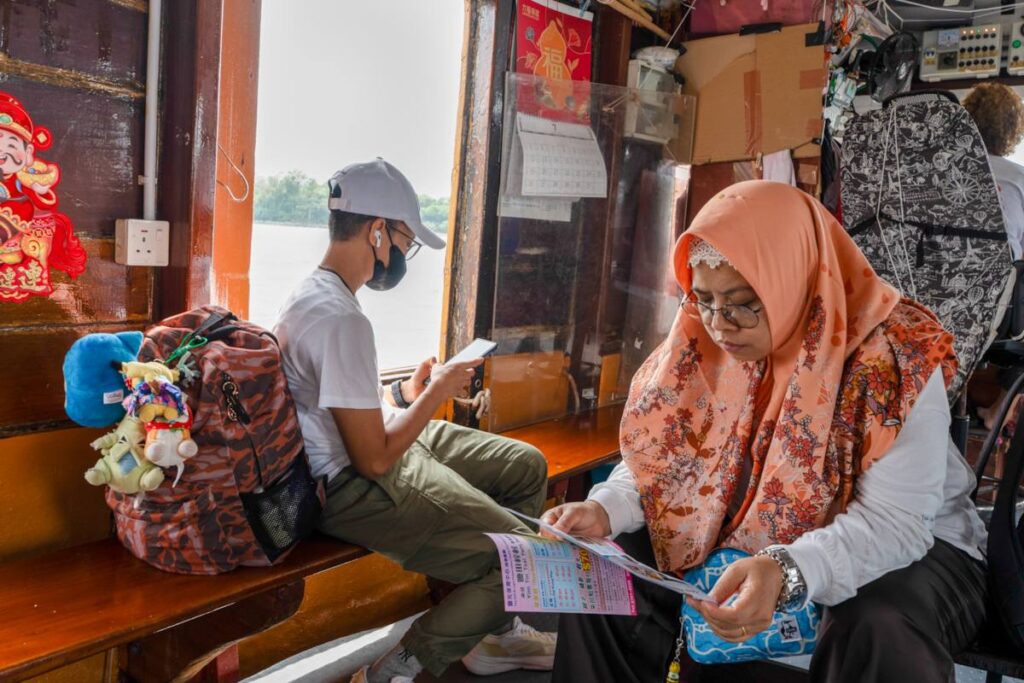
Indonesian domestic helpers Eka Eni Lestari (right) and Dian Septian taking the 15-minute ferry to Yim Tin Tsai village from Sai Kung Public Pier on their Sunday off-day. Lestari said it is her first time visiting the island. PHOTO: BRINA LAI
Read also: 9 Things to Do in Hong Kong’s Gatekeep District — Sham Shui Po
Sprouting Urban Community
While tourism ventures remain largely silent, both villages have drawn a pool of newcomers: urbanites, weekend volunteers and eco-enthusiasts as rural tourism grew popular after Covid-19. In Lai Chi Wo, 15 newcomers live alongside 10 village descendants.
In a narrow alley flanked by Lai Chi Wo’s ageing houses, a wooden “Coffee Terrace” sign invites visitors upstairs, where resident Angela So roasts coffee and makes herb-fruit drink infusions.
“I came here not for business, but to build up the farm. We wanted to grow coffee and crops in line with sustainability,” said So, a volunteer turned full-time farmer who now lives in the village and declined to reveal her age.
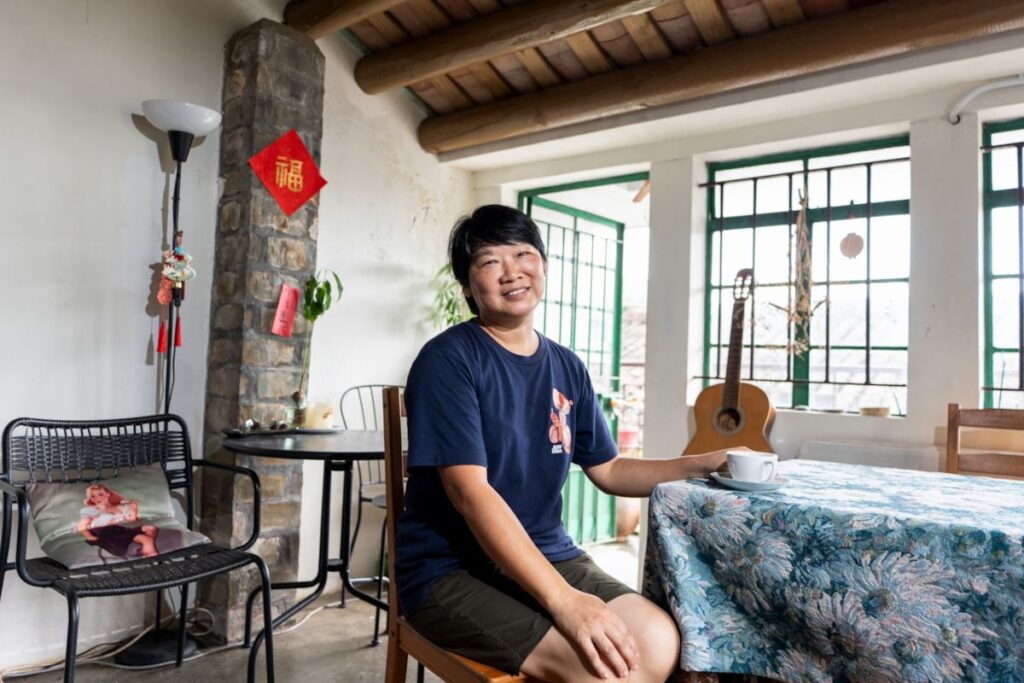
Angela So sits in her cafe Coffee Terrace, which she opened in 2023. The cafe sells locally-grown coffee and farm-to-table food and drink. So said the business remains operational for education and cultural preservation rather than profit. So is part of a new wave of “new villagers” within the village, who are actively rebuilding the community and are not original inhabitants of the village. PHOTO: BRINA LAI
Three years of volunteering in 2014 drew So to Lai Chi Wo’s agriculture. In 2017, when her company planned to relocate to Shenzhen, she quit her desk job and started farming full-time. Coffee soon became a focus, and So leased farmland terraces to plant the first bushes.
“When we arrived, the villagers welcomed us,” So recalled. “They were happy that we could grow coffee they could drink, harvested from their own family land.”
Her plot is part of more than 700 coffee trees flourishing under the dense canopy of the village’s feng shui woods, under an agroforestry project piloted by HKU. These bushes thrive from natural fertilisers including oyster shells and biochar.
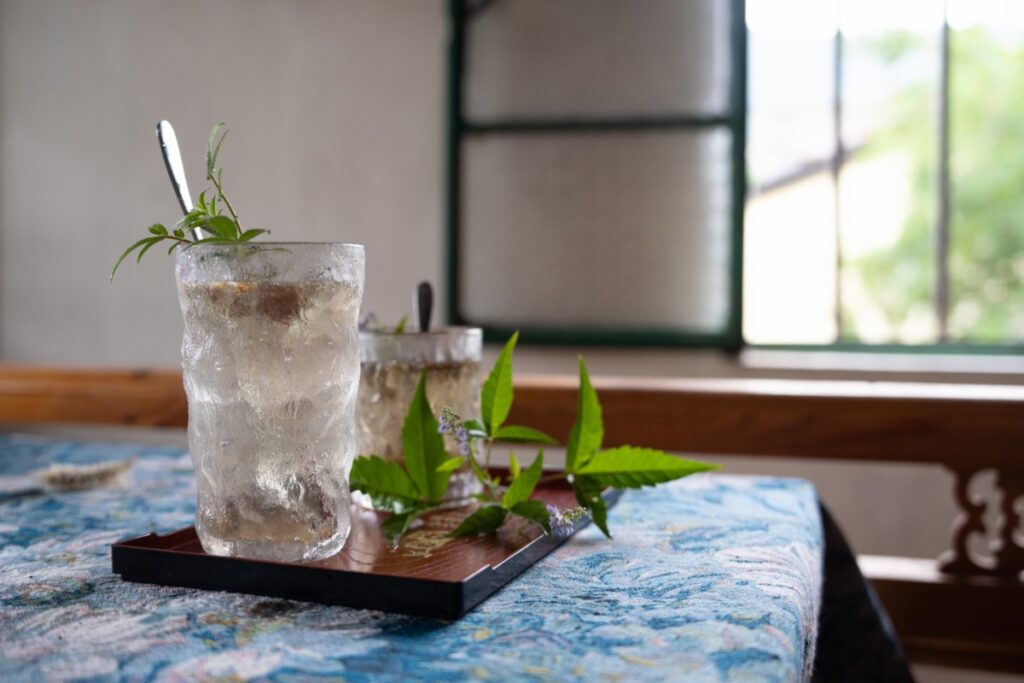
At the Coffee Terrace, customers can order freshly homegrown brewed coffee, and other drinks spiced with botanical ingredients, such as Chinese chaste tree seeds and kumquat. PHOTO: SAVANNA TAI
City resident Frances Kwan, who runs recreation company Artion Outdoor, regularly brings tour groups to the village.
The 39-year-old was raised in Kwu Tung, a rural area in Hong Kong’s New Territories, and was drawn to Lai Chi Wo when she first visited in 2020 while hiking. Her rural roots led her to become a village ambassador two years later under the Sha Tau Kok District Rural Committee, a group representing the interests of over 40 villages, including Lai Chi Wo.
As she grew immersed in Hakka culture, Kwan volunteered and brought visitors to Lai Chi Wo and its sister village Mui Tze Lam — which is a 30-minute trek apart — while bridging the gap between city dwellers and rural life.
“People may think the villages are disconnected from the city, but that’s not true. Hong Kong’s development cannot be separated from its villages,” she said, noting that visitors to Lai Chi Wo have doubled since 2022 as university groups, non-profits and companies visit the island.
Frances Kwan, owner of recreation company Artion Outdoor, sits inside Mui Tsz Lam Old House, a stop on the educational village tours she occasionally hosts. One of two houses restored under the 2020 Project Plum Grove, the Old House was revitalised through a collaboration with CUHK that ran until 2024, building on restoration efforts that began in 2017. PHOTO: BRINA LAI
Off-grid Bottlenecks
“At first, I only thought about farming,” Angela So said. “Then I realised it was difficult to get fresh produce to urban areas. But you can’t wait here and expect people to come and buy things from you.”
Turning off-grid farm produce into a livelihood faces a logistical bottleneck. With no roads leading to the city, crops travel by ferry, then on distribution vans.
Hoping to bridge this gap, Village Chief Tsang often negotiates with restaurant owners in the city for wholesale farm orders or to food processing factories.
“We try our best to help them sell their agricultural products,” Tsang said. “We want to help the farmers here earn some money and get some economic benefits. That’s how we keep them here.”
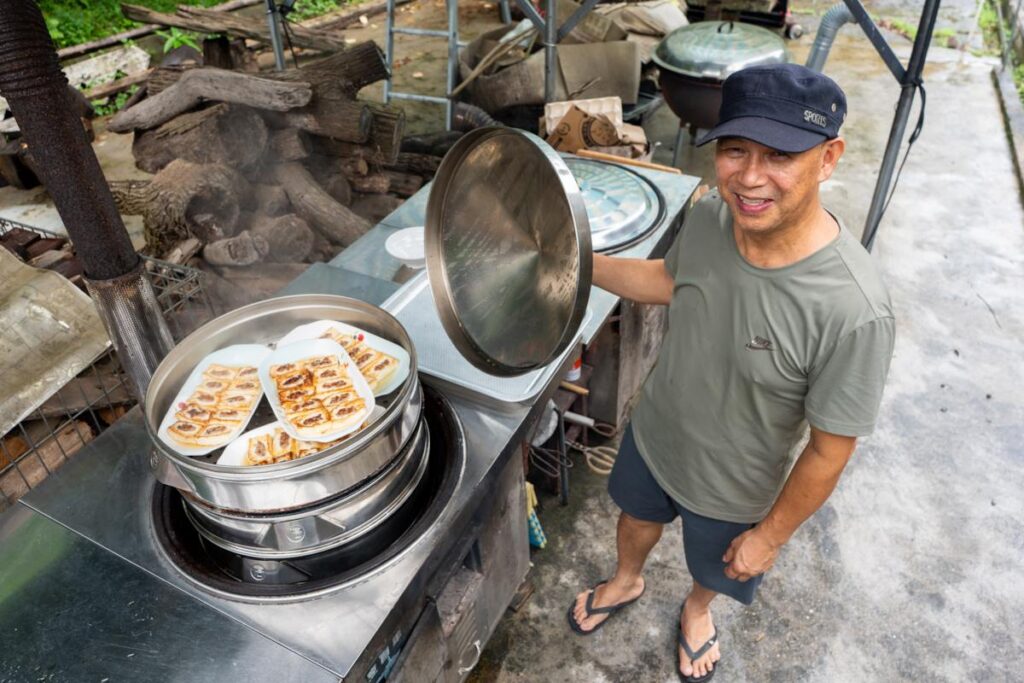
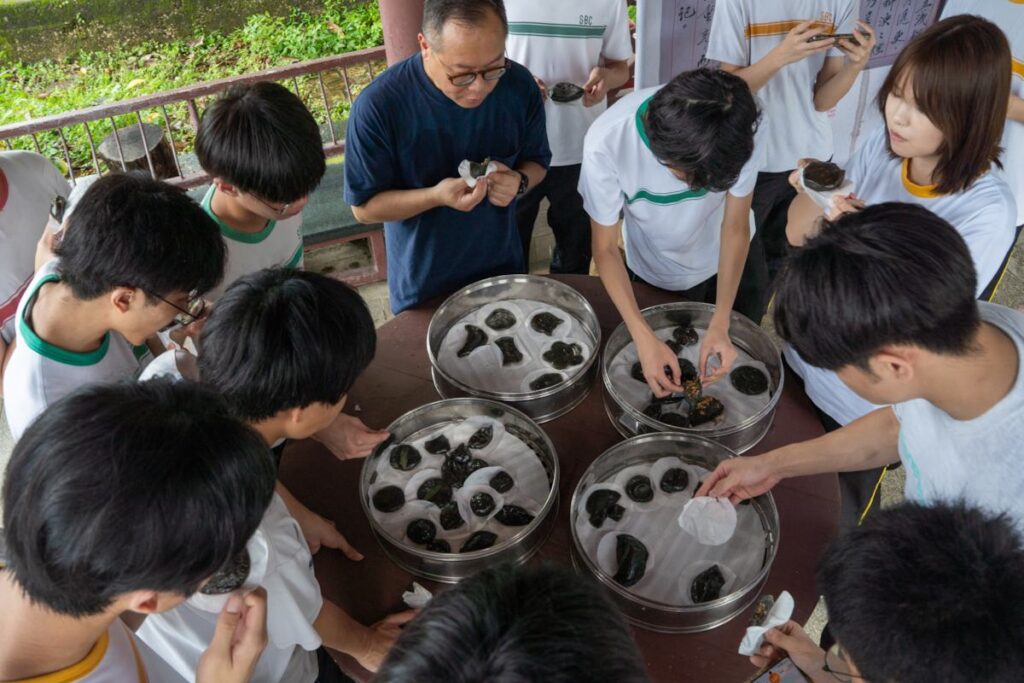
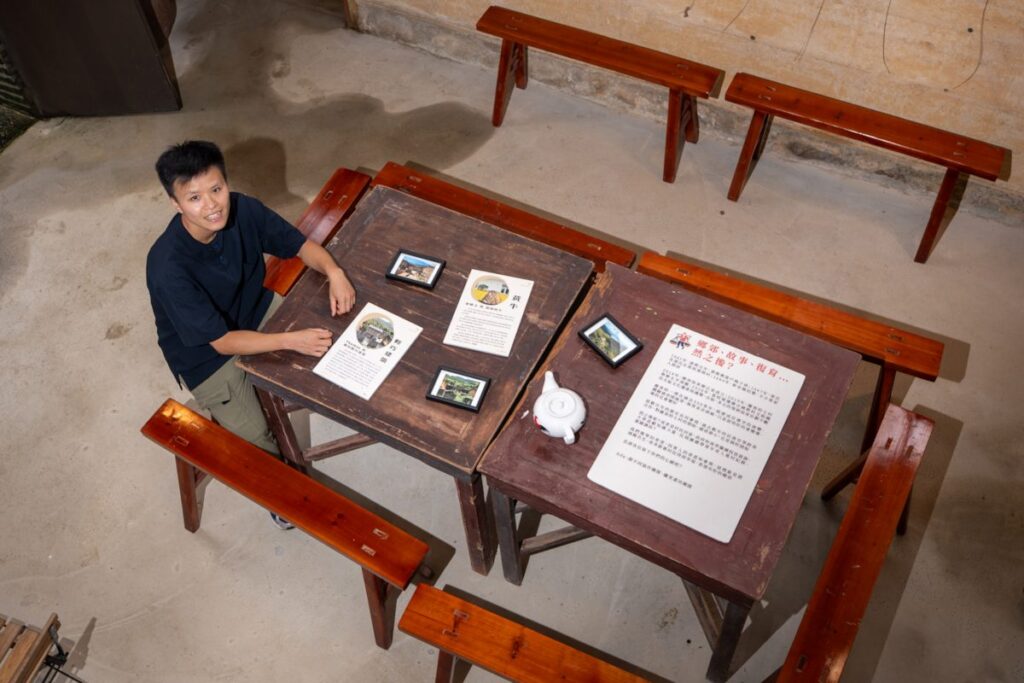
First: Brother Di, owner of Di Ji Shi Duo (的記士多), prepares stuffed Hakka tofu using a traditional woodfire method for students visiting the village on tour. Opened in 2023, the restaurant operates on a reservation basis, as most Lai Chi Wo villagers only return on weekends and during festivals. PHOTO: BRINA LAI
Second: A school group feasting on traditional Hakka tea cakes they helped make during a workshop on an educational tour. Black chicken shit Hakka tea cake is a traditional Hakka snack made from glutinous rice flour infused with the mashed leaves of the Chinese fevervine plant. PHOTO: SAVANNA TAI
At Yim Tin Tsai’s salt pans bathed in scorching heat, Windy Tang moves swiftly under a wide, pan-shaped hat, moving salt from the pans onto large plastic trays.
“I feel like they are my children,” the 60-year-old volunteer said, smoothing her hand over salt cubes. “The first time I did this, I fell in love with it,” she added.
Tang, who is retired, started volunteering at the salt pan in 2025 after gaining interest in the village’s restoration works. Every week, she travels over an hour from Mong Kok to make salt and occasionally leads visitor workshops.
“I can handle it (the heat). Besides, the salt loves this kind of heat!” she added.
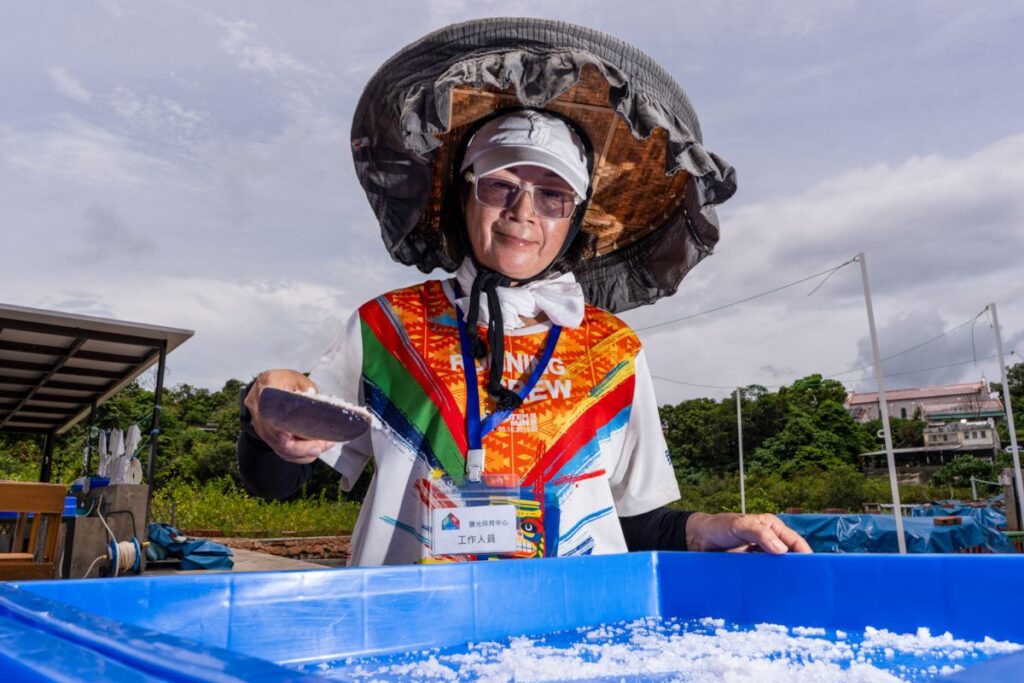
Windy Tang harvests crystals on Yim Tin Tsai’s salt pans. She has been volunteering in the island for over a year, making salt and leading workshops. PHOTO: BRINA LAI
Near the pier, husband and wife Liu Wai Fung and Carrie Tun run Chef de Yim Tin, a Western-Asian restaurant. They are the two only permanent residents in the village.
For 14 years, 63-year-old Liu lived in Yim Tin Tsai, farming and moving between kitchen counters since he left Lamma Island, trading it for rural silence. Tun, 58, had left a nursing job to join him about three years later.
“Customers used to line up during the pandemic,” said Tun. “But after, it dropped 80 per cent. On a weekday, just one or two tables (were filled).”
By 4pm on Sunday, most customers have left and Liu walks home up the hill while Tun mans the restaurant for its final hour.
“It doesn’t cost much money for the two of us living here. Rent is cheap, we cook our own food. It’s enough,” Liu added.
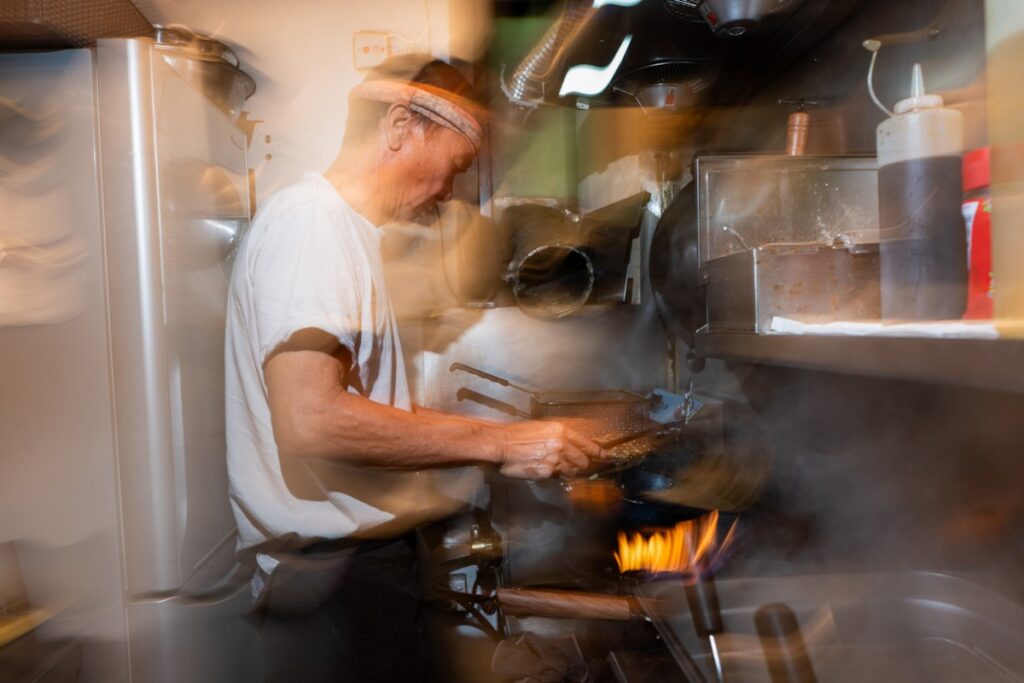
Liu Wai Fung, 63, cooks fried rice during lunch hour at Chef de Yim Tin, one of two food stalls on Yim Tin Tsai. Liu and his wife are the island’s only remaining residents, as limited access to essential infrastructure, particularly healthcare, makes year-round living impractical for many villagers. PHOTO: BRINA LAI
Future in Question
As they struggle to stay afloat and adapt to a new community and modern ventures, both villages face a looming question: would a new generation take over when its custodians are gone?
“It’s difficult for them to fully commit to the village like how I did,” said Chan, whose daughter assists with village operations.
In the fourth edition of Yim Tin Tsai’s Art Festival, which is expected to be held in 2027, Chan hopes more younger people will be involved.
In Lai Chi Wo, Tsang hopes the youngest village descendants will return, but said the four already in Hong Kong are busy with their professional lives.
“Their parents were born in Lai Chi Wo, so how do we bring the next generation back to take over? Then I can retire,” he laughed.
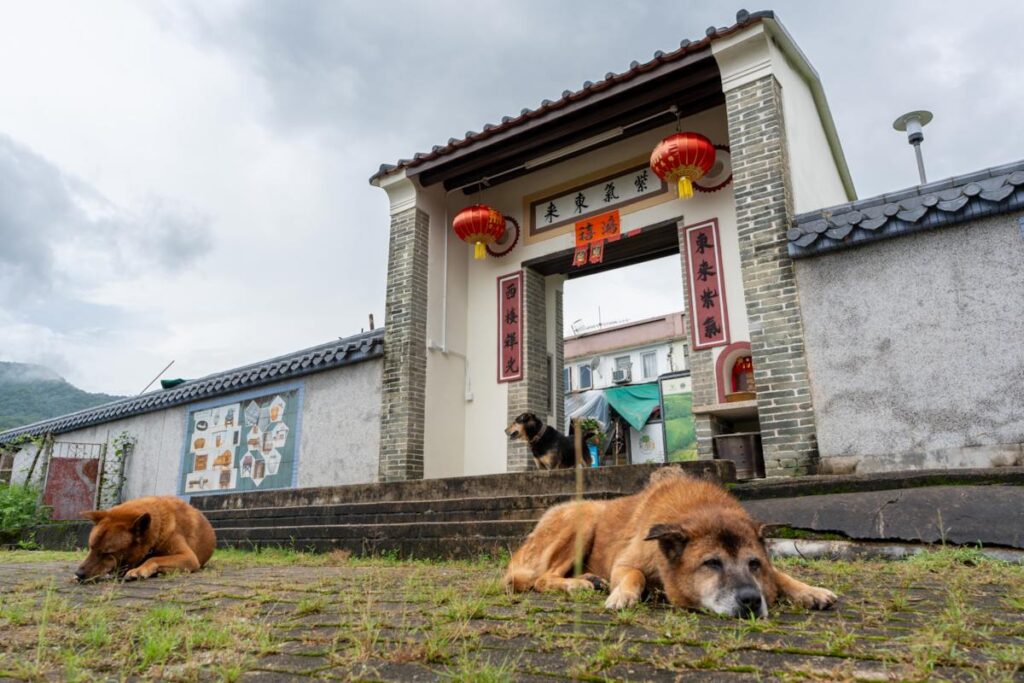
Village dogs rest at Lai Chi Wo East Entrance. The over 300-year-old village thrived in the 1950s, when nearly 1000 villagers lived in more than 200 houses. By the 1980s, the village started hollowing out when villagers left in search of better jobs. PHOTO: BRINA LAI
But for 105-year-old villager Wong, the village’s renaissance has given him what the city could not.
When he turned 100 in Lai Chi Wo during the 2021 pandemic border closures, his son was trapped outside Hong Kong, unable to visit. Instead, the village’s patchwork of volunteers rallied around him.
“When I celebrated my 100th birthday, those friends threw a banquet and a big celebration for me!” Wong recalled, gesturing to a photo frame behind him.
“Many visitors, tourists, maybe a hundred people — I didn’t even know most of them, but they came to celebrate my birthday,” he recalled.
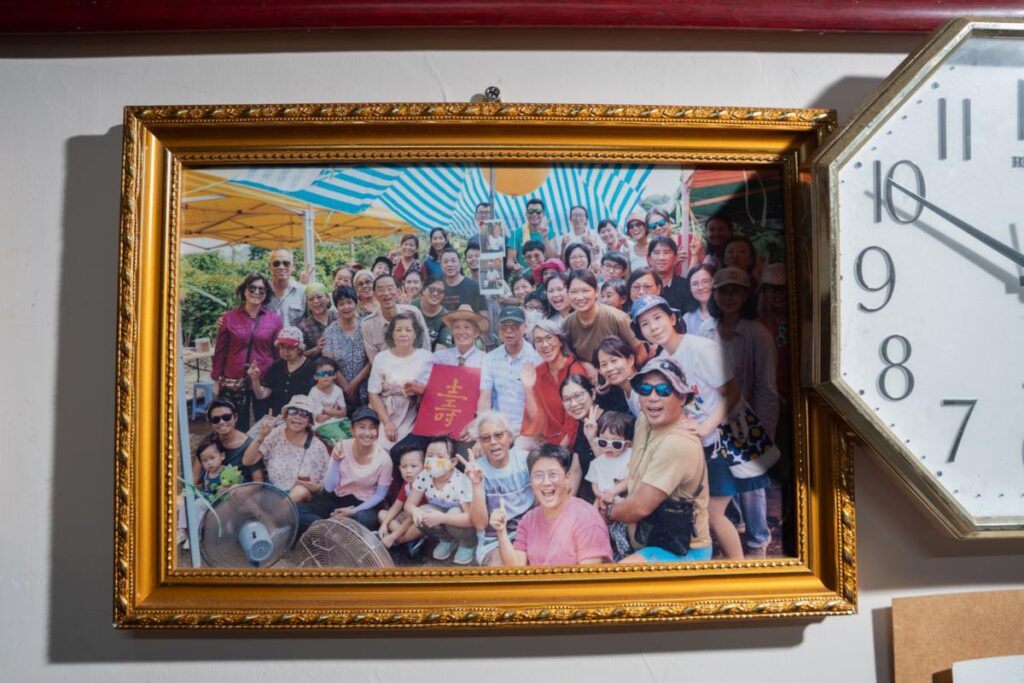
A framed photograph of Kiang Wong’s 100th birthday celebration in 2021, when the village’s residents and volunteers surprised him with a banquet party. PHOTO: SAVANNA TAI
A century after his ancestors worked the land, Wong still tends his orchard alongside newcomers helping revive the village. His presence is a reminder that Lai Chi Wo may yet outlive abandonment.