

As customers flood in from across the border, or behind a screen, businesses in the rituals industry face diverging fates.
Written by: Jermaine Fok and Koh Kim Xuan
Photos by: Jasel Poh and Koh Kim Xuan
Editor’s Note: This feature story was reported from the ground in Hong Kong by final-year journalism students from the Wee Kim Wee School of Communication and Information, Nanyang Technological University, Singapore, as part of their Going Overseas For Advanced Reporting (GO-FAR) journalism course.
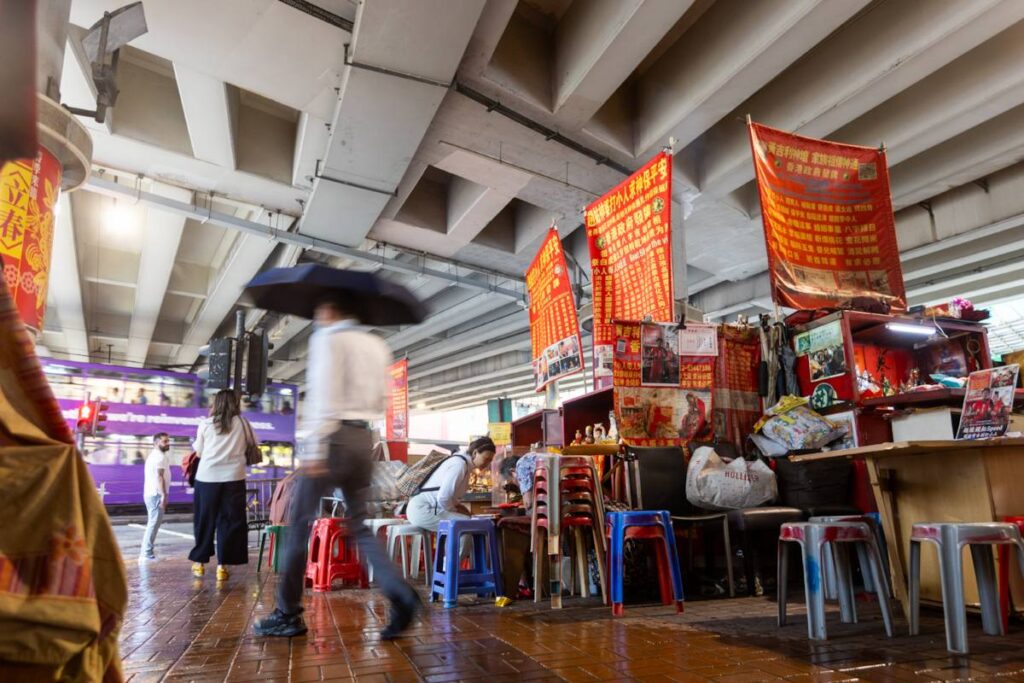
The area under the Canal Road Flyover is occupied almost exclusively by Hong Kong’s villain-hitting masters. The location was chosen by the masters due to its good Fengshui — meaning space to promote positive energy flow, balance, and harmony — as it is situated between busy road junctions. PHOTO: JASEL POH
At the Canal Road junction, sharp, smacking ‘Piak’ sounds coming from under the flyover cut through the roar of surrounding congested traffic.
There, 10 villain-hitting masters — all women — are shrouded in smoke from burning paper offerings.
Perched on low stools, they squat over paper effigies, striking them with worn-out shoes, as their chants fill the air.
Each tool symbolises a different purpose: a stiletto for female mistresses, a dagger for ‘bad men’, and a flat shoe that is used for other requests.
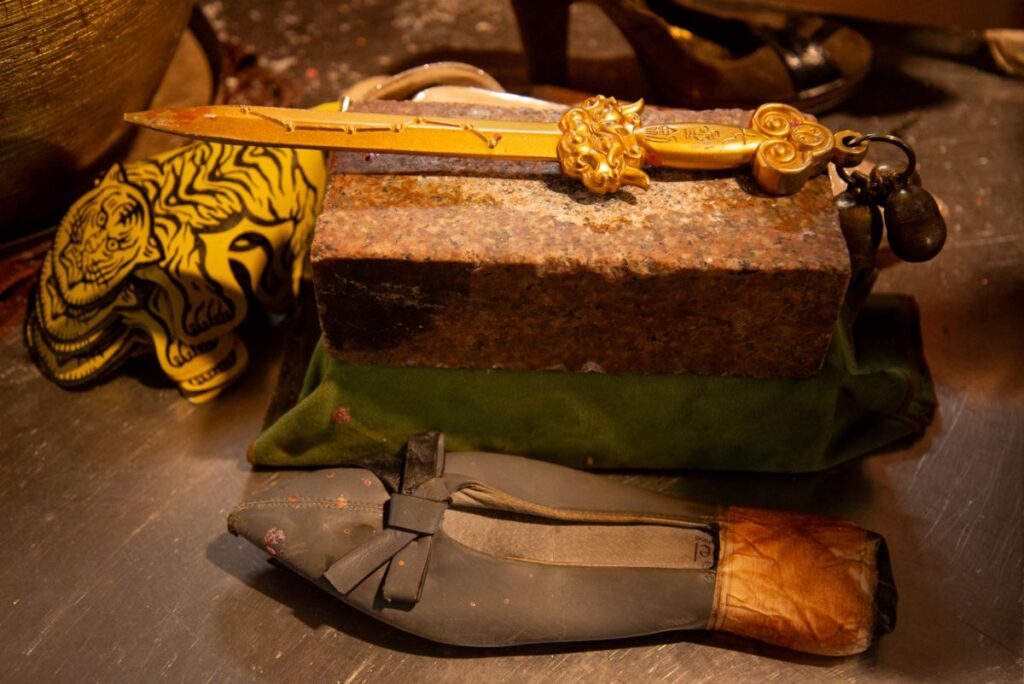
Villain-hitting masters may use a variety of shoes for the ritual. (From top to bottom) The dagger is used to curse ‘bad men’, and the worn-out flat for general requests regarding work or bad people in customers’ lives. PHOTO: KOH KIM XUAN
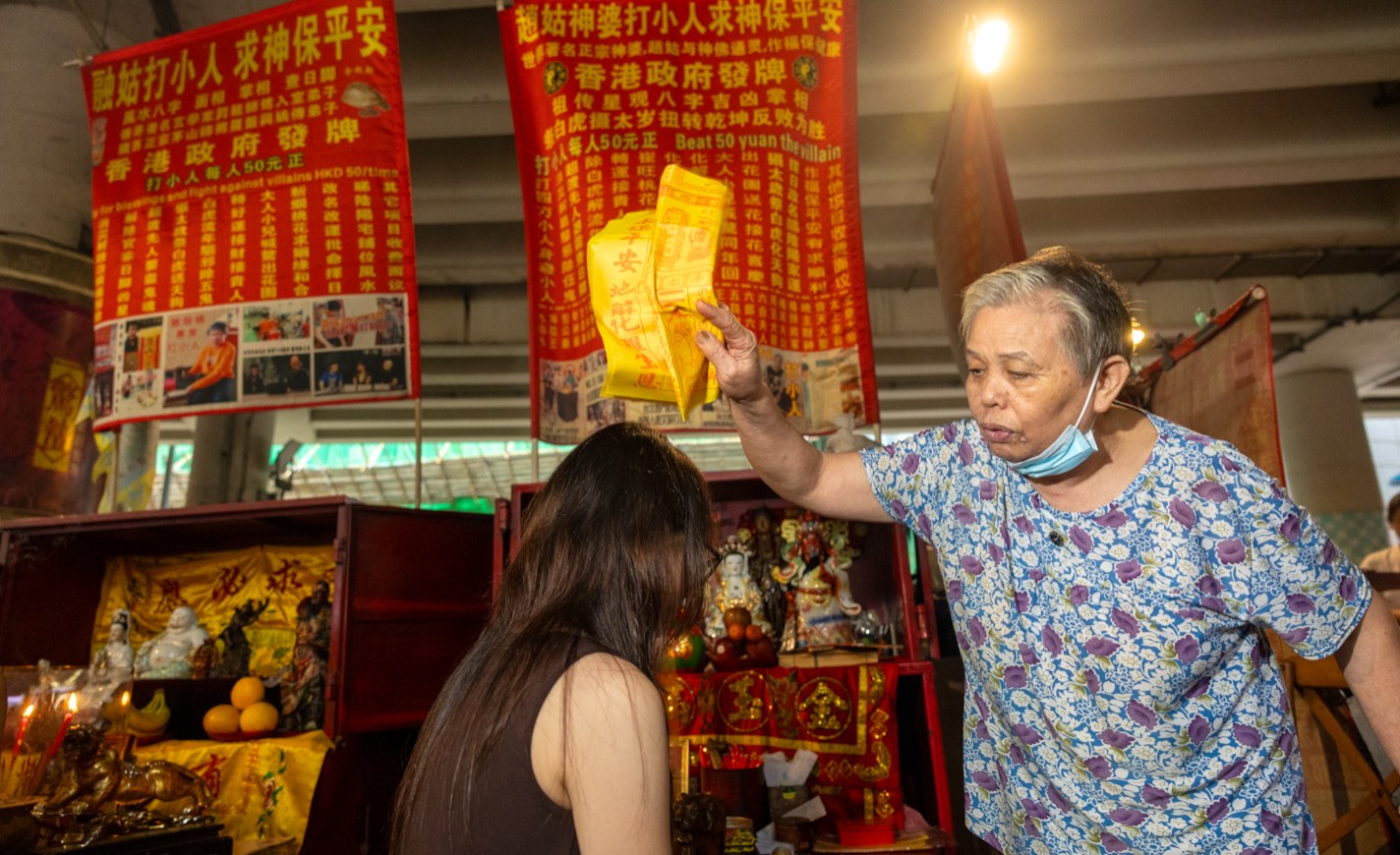
Effigies bearing the name of the victim’s intended target are beaten vehemently into tiny shreds by the master. Whatever remains of the effigy is then burned, with the master waving the paper talismans around the customer’s head as she chants the bad luck away.
For just HK$50 (approximately S$8), customers can curse their enemies, be it an unwanted ex-boyfriend or a hated boss at work, as the ritual is believed to drive away misfortune and evil.
Siu Gu, 75, is one of the masters who works 10 hours a day fulfilling her customers’ requests.
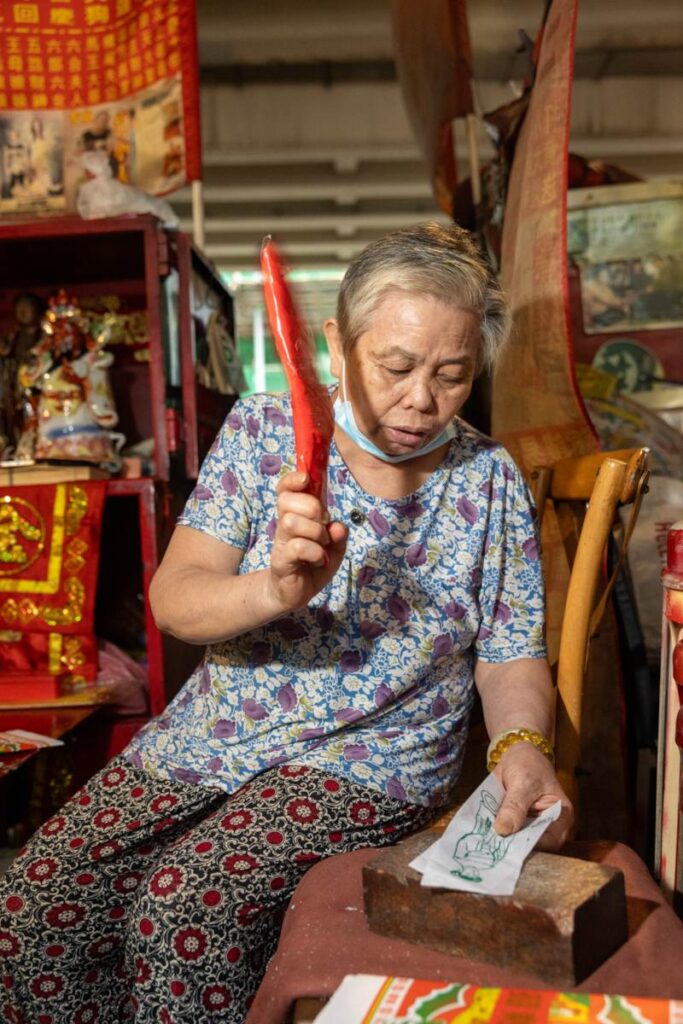
As part of a ritual, Siu Gu vehemently smacks the paper effigy, representing the enemy, against a concrete brick with a worn-out shoe which is held together by red duct tape. As she smacks the effigy, she chants rhythmic curses to strip away the target’s power to cause harm. PHOTO: JASEL POH
During peak seasons like Lunar New Year, she receives up to 300 customers per day. On a typical day, however, she carries out rituals for up to 20 customers a day.
Originally a farmer from Dongguan, China, Siu Gu was 20 when a Daoist (Taoist) priest told her that she possessed a gift for villain hitting.
Though initially reluctant, she eventually moved to Hong Kong at her father’s urging, after her family insisted she fulfil “God’s plan”.
“(When) you have to do it, you just accept it,” said Siu Gu, who became a full-fledged villain-hitting master under the Canal Road Flyover by her 30s.
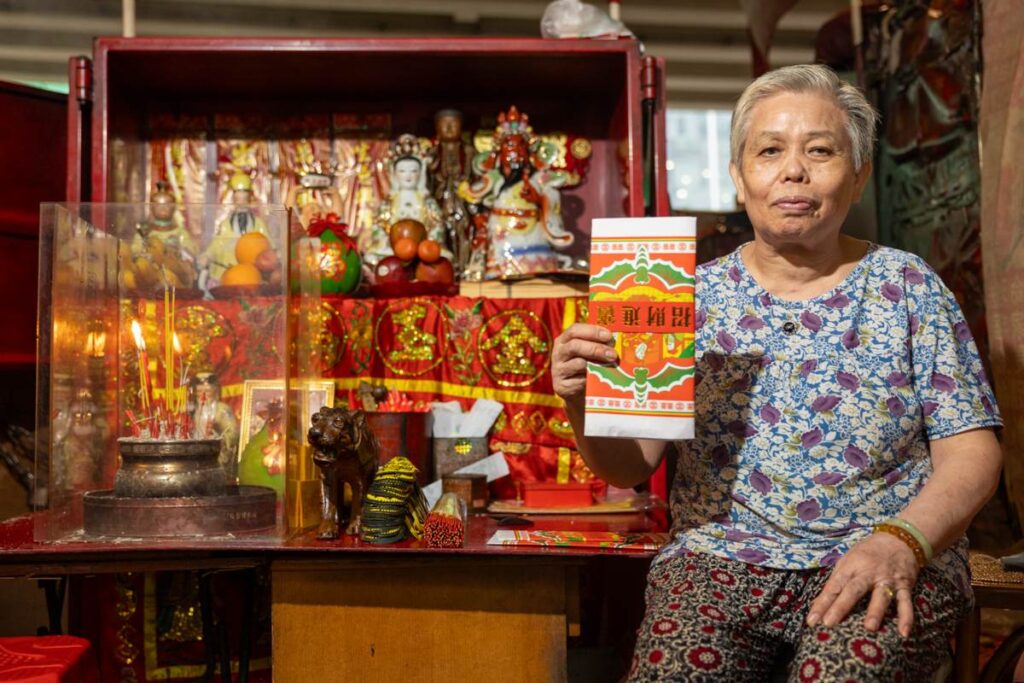
Siu Gu sits at her stall and holds ‘nobleman paper’, which is used during a villain-hitting ritual to pray for blessings on behalf of customers. PHOTO: JASEL POH
Only found across the border
With the popularity of Chinese social media platforms like Xiaohongshu and dominant superapp WeChat, villain hitters like Siu Gu have seen an uptick in mainland Chinese tourists.
Mainland visitors now account for 50 per cent of her clientele, while the rest are locals and other foreigners.
Several other villain hitters under the flyover report a similar customer mix.
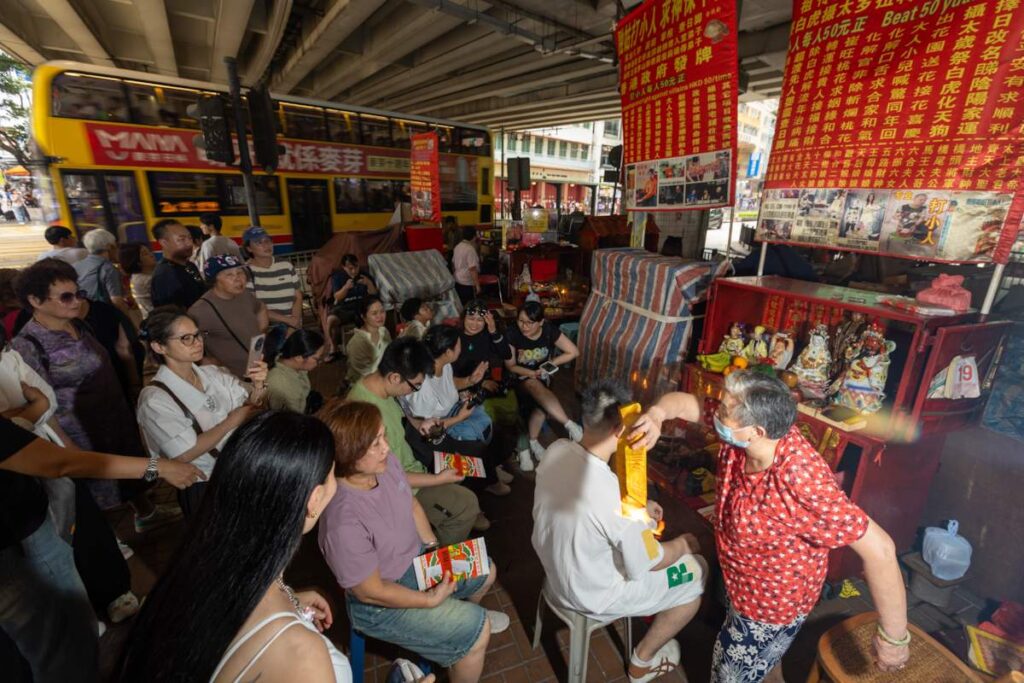
Half of Siu Gu’s, and other villain-hitting masters’ clientele are tourists from Mainland China. PHOTO: JASEL POH
Despite originating from the mainland, the ritual is tightly controlled there, prompting some visitors to cross the border to Hong Kong, where it survives as a protected intangible heritage.
The ritual dates back to the Tang Dynasty, when paper tiger effigies were used to ward off threats to crops before evolving into representations of human villains.
“Villain-hitting rituals are a Chinese custom that incorporates elements from various cultures and religions, including Buddhism and Daoism (Taoism),” said Professor Lai Chi Tim, director of the Center for the Studies of Daoist Culture at The Chinese University of Hong Kong.
“In Chinese tradition, there are many different exotic practices to deal with people’s sufferings and concerns, or to pacify their anger against other people”.
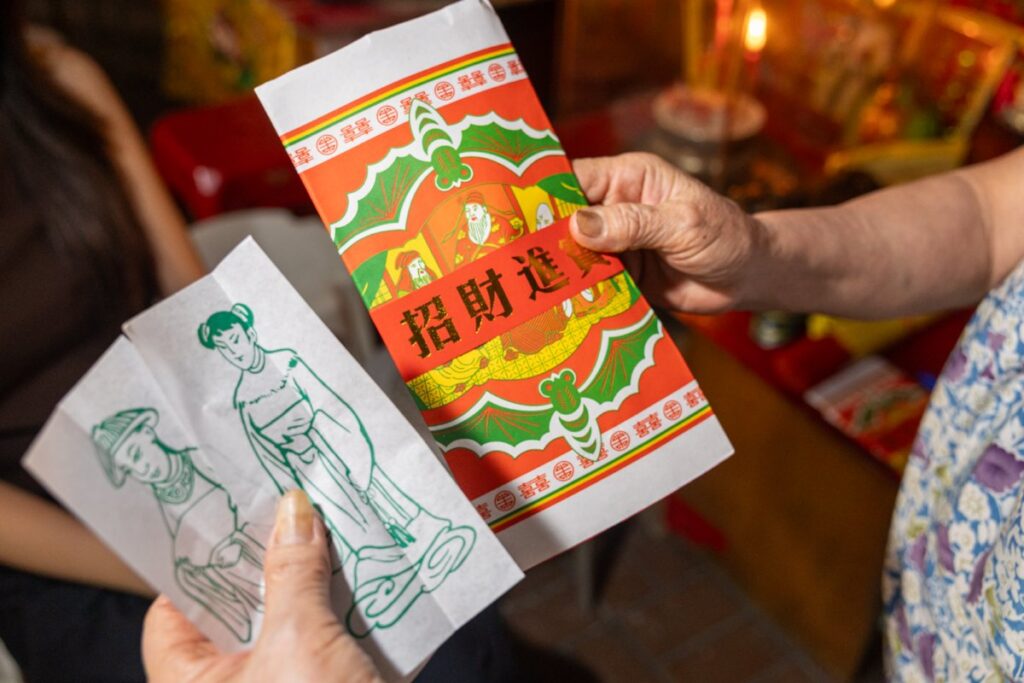
Siu Gu holds out paper effigies (left) of two genders, which constitute the first step of the ritual, where customers write the names of their enemies on the effigies. They are then beaten to shreds by the villain masters. PHOTO: JASEL POH
For 28-year-old mainlander Lucy Cheung (not her real name), the ritual offered a way to ease her troubles at work.
“As Hong Kong is a culturally welcoming place where no one recognises me and I am not at work, it feels safe to experience villain hitting here,” she said.
Cheung is not the only one. Among the crowds of tourists is 32-year-old Shanghai teacher Florence Liu (not her real name), who brought her parents to chase away misfortune through villain-hitting rituals.
She said portrayals of the tradition featured in iconic Hong Kong films such as Tales From the Dark 1 had also drawn mainland visitors, including herself.
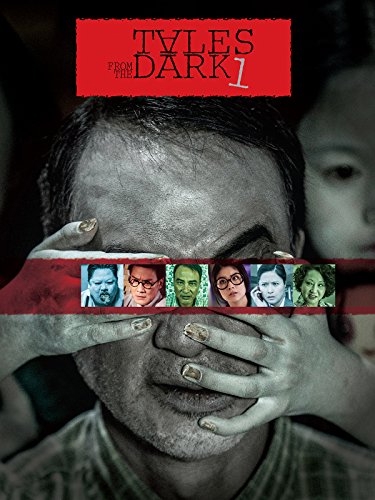
Villain hitting was featured as a major premise in the third and final part of the 2013 Hong Kong horror anthology film, Tales of the Dark 1. PHOTO: IMDb
However, her parents, who stood some distance away and did not wish to be named, feared that Liu may lose her job back in Shanghai if she were seen partaking in the ritual.
“Rituals like these are not allowed in Shanghai. If people see someone burning paper money or doing these kinds of processions, they will be reported to the authorities as it is illegal,” Liu said in Chinese.
Practices like villain hitting fall outside Mainland China’s five officially recognised religions and are categorised as ‘superstition’ or ‘evil cult.’ Under the Public Security Administration Punishments Law, engaging in non-state-sanctioned religious activities risks detention and fines.
Read also: Hong Kong’s Outdoor: 9 Lesser-Known Sights for the Adventurous
Growing crowd
On the other side, beneath the bridge, sits fifth-generation villain hitter Auntie Chan, 43, who did not want to give her full name.
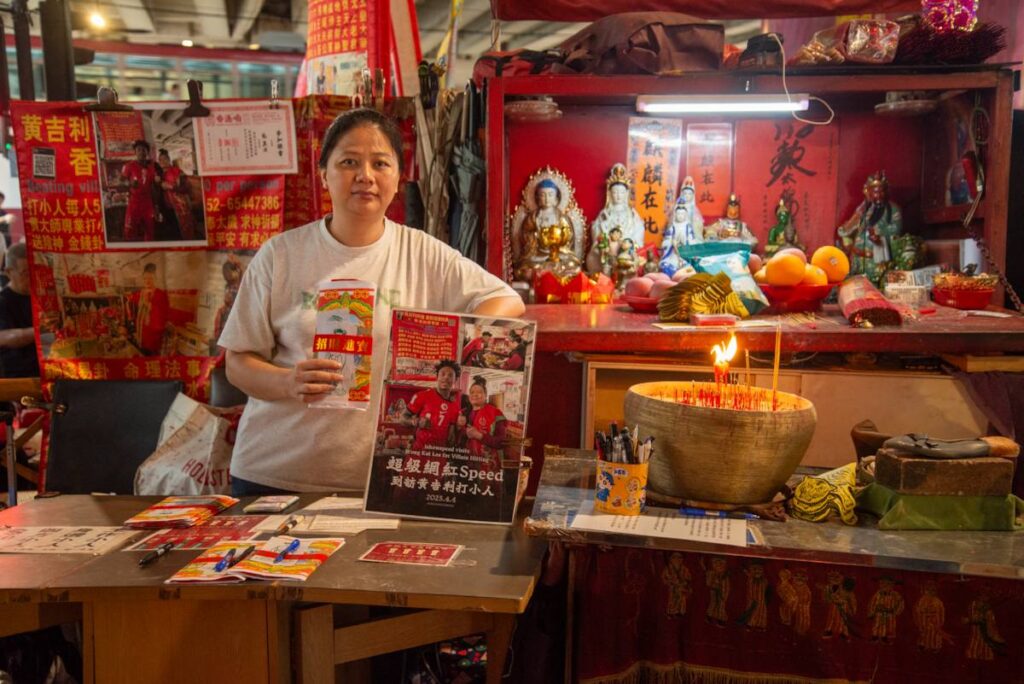
Auntie Chan stands at her stall, holding a stack of burnable offerings used in villain-hitting rituals. PHOTO: KOH KIM XUAN
Her business has boomed since American influencer IShowSpeed visited her store in 2025, livestreaming his dive into the unique custom to 140,000 concurrent viewers worldwide.
Chan has since seen a 50 per cent year-on-year increase in customers. But the growth is not just happening on the streets.
She has also begun offering her services through WeChat video to customers who cannot travel to Hong Kong. Her son films each ritual and sends the recording to the customer.
The online service is popular with customers in Taiwan, which does not have a traditional street-level villain-hitting culture. Chan said the family can process around 100 orders from Taiwan in a single day, alongside some from Singapore and India.
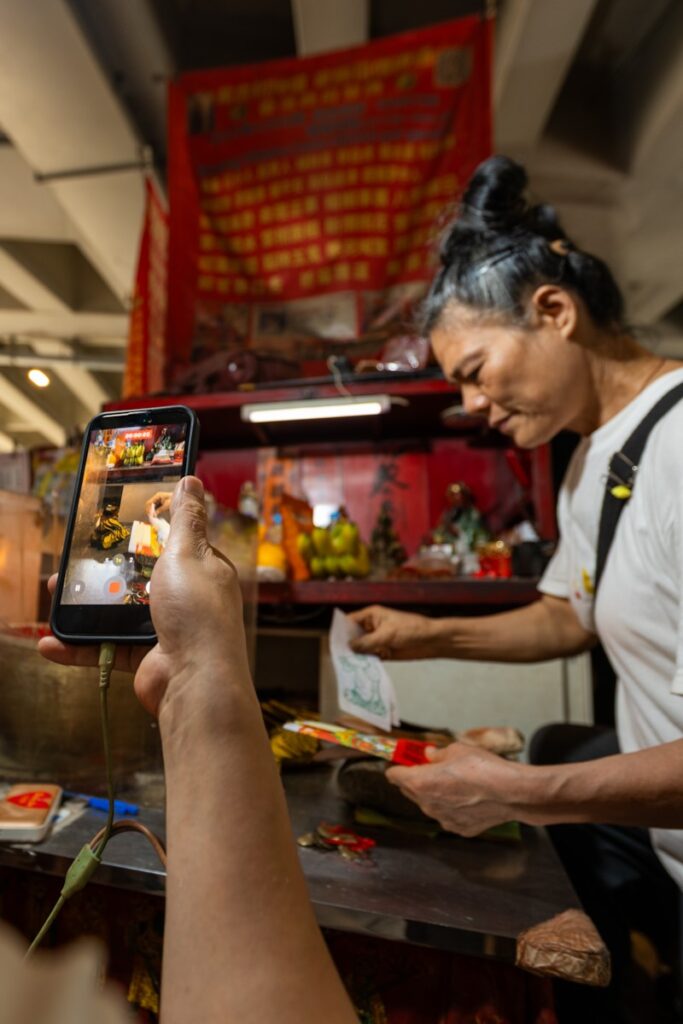
Auntie Chan’s mother, who is also a villain hitter, carries out a ritual while her son records her. The videos are sent to online customers through WeChat. PHOTO: JASEL POH
Similar to in-person sessions, she charges HK$50 for online rituals.
However, Chan cannot publicly livestream the rituals on Chinese social media platforms, which restrict livestreaming content deemed to promote superstition and religion.
“If I do livestream on these platforms, especially on Chinese social media, I will be banned from livestreaming,” she said.
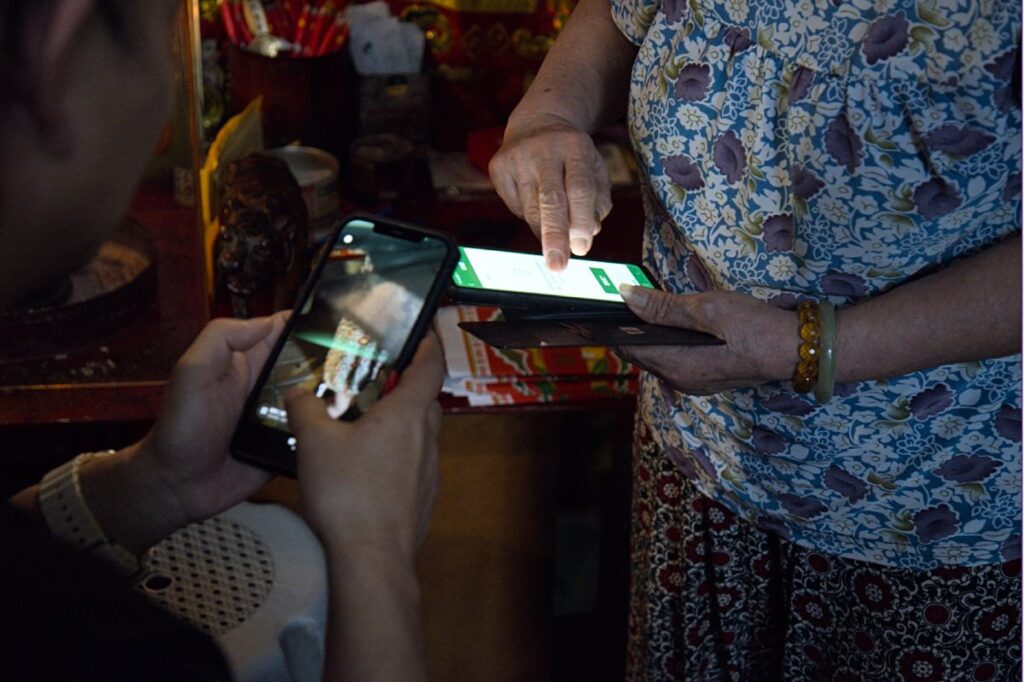
Apart from Auntie Chan, other villain hitters under the flyover have also started using WeChat to connect with mainland Chinese tourists, or for the payment of services. PHOTO: KOH KIM XUAN
Over the past year, the demographic of customers has also changed, with Western customers accounting for half of the 50 per cent increase.
“Many Caucasians from the West come because they know this place through Speed,” she said. “When they come to Hong Kong to travel, they will come in and experience this for themselves.”
The surge in online and physical customers allowed Chan’s family to expand to two outlets beneath the bustling bridge, one run by Chan and her son, and the other by her mother.
Read also: 7D Hong Kong Itinerary — Exploring Beyond the Food And Shopping Paradise
The other side of the boom
That said, not everyone in the villain-hitting trade is convinced by the practice.
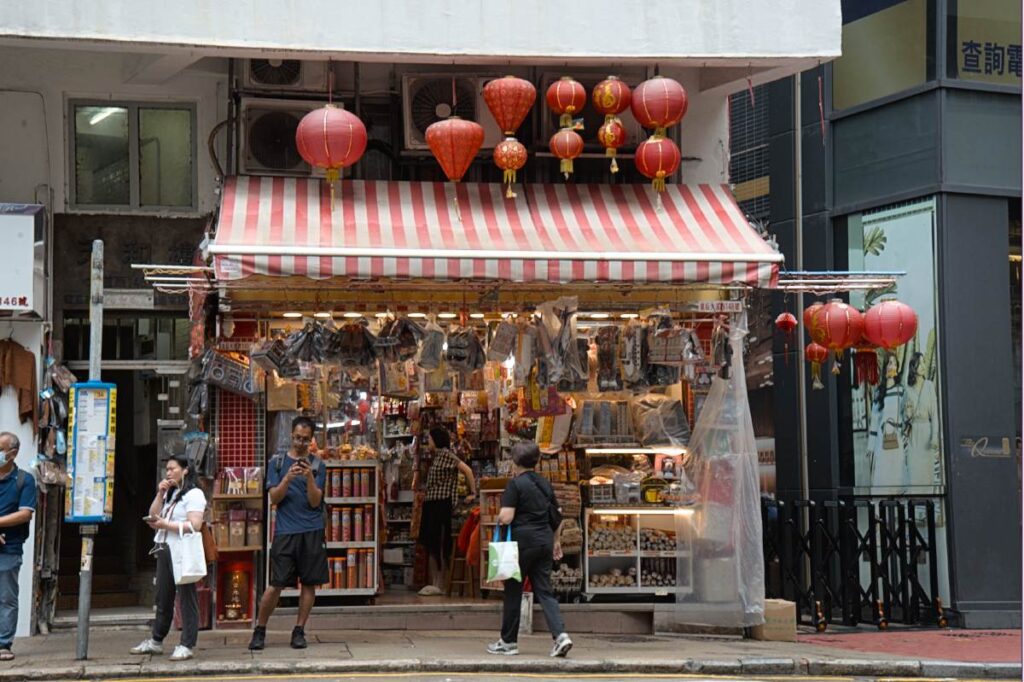
Streetside incense and burnable offering businesses in Hong Kong are shuttering their stores as fewer customers conduct their own rituals amid stricter government regulations. PHOTO: KOH KIM XUAN
Kwan Wing Ho, 67, supplies the joss paper and burnable offerings used by practitioners beneath the flyover, but ironically does not support the practice himself.
His traditional joss paper shop in Sai Wan stocks paper effigies and villain-hitting kits, which customers can buy to curse their enemies.
“I’m not very supportive of the hitting practice; if you really hate someone, you can just worship or curse them at home yourself. There’s no need to do such an extreme thing to hit them under the bridge,” he said. “You can just buy the villain-hitting sets, and go back home to pray and solve your problems.”
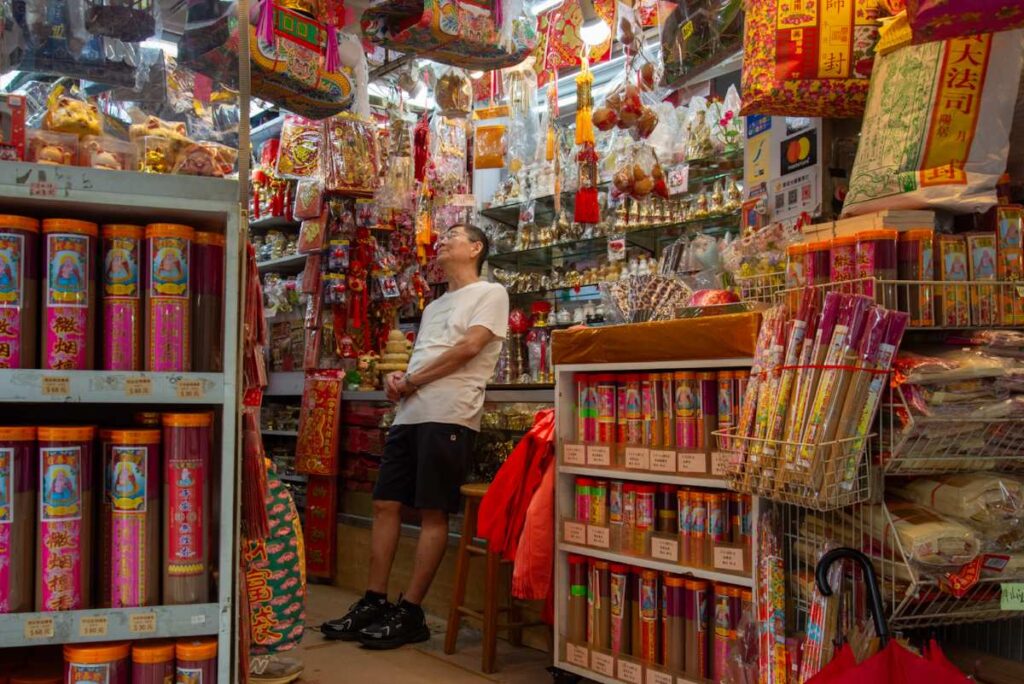
Kwan Wing Ho stands in his burnable offerings shop along the streets of Sai Wan. PHOTO: KOH KIM XUAN
Yet Kwan continues to supply the ritual practitioners. For him, the kits are simply another part of a traditional incense business he has run for years.
Among his customers, some buy the kits and perform rituals to place a hex on co-workers or ward off bad luck on their own instead of visiting the villain hitters in Causeway Bay. But Kwan said demand for the kits has declined as more people seek out villain hitters to perform the rituals.
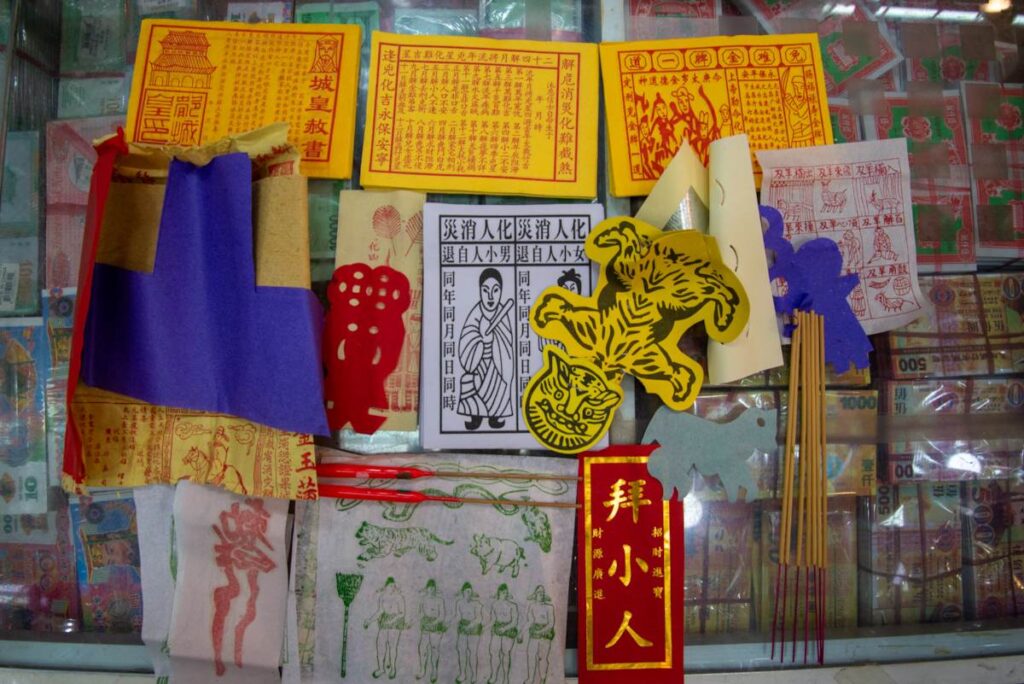
Customers may buy villain-hitting kits from Kwan’s shop, which contain the tools needed to conduct a ritual. PHOTO: KOH KIM XUAN
Adapting as traditions fade
Other parts of Kwan’s business are also fading. Customer demand for burnable offerings has fallen amid tighter restrictions on the burning of offerings introduced after the Wang Fuk Court fire in November 2025.
While burning joss paper as part of customary religious rites remains exempt from the city’s open-burning permit requirements, authorities have encouraged temples and other premises to reduce on-site burning.
Kwan said fewer customers are now willing to buy burnable offerings for use in public areas, amid potential fines of up to HK$3,000 (approximately S$490).
Overall, sales at his shop, including villain-hitting kits, have fallen by about 10 per cent over the years.
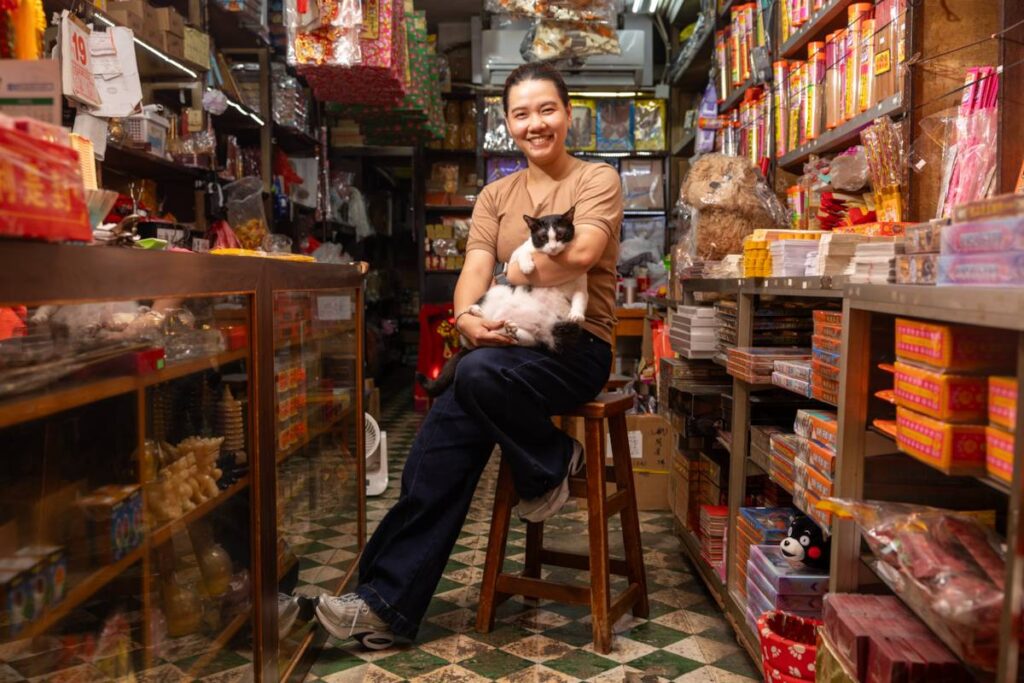
Kaka Ng, another joss paper shop owner in Hong Kong, supplies burnable offerings for funeral services. While sales are falling, she has started posting on social media to educate younger generations on how to prepare for rituals. PHOTO: JASEL POH
While the joss paper supply trade is shrinking, the practitioners under the flyover who have adapted to changing demand are finding new ways to keep the ritual alive.
For Chan, that has meant expanding from the streets to the screen.
For others beneath the bridge, the concern is less about finding customers than finding someone to carry the practice forward.
“I believe this is my calling. That is why I still do it until now,” said Siu Gu, who is unsure when she will retire and whether anyone will take her place.
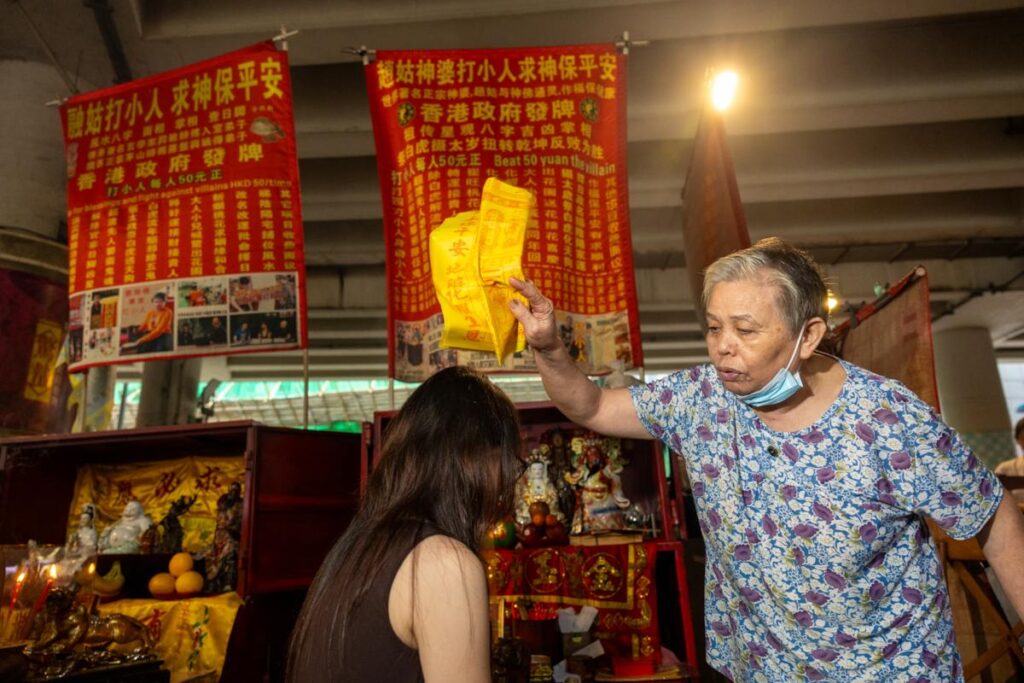
Siu Gu waves a talisman over a client’s head while chanting as part of a villain-hitting ritual. PHOTO: JASEL POH
Her daughter works in finance and has no plans to take over the business, while her son owns a construction business.
For Siu Gu, the question is no longer simply when she will step down, but who will continue the centuries-old ritual after her.
Before she could think any further, a customer approached her for a ritual. Without hesitation, Siu Gu began striking the effigy, as she has done countless times before. The sharp ‘Piak’ sound rang out with each blow, mingling with the rhythmic slaps of other villain hitters working nearby.